

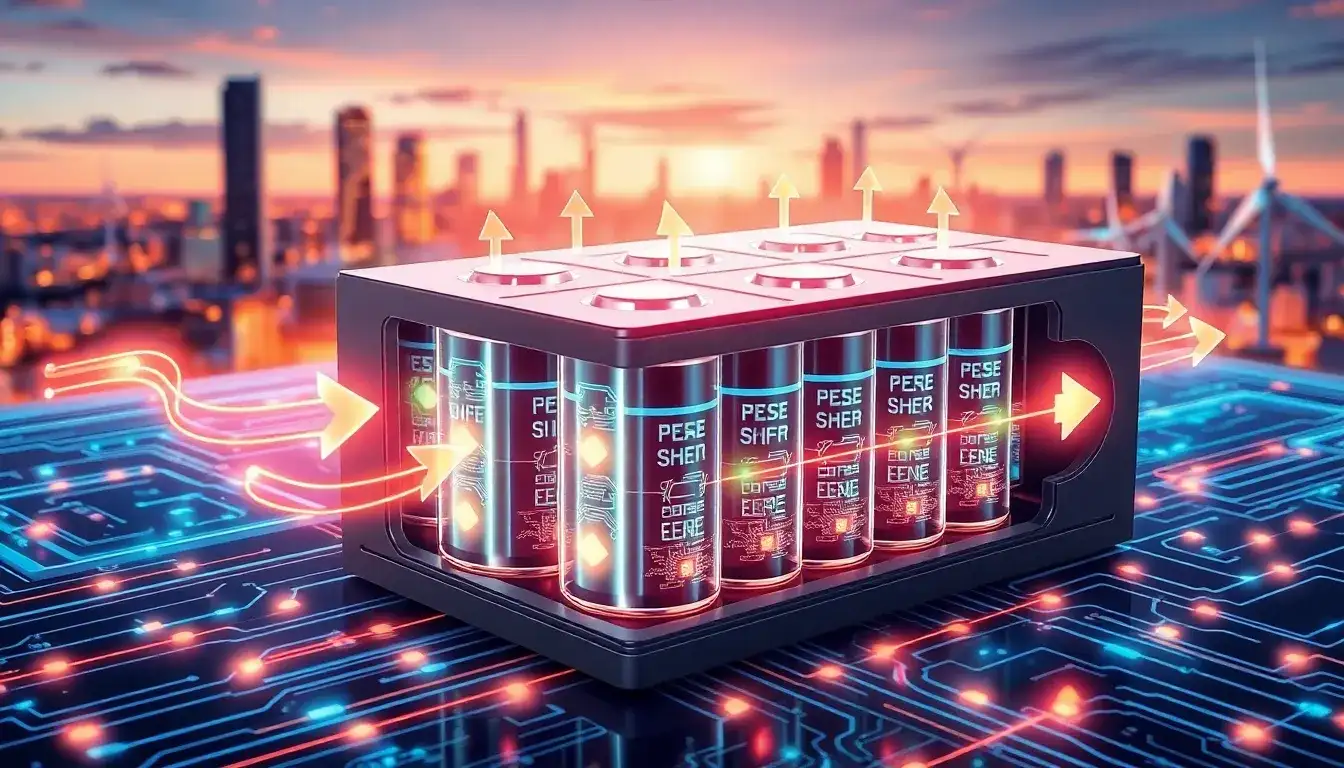
Active cell balancing improves energy efficiency primarily by redistributing charge from cells with higher state of charge (SoC) to cells with lower SoC within a battery pack, instead of dissipating excess energy as heat as in passive balancing methods. This efficient transfer enables more uniform cell voltages and capacities, leading to better overall battery utilization and longer runtime.
How Active Cell Balancing Enhances Energy Efficiency
- Charge Redistribution Rather than Dissipation:
Active balancing uses capacitors, inductors, or DC/DC converters to shuttle energy from stronger cells to weaker cells rather than simply wasting energy through resistors as heat, which is common in passive balancing. This method preserves energy within the battery pack and maximizes usable capacity. - Balancing During Charge and Discharge:
Unlike passive balancing, which is typically done only during charging, active balancing can occur during both charging and discharging cycles. This flexibility allows for continuous optimization of cell states, improving the battery pack’s effective capacity and extending runtime. - Higher Balancing Currents and Faster Balancing:
Active balancing supports significantly higher balancing currents (up to 6A) compared to passive (around 0.25A), enabling faster equalization of cells. This is particularly beneficial for large battery systems or those operating under fast cycling conditions, contributing to more efficient energy use. - Extended Battery Life and Capacity Usage:
By ensuring cells do not drain unevenly or become overcharged, active balancing reduces stress on individual cells, thereby prolonging the overall battery life and maintaining its capacity over time. This means fewer energy losses related to degradation and uneven cell wear.
Efficiency Trade-offs and Effectiveness
Although active cell balancing improves energy efficiency compared to passive methods, it can still incur some energy losses—estimated roughly between 10% to 15%—due to the complexity of power electronics and the energy transfer processes involved. However, these losses are generally outweighed by the gains in capacity utilization, runtime, and battery longevity.
One advanced implementation can achieve charge transfer efficiencies of up to about 89.4%, and overall balancing efficiencies of 96.3%, demonstrating how modern active balancing circuits optimize energy reuse within the pack.
Summary
Active cell balancing enhances energy efficiency by:
- Efficiently transferring charge between cells instead of wasting it as heat.
- Allowing balancing during both charging and discharging, increasing balancing opportunities.
- Supporting higher balancing currents for faster and more effective equalization.
- Prolonging battery life and maintaining usable capacity longer, reducing energy losses due to degradation.
This improves runtime and capacity usage of battery packs, making active cell balancing a preferred solution for energy-efficient and long-lasting battery management systems.
Original article by NenPower, If reposted, please credit the source: https://nenpower.com/blog/how-does-active-cell-balancing-improve-energy-efficiency/

