

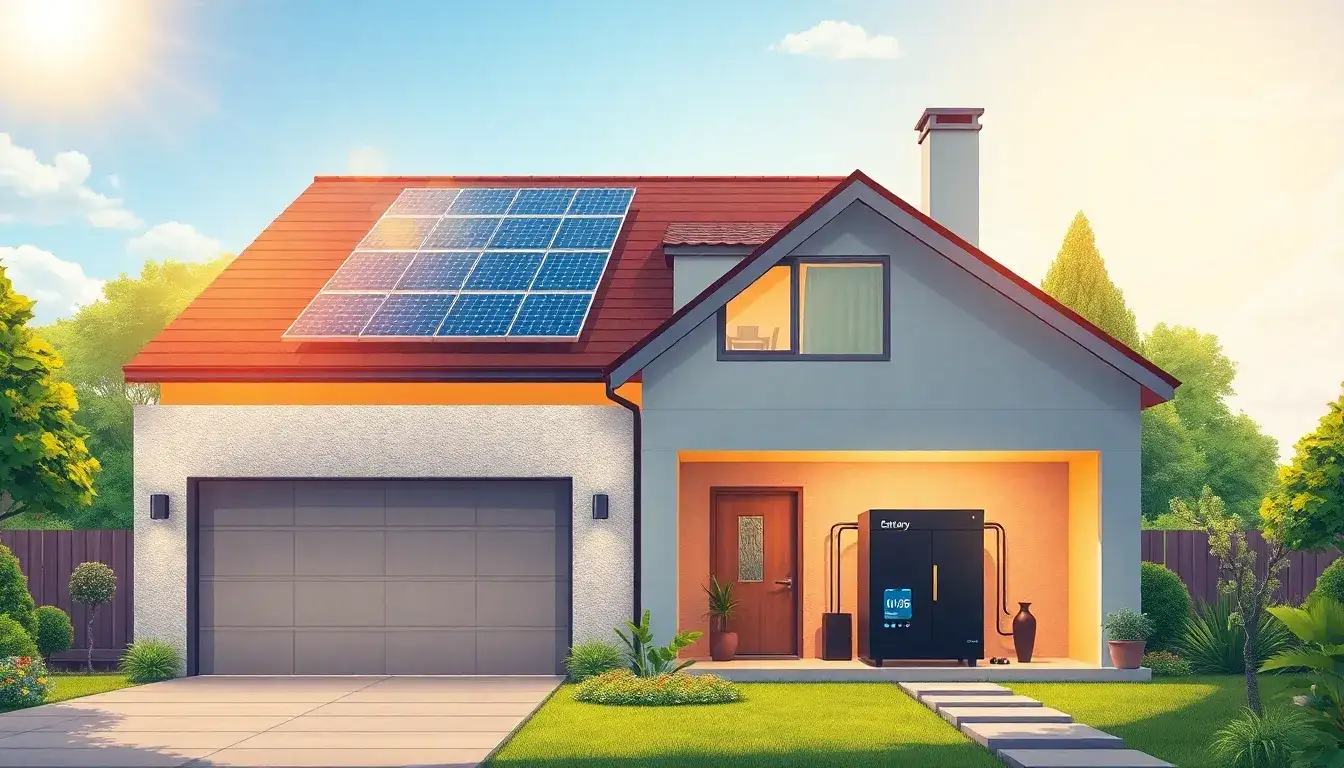
Integrating Home Battery Systems with Solar Panels for Maximized Energy Efficiency
How It Works
- Solar Energy Generation: Solar panels convert sunlight into direct current (DC) electricity, which is then converted into alternating current (AC) by an inverter for immediate use in the home.
- Excess Energy Storage: When the solar panels produce more electricity than the home needs, the excess energy is stored in a battery storage system instead of being sent back to the grid. This stored energy can be used during the evening, cloudy days, or power outages.
- Battery Charging and Discharging: The battery system stores the excess energy for later use, ensuring a continuous power supply when solar energy production is insufficient. This helps reduce reliance on the grid.
- Smart Energy Management: Advanced systems include energy management software that optimizes energy use based on consumption patterns and utility rates. This allows homeowners to maximize their solar energy usage and reduce electricity bills by using stored energy during peak rate hours.
Benefits of Integration
- Energy Efficiency and Savings: By storing excess energy for later use, homeowners can avoid buying electricity from the grid during peak hours, leading to significant cost savings.
- Reliability and Backup Power: The battery system provides backup power during grid outages or when solar panels are not producing enough energy, ensuring essential appliances remain operational.
- Enhanced Energy Independence: This integrated system reduces dependence on the utility grid, providing homeowners with greater control over their energy usage and independence from grid outages.
Considerations for Integration
- Compatibility Assessment: Ensure that the solar panels and existing infrastructure are compatible with the battery system. This may involve assessing electrical compatibility and communication protocols.
- Storage Capacity Planning: Determine the appropriate storage capacity based on household size, energy consumption patterns, and desired backup duration.
- Cost-Benefit Analysis: Evaluate the initial costs against potential long-term energy savings and available incentives to make an informed decision.
Original article by NenPower, If reposted, please credit the source: https://nenpower.com/blog/how-does-a-home-battery-system-integrate-with-solar-panels-to-maximize-energy-efficiency/

