

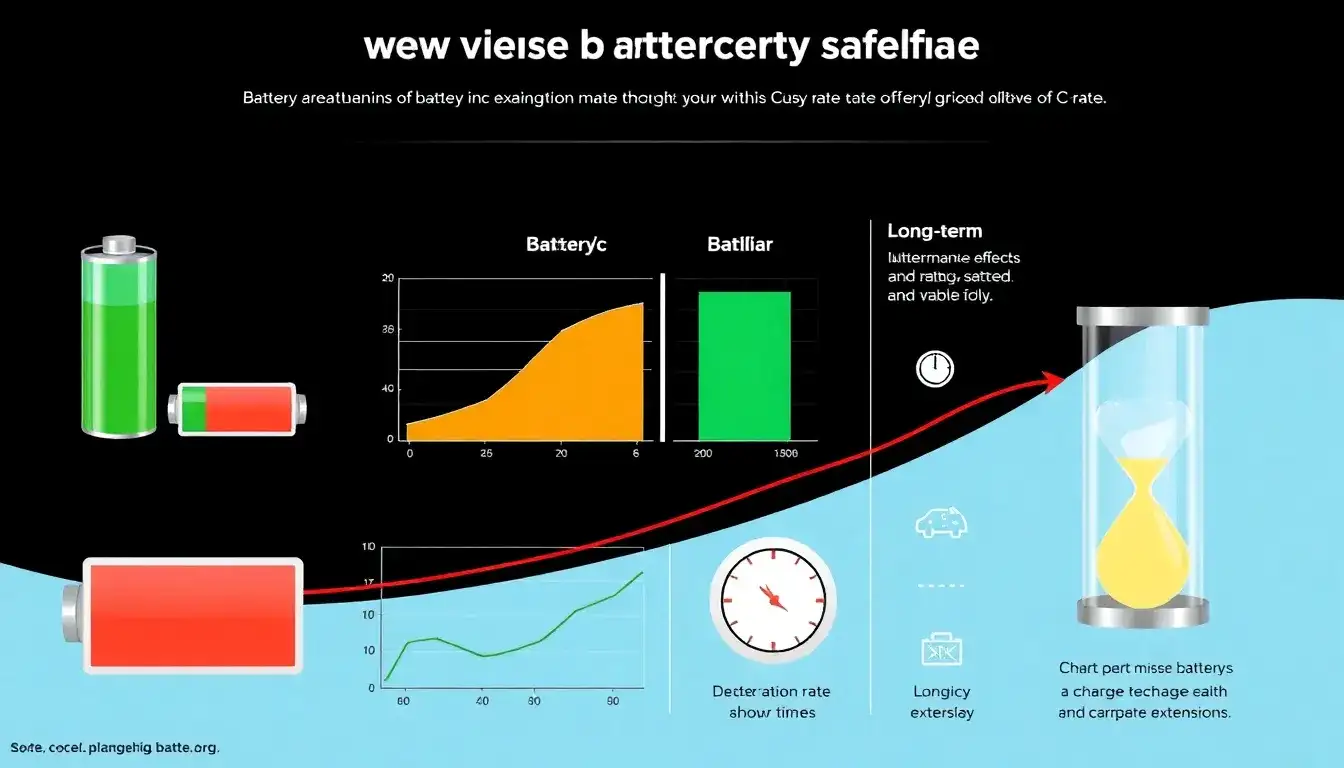
Higher C-rates significantly impact battery lifespan through several interconnected mechanisms:
1. Accelerated Degradation
Higher C-rates increase current density, stressing battery materials and causing faster chemical degradation. This reduces the battery’s capacity over time and shortens the operational lifespan of devices like EVs.
2. Dendrite Formation Risks
Faster charging (especially above 2C sustained) can lead to lithium dendrite growth in lithium-ion batteries. These needle-like structures risk internal short circuits, cell failure, and even thermal runaway.
3. Heat Generation
High C-rates produce excessive heat during charge/discharge cycles. Elevated temperatures degrade electrolyte stability and electrode materials, directly reducing cycle life. Thermal management systems become critical but add complexity.
4. Capacity Tradeoffs
While high C-rates enable rapid energy transfer, they often result in lower effective capacity during discharge and long-term capacity loss from material breakdown.
Balancing Act
Battery designs must optimize C-rates against:
- Material selection: Electrodes/electrolytes for high-rate stability
- Thermal systems: Cooling to mitigate heat-related degradation
- BMS limitations: Managing charge curves to avoid sustained high C-rates
Commercial EV batteries typically avoid sustained C-rates exceeding 2C to balance charging speed and longevity.
Original article by NenPower, If reposted, please credit the source: https://nenpower.com/blog/how-does-a-higher-c-rate-impact-battery-lifespan/

