

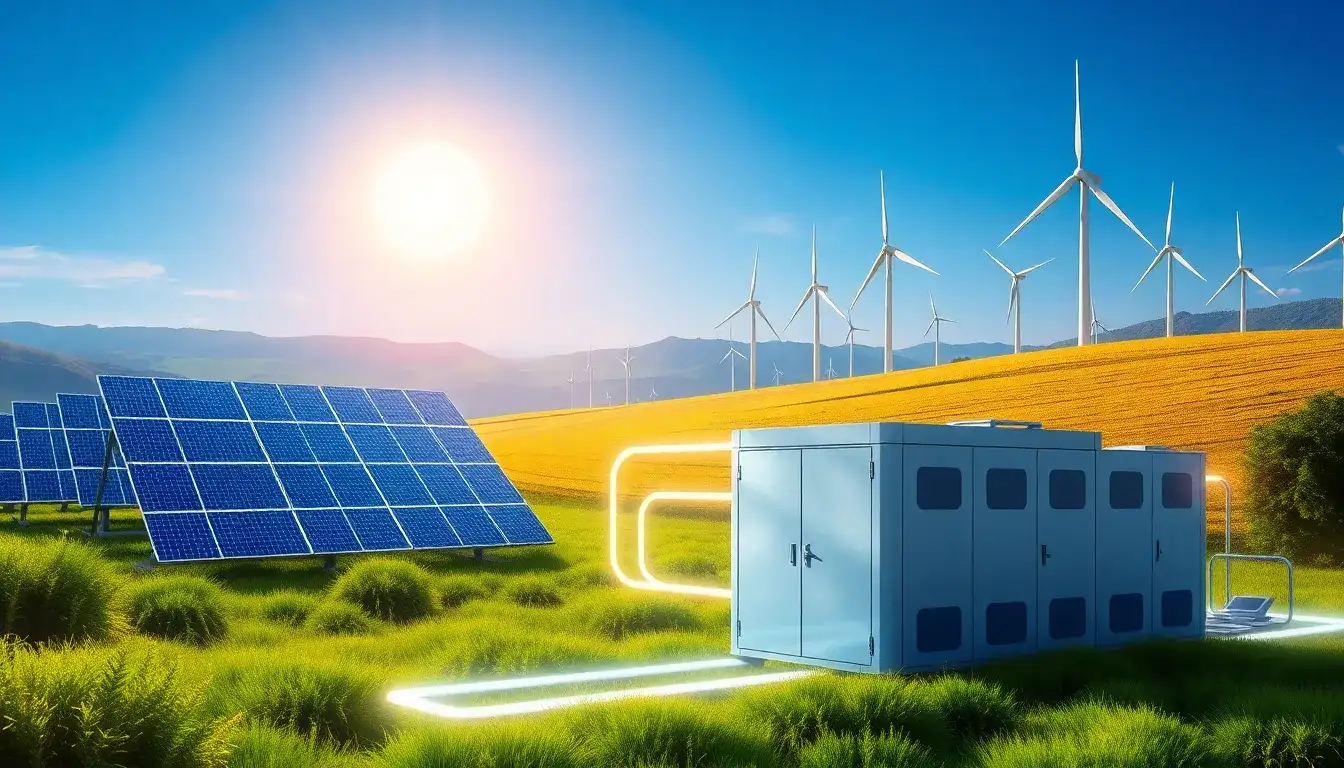
A battery energy storage system (BESS) integrates with renewable energy sources like solar and wind by storing the electricity these variable sources generate when conditions are favorable (e.g., sunny or windy periods) and releasing it when production is low or demand is high. This integration addresses the inherent intermittency of renewable energy, ensuring a reliable, consistent power supply and improving grid stability.
How BESS Integrates with Renewables:
- Charging from Renewables: BESS units are charged using excess electricity produced by renewable sources during peak generation times. For instance, solar panels generate surplus power during midday, which can be stored in batteries rather than wasted.
- Energy Management Software: Intelligent control systems and algorithms manage when to store energy and when to release it, optimizing the balance between generation and demand. This ensures supply meets demand, reducing reliance on fossil-fuel peaking plants that traditionally balance grids.
- Grid Services and Reliability: Batteries provide fast response services such as frequency regulation and load following to manage short-term fluctuations in renewable output. This capability is critical for smoothing output variations and maintaining power quality on the grid.
- Peak Shaving and Self-Consumption: At the commercial, industrial, or residential level, BESS helps shave peak demand by discharging stored renewable energy during costly peak hours, reducing energy costs. This optimization also increases the self-consumption of renewable energy, maximizing the value of onsite generation like rooftop solar.
- Backup Power and Off-Grid Applications: Batteries support critical infrastructure (e.g., hospitals, telecom towers) by providing backup power during outages and can enable isolated or remote communities to rely more heavily on renewables rather than diesel generators, thereby reducing emissions.
- Scalability and Flexibility: BESS are scalable from small home systems paired with rooftop solar to large, utility-scale battery farms supporting entire grids. This flexibility promotes widespread adoption of renewables across different sectors and geographies.
Benefits of BESS Integration with Renewables:
- Enables Higher Renewable Penetration: By mitigating fluctuations and storing excess generation, batteries allow grids to accommodate more renewable capacity without sacrificing reliability.
- Cost Savings and Emission Reductions: Reducing the need for fossil-fueled backup power and peak generators lowers operational costs and greenhouse gas emissions.
- System Modernization: BESS is a key component in modernizing electrical grids to handle more variable energy flows and enable new applications such as electric vehicle charging infrastructure.
Examples:
- The Beach Battery project in the Netherlands uses repurposed EV batteries to store solar energy for a coastal community, ensuring power availability despite variable conditions.
- The Tesla battery system at Australia’s Hornsdale Wind Farm stores and dispatches wind energy to provide grid services and stabilize the local electricity network.
In summary, battery energy storage systems integrate with renewable energy sources by capturing surplus renewable electricity, managing its release based on demand and grid conditions, and providing critical grid support services. This integration is essential for overcoming the intermittency of renewables and enabling a cleaner, more reliable energy future.
Original article by NenPower, If reposted, please credit the source: https://nenpower.com/blog/how-does-a-battery-energy-storage-system-integrate-with-renewable-energy-sources/

