

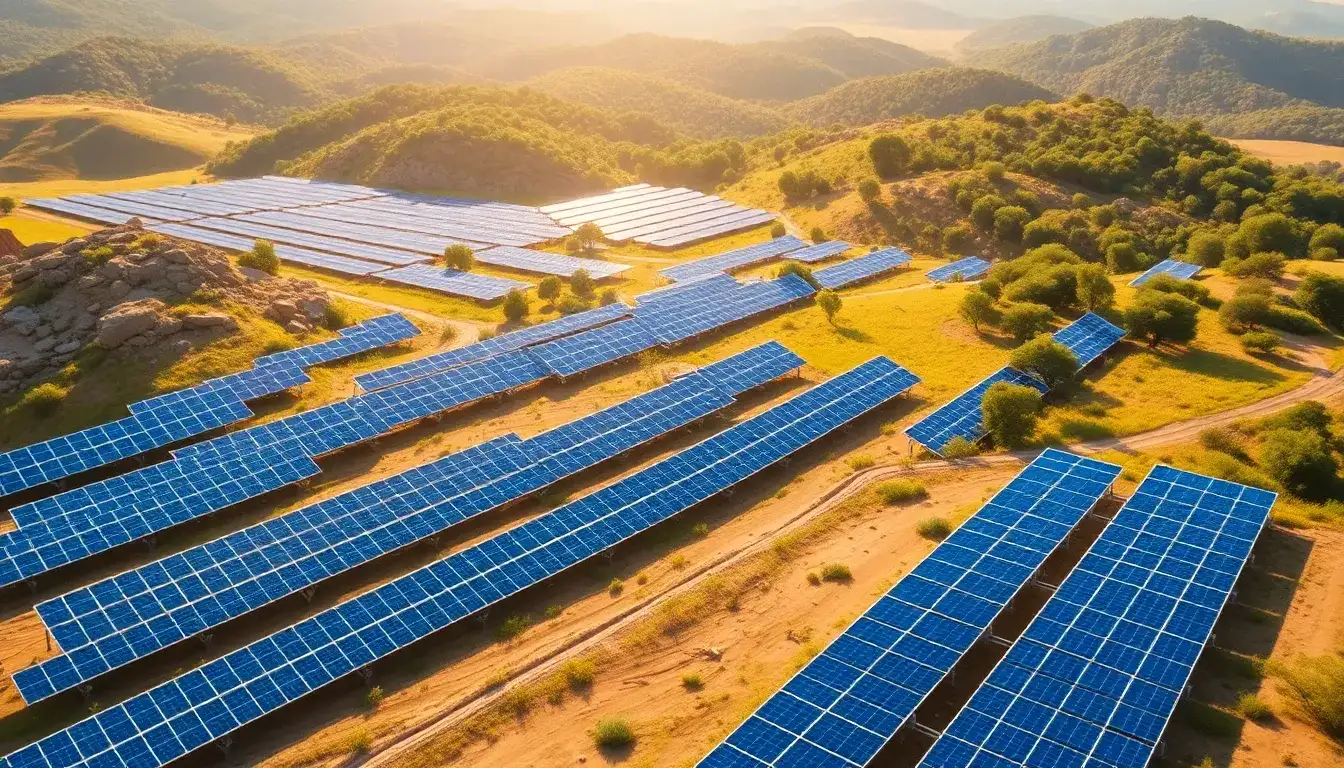
3D backtracking handles irregular terrain in solar plants by employing advanced algorithms that account for the complex three-dimensional topography where the solar trackers are installed. Unlike traditional backtracking, which primarily considers only the east-west slope to avoid inter-row shading, 3D backtracking incorporates the slopes and inclinations in multiple directions, including north-south and diagonal deviations. This comprehensive approach is crucial for minimizing shading caused by elevation changes, hills, and uneven ground—conditions that conventional 2D methods overlook and which can create corner and diagonal shadows that significantly reduce power output.
Key aspects of how 3D backtracking manages irregular terrain include:
- Topographical Adaptation: The algorithm integrates detailed terrain data to dynamically adjust the angle of each solar tracker in real time. By performing three-dimensional polygonal analyses, it calculates optimal panel tilts that prevent shading from neighboring rows on uneven surfaces.
- Shading Avoidance Across Multiple Directions: It prevents shadows not only between adjacent rows east-west but also tackles shading caused by slopes in north-south directions and installation deviations, which are common in mountainous or hilly sites.
- Maximizing Energy Yield Despite Minor Edge Shading: Instead of eliminating all shading at the cost of less sun exposure, 3D backtracking optimizes energy output by allowing minimal, less impactful shading while maintaining the best possible solar orientation.
- Handling High-Density Installations and Complex Layouts: In plants where panels are closely spaced or terrain irregularity is extreme, the 3D algorithm fine-tunes the positioning of each tracker, ensuring the configuration maximizes sunlight capture and limits energy losses due to shading.
In summary, 3D backtracking systems enhance solar plant performance on irregular terrain by using sophisticated 3D modeling and real-time control algorithms that adjust each tracker’s position according to the actual topography, significantly reducing shading and optimizing solar energy harvesting even on complex, undulating sites.
Original article by NenPower, If reposted, please credit the source: https://nenpower.com/blog/how-does-3d-backtracking-handle-irregular-terrain-in-solar-plants/

