

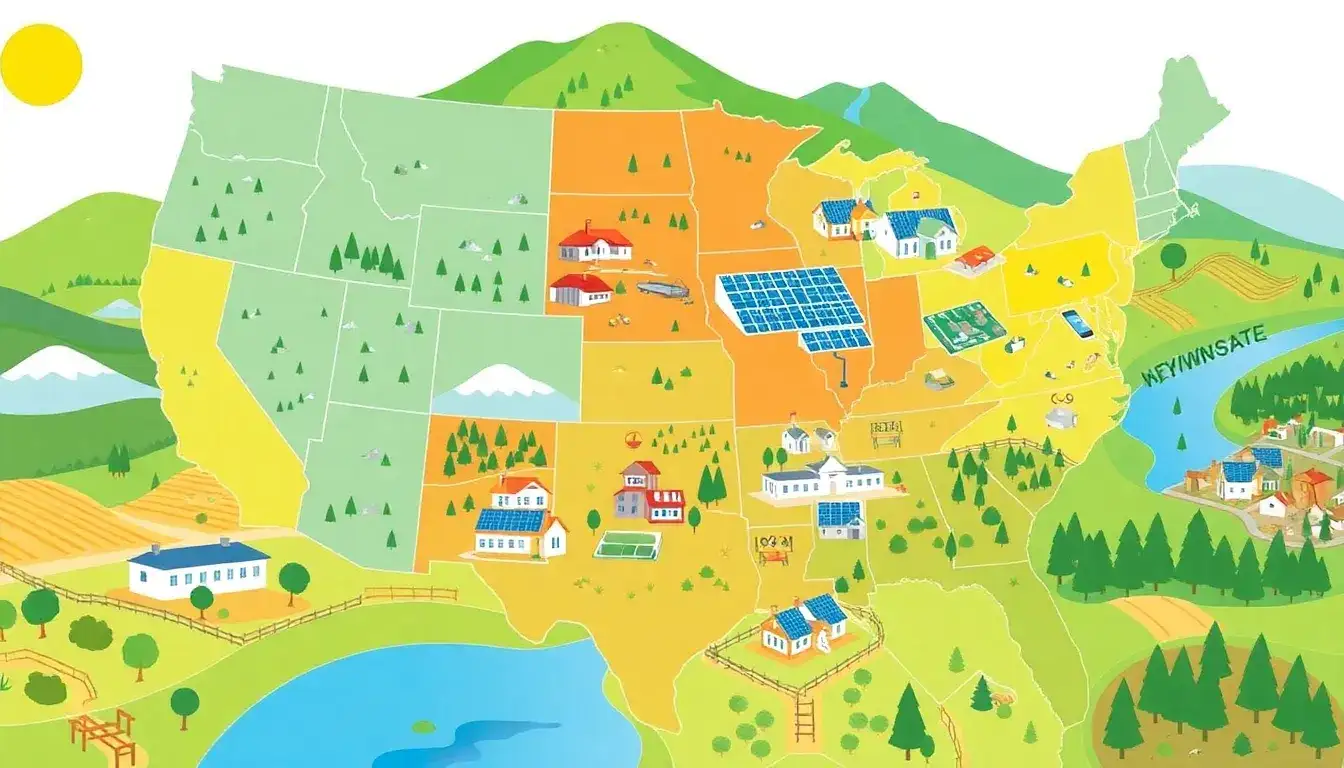
Zoning laws regarding solar energy development vary significantly between states due to differences in local regulations, environmental policies, and renewable energy goals. Here are some key aspects that highlight these differences:
Differences in Zoning Approaches
- Permitted Use: Zoning laws often classify solar installations as principal, accessory, or special uses. States like California and New York have specific frameworks that allow solar installations as accessory uses in residential areas, while others might require special permits.
- Zoning Districts: Some states, such as Texas, have zoning restrictions on protected wildlife habitats and preservation areas, whereas other states like Arizona might have more expansive areas designated for solar development.
- Regulatory Framework: The presence or absence of specific solar regulations in zoning codes affects development. States with clear guidelines (e.g., Florida with its model ordinances) facilitate easier installation processes compared to those without, where interpretations can be subjective and slow.
Regional Policies and Incentives
- State-Level Incentives: Some states offer robust incentives for solar energy development, such as tax credits or property value exemptions, influencing how zoning laws are applied locally.
- Environmental Considerations: Regions with environmental concerns may incorporate stricter zoning controls to balance solar development with conservation goals, such as in Vermont where aesthetic and environmental impacts are considered.
Tools and Resources
- Comprehensive Database: Organizations like NREL provide databases of local ordinances that can help compare solar zoning laws across states, aiding in targeted policy development.
- Model Ordinances: Guides from organizations such as Go Solar Texas and SolSmart offer template ordinances that municipalities can adapt to tailor their local regulations for solar energy, ensuring consistency and efficiency.
Overall, the variation in zoning laws reflects local priorities, environmental concerns, and the level of support for renewable energy development.
Original article by NenPower, If reposted, please credit the source: https://nenpower.com/blog/how-do-zoning-laws-differ-between-states-regarding-solar-energy-development/

