

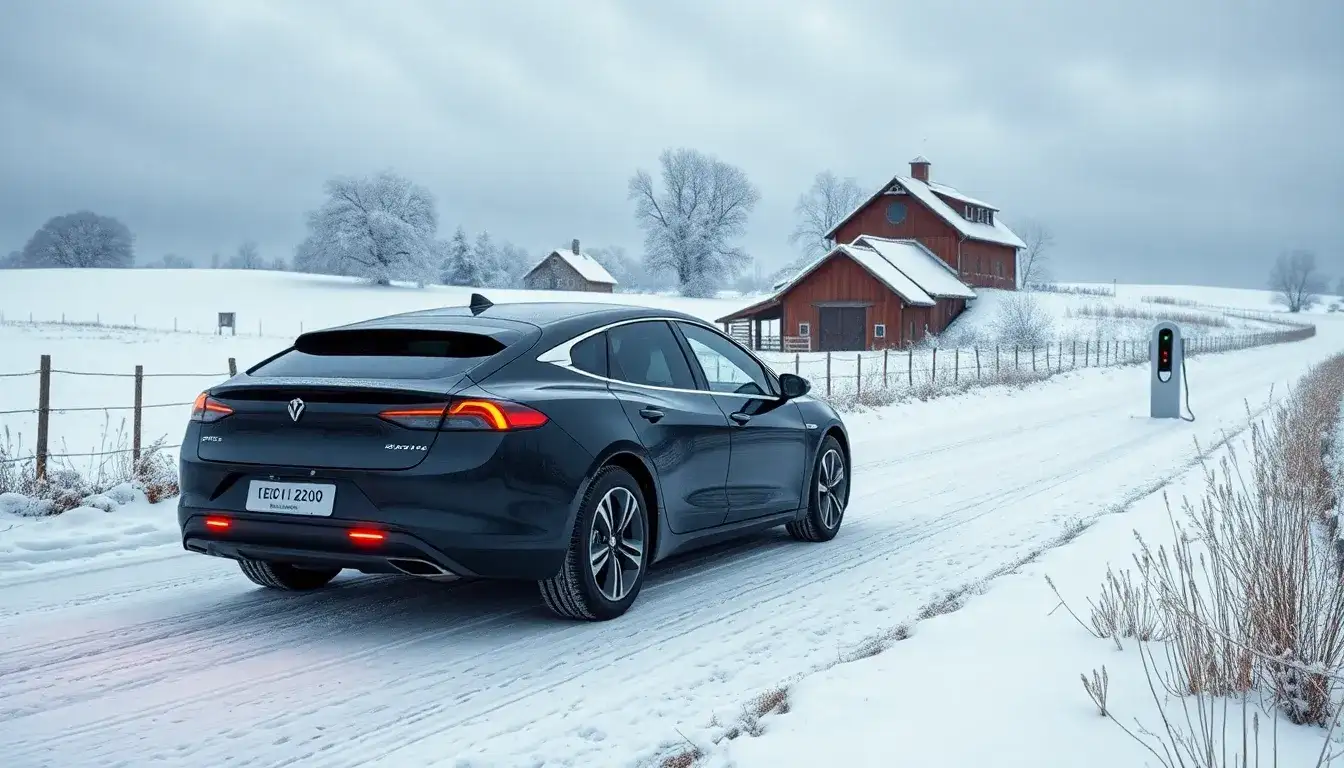
Winter conditions significantly impact electric vehicle (EV) performance in rural areas, primarily through reduced battery efficiency and range limitations. Here’s a breakdown of the key issues and contributing factors:
Range Reduction
- Cold-weather range loss: Freezing temperatures can reduce EV range by 25–41%, with an average estimated at ~20% (compared to ~15% efficiency loss in gasoline vehicles).
- Battery chemistry slowdown: Lower temperatures slow electrochemical reactions in lithium-ion batteries, decreasing energy output and regenerative braking efficiency.
Charging Challenges
- Increased charging demand: Reduced range requires more frequent charging, exacerbating infrastructure gaps in rural areas where stations are already sparse.
- Weather-exposed stations: Many rural chargers lack shelters, making charging in extreme cold uncomfortable and impractical.
Technological and Behavioral Factors
- Thermal management: While newer EVs use heat pumps and battery preconditioning to mitigate cold-weather losses, these features aren’t universal.
- Driver awareness: Rural residents often cite cold-weather performance as a top EV adoption concern, though similar issues affect gasoline vehicles.
These factors create a compounding challenge for rural EV adoption, where longer travel distances and limited charging infrastructure amplify cold-weather drawbacks.
Original article by NenPower, If reposted, please credit the source: https://nenpower.com/blog/how-do-winter-conditions-impact-ev-performance-in-rural-areas/

