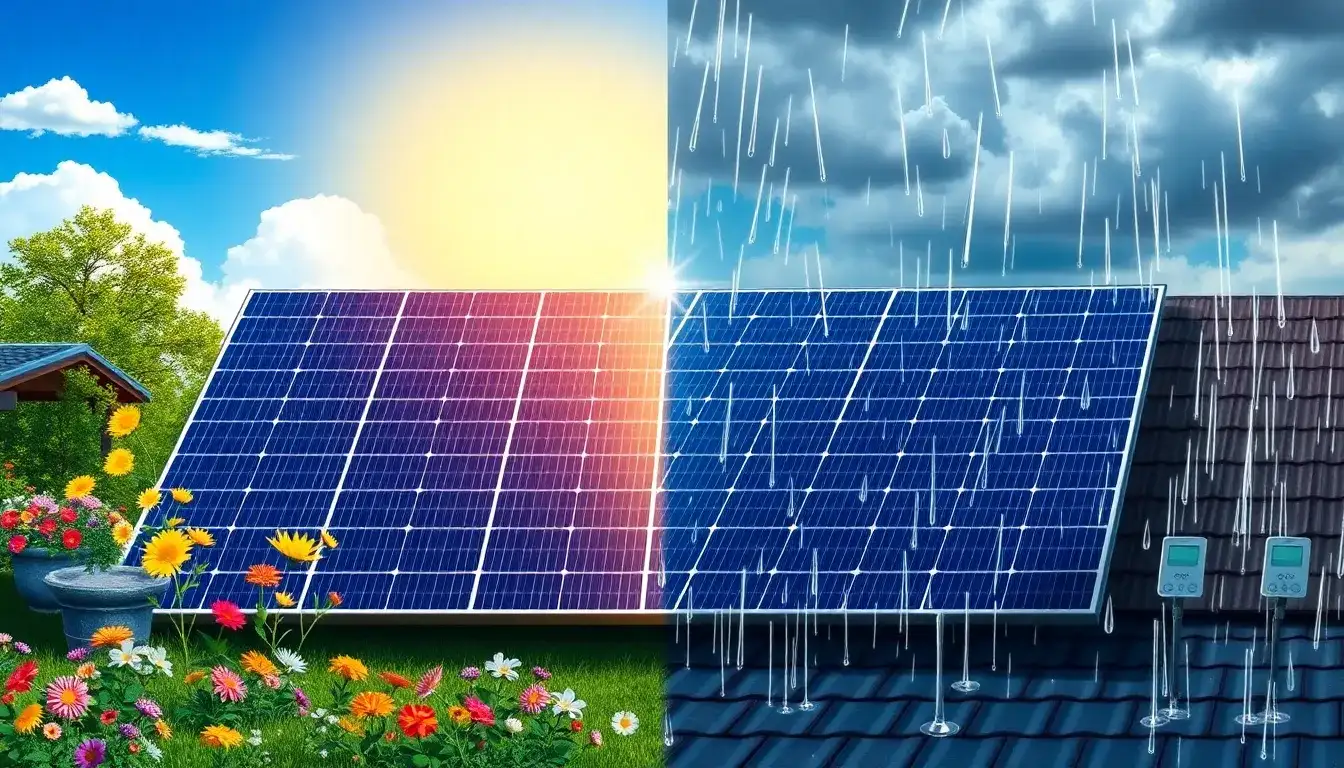
Weather conditions significantly impact the performance of bifacial solar panels, which capture sunlight from both the front and back sides. Here are some key ways in which different weather conditions can affect their performance:
Impact of Weather Conditions on Bifacial Solar Panels
1. Sunlight and Heat
- Optimal Conditions: Sunny days are ideal for maximum energy production. However, extreme heat can reduce panel efficiency due to overheating.
- Mitigation: Installing panels at an angle enhances air circulation, reducing efficiency losses.
2. Cloud Cover and Overcast Skies
- Effect: Cloudy conditions lower solar output, but bifacial panels can capture indirect sunlight from both sides, potentially mitigating this impact.
- Solution: Panels designed for low-light conditions can help capture diffused sunlight more effectively.
3. Rainfall
- Impact: Rain can clean panels, improving efficiency. However, prolonged cloudy and rainy weather reduces overall solar output.
- Recommendation: Hydrophobic coatings can maintain cleanliness during rainy seasons.
4. Snow and Ice
- Challenge: Accumulation on panels obstructs sunlight. The rear side of bifacial panels can be challenging to clean.
- Solutions: Installing panels at steeper angles helps snow slide off easily. Coatings that repel snow and ice can also be beneficial. Bifacial panels perform better in snowy conditions compared to monofacial panels, as they benefit from reflected light off snow, potentially cutting snow losses significantly.
5. Wind
- Impact: Moderate winds cool panels, improving efficiency, but strong winds can cause damage.
- Protection: Durable mounting systems and selecting wind-resistant panels are crucial in windy areas.
6. Temperature Variability
- Effect: Extreme temperatures affect panel performance. Bifacial panels operate efficiently in cold temperatures but can be less efficient in extreme heat.
- Strategy: Selecting panels with a low temperature coefficient can help maintain performance across various temperatures.
7. Hail and Extreme Weather
- Risk: Physical damage from hail is possible.
- Recommendation: Panels with high durability ratings and protective measures are recommended in hail-prone areas.
Conclusion
Weather conditions present both challenges and opportunities for bifacial solar panels. Understanding these impacts and implementing effective mitigation strategies can significantly enhance the efficiency and longevity of these systems. Regular maintenance, appropriate installation techniques, and the selection of suitable panels for local weather conditions are essential for optimizing performance.
Original article by NenPower, If reposted, please credit the source: https://nenpower.com/blog/how-do-weather-conditions-impact-the-performance-of-bifacial-solar-panels/