

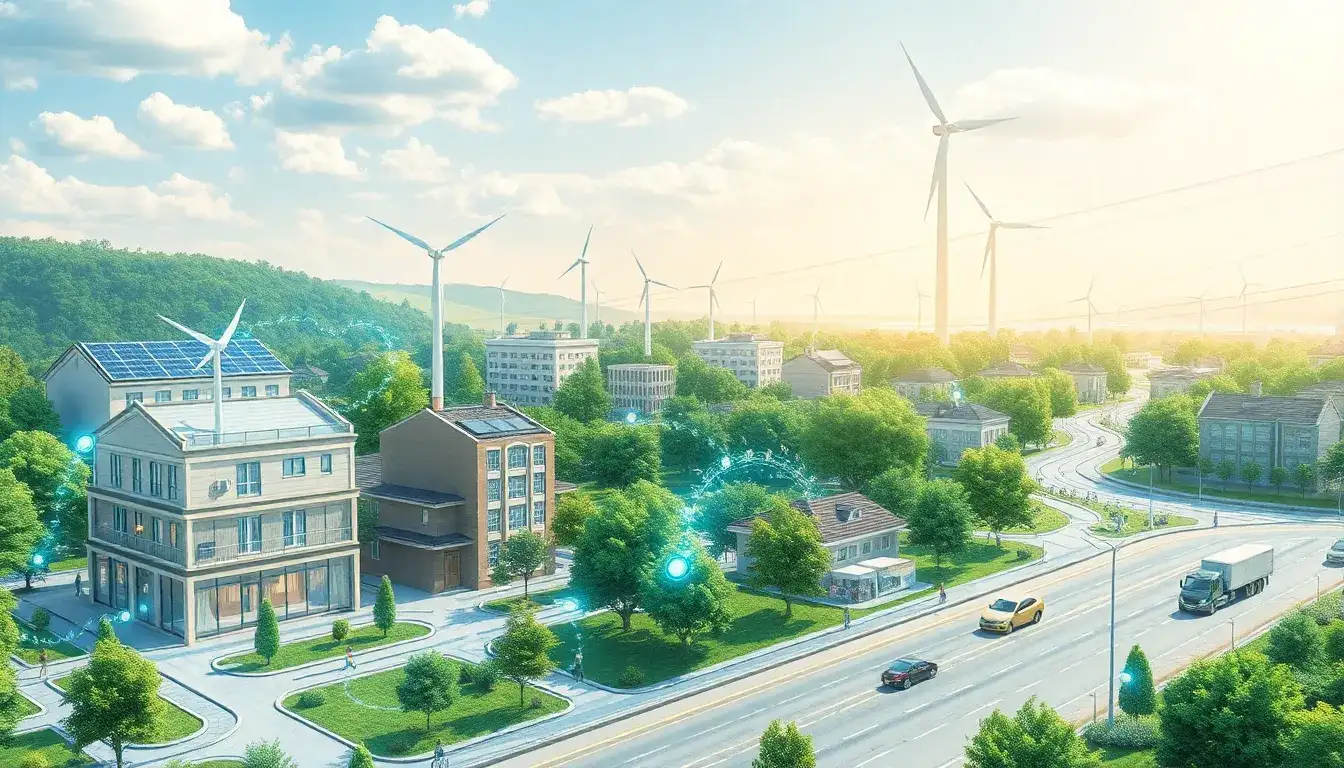
Virtual Power Plants (VPPs) significantly contribute to a cleaner energy grid through several mechanisms:
Key Contributions of VPPs
- Decarbonization and Reduced Emissions
- Decreased Reliance on Fossil Fuels: VPPs help reduce the grid’s reliance on fossil fuels by using distributed renewable energy resources, such as rooftop solar and energy storage systems.
- Efficiency and Optimization: By optimizing energy production and consumption in real-time, VPPs ensure that renewable energy sources are utilized more efficiently, leading to reduced CO2 emissions.
- Improved Grid Flexibility and Resilience
- Demand Management: VPPs manage energy demand by controlling devices like HVAC systems and smart home appliances during peak usage periods. This flexibility prevents the need for high-polluting peaker plants.
- Rapid Deployment: VPPs can be rapidly deployed, providing resilience during grid outages and extreme weather events without the need for extensive infrastructure.
- Economic and Social Benefits
- Cost Savings: Participants in VPPs receive incentives for their contributions, and the broader community benefits from reduced energy costs due to avoided or deferred infrastructure investments.
- Equity: VPPs democratize energy participation by valuing every kilowatt-hour equally, regardless of the participant’s economic background, thus promoting equity.
- Supporting National Climate Targets
VPPs play a crucial role in aligning energy systems with national climate targets by facilitating a transition to 100% carbon-free electricity. This is supported by significant investments in clean energy policies.
Overall, VPPs are pivotal in transforming the energy grid into a more sustainable, efficient, and equitable system.
Original article by NenPower, If reposted, please credit the source: https://nenpower.com/blog/how-do-vpps-contribute-to-a-cleaner-energy-grid/

