

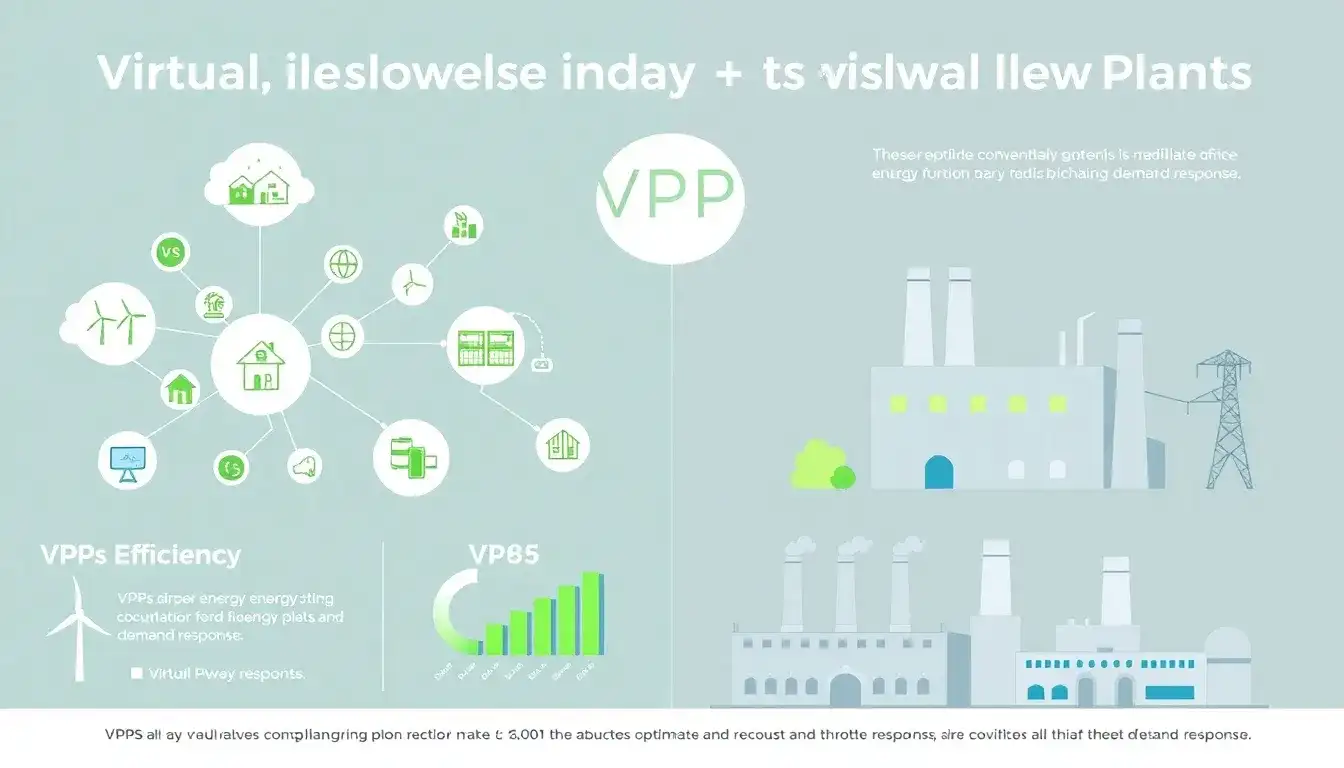
When comparing Virtual Power Plants (VPPs) to traditional power plants in terms of efficiency, several key aspects come into play:
Efficiency Comparison
- Operational Efficiency:
- Traditional Power Plants: These plants are centrally located and generate electricity using a single fuel source, such as coal or nuclear. They offer consistent and stable electricity supply but are often less efficient due to significant transmission losses and lower utilization rates of their full capacity.
- Virtual Power Plants (VPPs): VPPs are networks of distributed energy resources like solar panels, wind turbines, and battery storage systems. They improve efficiency by optimizing energy usage locally, reducing transmission losses, and offering flexibility in managing supply and demand.
- Resource Utilization:
- Traditional Power Plants: They often operate at partial capacity due to fluctuating demand, leading to inefficiencies. Their central location can also result in higher transmission costs and energy losses.
- VPPs: By aggregating and coordinating various distributed energy resources, VPPs can optimize resource utilization. This allows for better grid stability and the ability to adapt to changing demand without the need for extensive infrastructure.
- Environmental Impact:
- Traditional Power Plants: These are often high emitters of greenhouse gases, especially those powered by fossil fuels. Their environmental impact is significant, contributing to climate change.
- VPPs: They promote the use of renewable energy sources, reducing reliance on fossil fuels and consequently lowering greenhouse gas emissions. This makes them more environmentally friendly and sustainable.
- Cost Efficiency:
- Traditional Power Plants: Building new traditional power plants is expensive and time-consuming, requiring significant upfront investment.
- VPPs: Implementing VPPs is often less costly compared to traditional plants. The distributed nature of VPPs allows for more flexible and scalable deployments, reducing the need for new infrastructure.
- Reliability:
- Traditional Power Plants: Generally considered more reliable due to their centralized control and consistent power output.
- VPPs: While traditionally seen as less reliable due to reliance on weather-dependent resources, advancements in technology have improved VPP reliability and efficiency.
In summary, while traditional power plants offer consistent power supply, VPPs are more efficient in terms of operational flexibility, resource utilization, and environmental sustainability. However, traditional plants are often considered more reliable in the short term. As technology advances, VPPs are increasingly viable and promising solutions for sustainable energy management.
Original article by NenPower, If reposted, please credit the source: https://nenpower.com/blog/how-do-vpps-compare-to-traditional-power-plants-in-terms-of-efficiency/

