

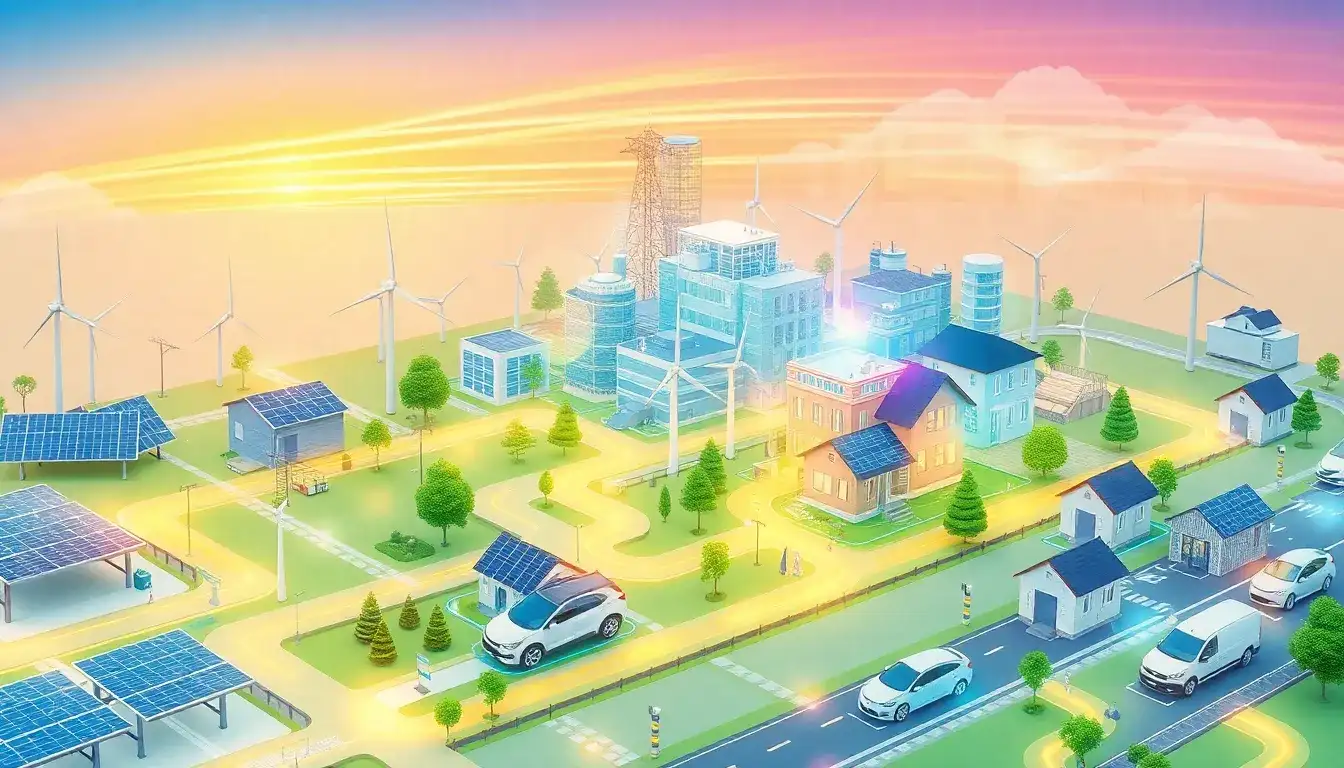
How Virtual Power Plants (VPPs) Reduce Peak Demand
Virtual Power Plants (VPPs) are innovative solutions that aggregate, coordinate, and remotely control distributed energy resources (DERs), such as smart appliances, solar systems with batteries, electric vehicles, and commercial loads. They play a crucial role in reducing peak energy demand by optimizing the use of these resources to balance electricity supply and demand in real-time. Here’s how VPPs achieve this:
1. Shifting and Reducing Demand
VPPs can remotely adjust the operation of DERs like smart thermostats, water heaters, and HVAC systems to reduce electricity consumption during peak hours. By shifting demand to off-peak times or reducing it altogether, VPPs help alleviate strain on the grid and defer the need for expensive “peaker plants” that typically operate on fossil fuels.
2. Utilizing Distributed Energy Resources
When electricity is abundant, VPPs can charge batteries or adjust EV charging schedules to increase demand, thus absorbing excess renewable energy generated by solar or wind power. Conversely, during peak periods, these stored energies can be used to supply the grid, further reducing reliance on traditional power sources.
3. Grid Services and Flexibility
Advanced VPPs not only reduce demand but can also export energy back to the grid when needed. This bi-directional capability allows for more efficient management of peak demand by drawing from local resources to meet regional energy needs. It enhances grid flexibility and resilience by providing immediate responses to changes in energy demand.
4. Economic Incentives
VPP participants often receive economic benefits such as upfront incentives or reduced electricity rates for their contributions to grid stability. This encourages more consumers to enroll their DERs in VPP programs, increasing the overall capacity for peak demand reduction.
5. Avoiding Peaker Plants
By efficiently managing peak demand, VPPs reduce the need for peaker plants, which are expensive and typically burn fossil fuels, contributing to greenhouse gas emissions. Lowering peak demand also reduces electricity bills for consumers, as it avoids the cost of constructing new peaker plants and related infrastructure.
Overall, VPPs offer a cost-effective, efficient, and environmentally friendly solution to managing peak energy demand, making them a critical component in the transition to a cleaner and more resilient energy grid.
Original article by NenPower, If reposted, please credit the source: https://nenpower.com/blog/how-do-virtual-power-plants-reduce-peak-demand/

