

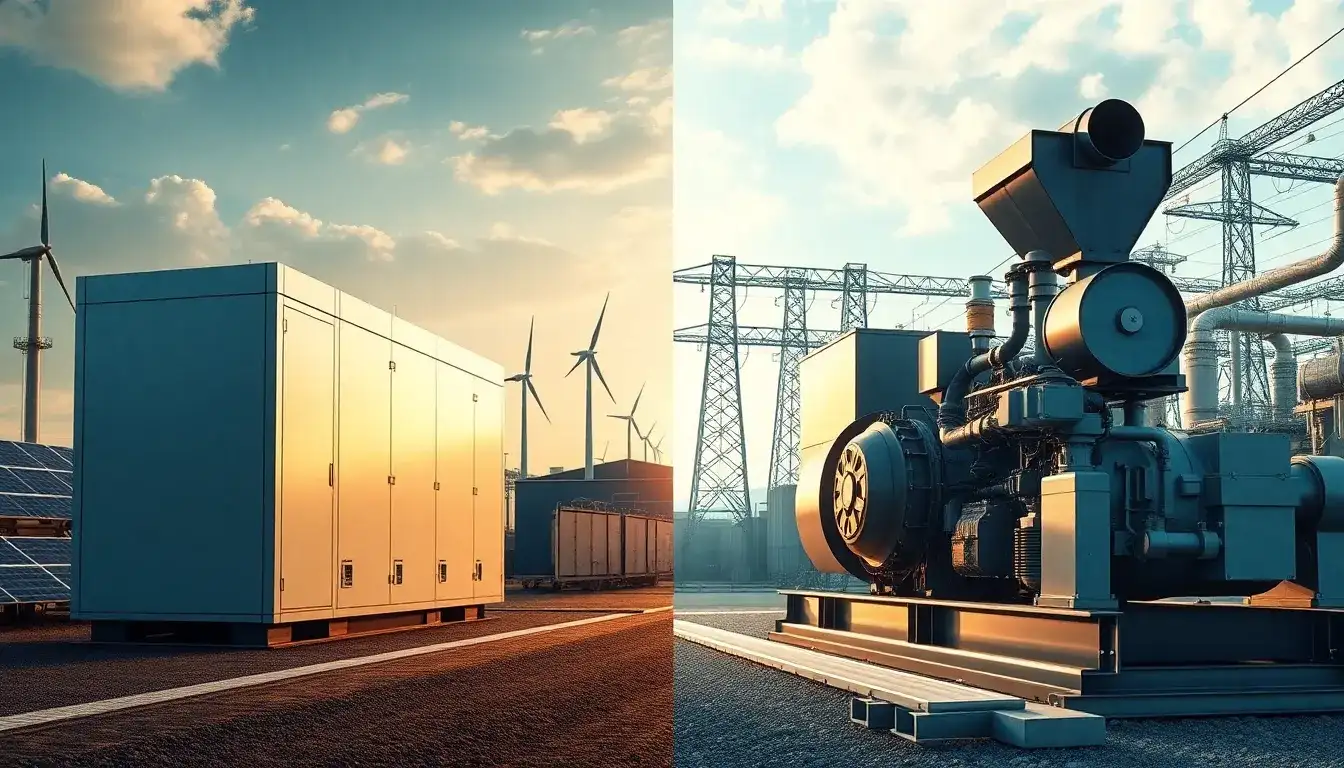
Utility-scale energy storage systems and traditional generators differ significantly in start-up time, with storage systems offering near-instantaneous response capabilities. While specific start-up time metrics are not detailed in the provided sources, battery energy storage systems (BESS) inherently operate without the mechanical warm-up or fuel combustion delays associated with traditional generators like gas peakers or coal plants. Instead, BESS can discharge stored energy into the grid immediately upon demand.
Key distinctions:
- Energy storage: Provide sub-second to second-level response times, enabling rapid grid stabilization and load balancing.
- Traditional generators: Require minutes to hours for start-up, depending on the technology (e.g., gas turbines may take 5–30 minutes, while coal plants can take hours).
The advantage in start-up time positions BESS as critical for managing short-duration grid fluctuations and integrating variable renewable energy sources like solar and wind. However, projects involving hydrogen-based storage systems, such as Energy Vault’s 48-hour duration solution, may involve longer start-up cycles due to energy conversion processes, though these remain distinct from conventional generators.
Industry-standard knowledge about generator start-up times (not explicitly covered in provided sources, but widely documented in energy sector literature).
Note: For precise start-up time comparisons, up-to-date technical specifications from specific generator models would be required.
Original article by NenPower, If reposted, please credit the source: https://nenpower.com/blog/how-do-utility-scale-energy-storage-systems-compare-to-traditional-generators-in-terms-of-start-up-time/

