

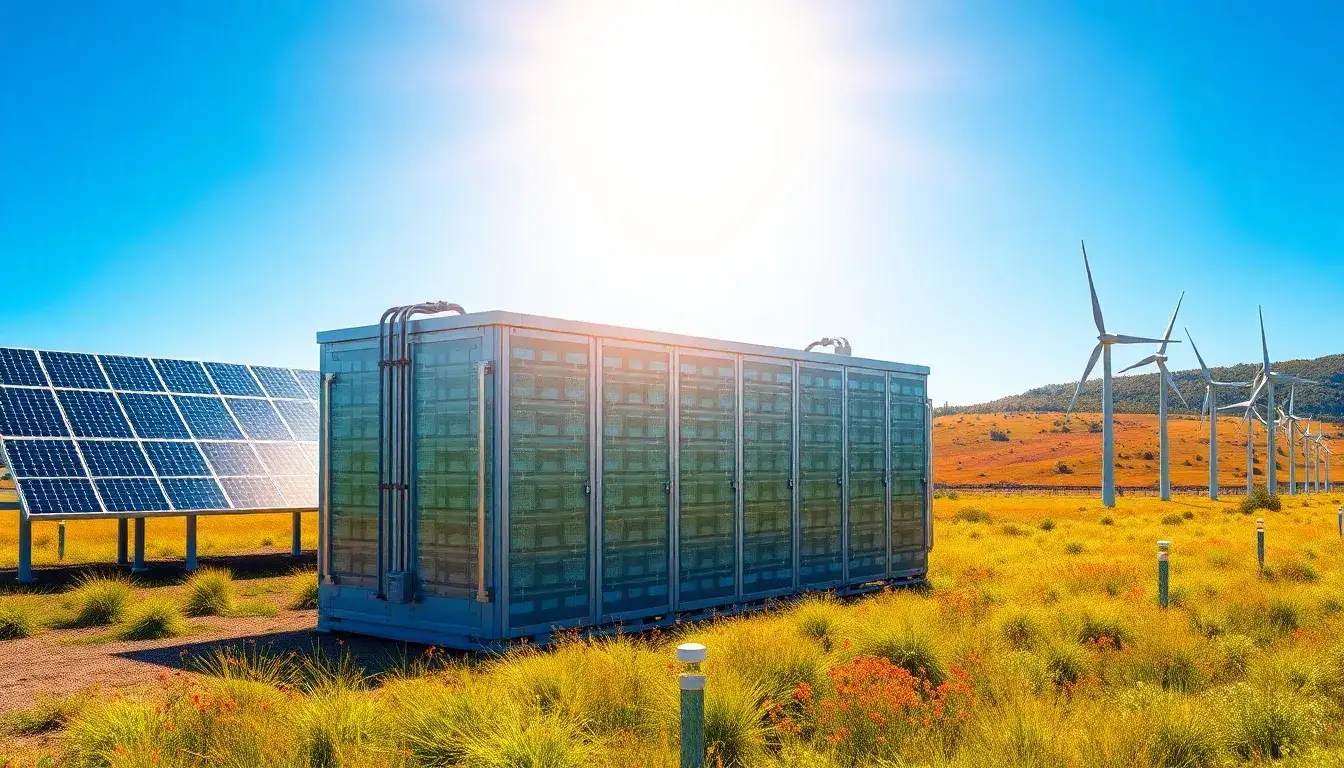
Utility-scale batteries play a pivotal role in supporting the integration of solar PV and wind generators into the energy grid by addressing several key challenges associated with variable renewable energy sources. Here are some of the ways utility-scale batteries support these integrations:
Key Functions of Utility-Scale Batteries
- Energy Storage and Release: Utility-scale batteries can store excess energy generated by solar PV and wind generators during periods of low demand. This stored energy can then be released when it is needed, smoothing out the power output and ensuring a consistent supply of electricity.
- Capacity Firming: By storing energy during periods of high production, batteries help stabilize the grid by firming the capacity of variable renewable sources. This ensures that the power output is consistent and reliable, even when solar or wind conditions change.
- Power Output Smoothing: Batteries can absorb excess energy during periods of high production, thereby reducing the strain on the grid. Conversely, they can release energy during periods of low production, ensuring that the grid remains stable and that power output remains consistent.
- Ramp Rate Control: Utility-scale batteries can control ramp rates by absorbing or releasing energy quickly. This helps manage sudden changes in power output from solar or wind sources, ensuring grid stability during times of rapid output changes.
- Frequency Regulation: By quickly adjusting power output, batteries help maintain grid frequency within a stable range. This is crucial for maintaining the reliability and stability of the electrical grid.
- Black Start Services: In the event of a grid failure, batteries can facilitate a “black start,” providing the initial power needed to restart other power generation units and restore grid operations.
- Investment Deferral: Utility-scale batteries can defer investments in peak generation and grid reinforcement. By storing energy during off-peak periods and releasing it during peak demand, they reduce the need for additional peak capacity and infrastructure upgrades.
Benefits for Renewable Generators
- Reduced Renewable Curtailment: By storing excess energy from solar and wind, batteries help reduce the amount of renewable energy that is curtailed when it cannot be immediately used by the grid.
- Enhanced Renewable Capacity: Batteries help optimize the use of renewable energy sources by providing consistent power output, thereby increasing the viable capacity of solar and wind installations.
Conclusion
Utility-scale batteries are essential for effectively integrating solar PV and wind generators into the electrical grid. They address the intermittency challenges associated with these renewable sources, providing a more stable, reliable, and efficient energy supply. By offering a range of services from energy storage to grid stability, utility-scale batteries help ensure that renewable energy contributes more effectively to meeting global energy demands.
Original article by NenPower, If reposted, please credit the source: https://nenpower.com/blog/how-do-utility-scale-batteries-support-the-integration-of-solar-pv-and-wind-generators/

