

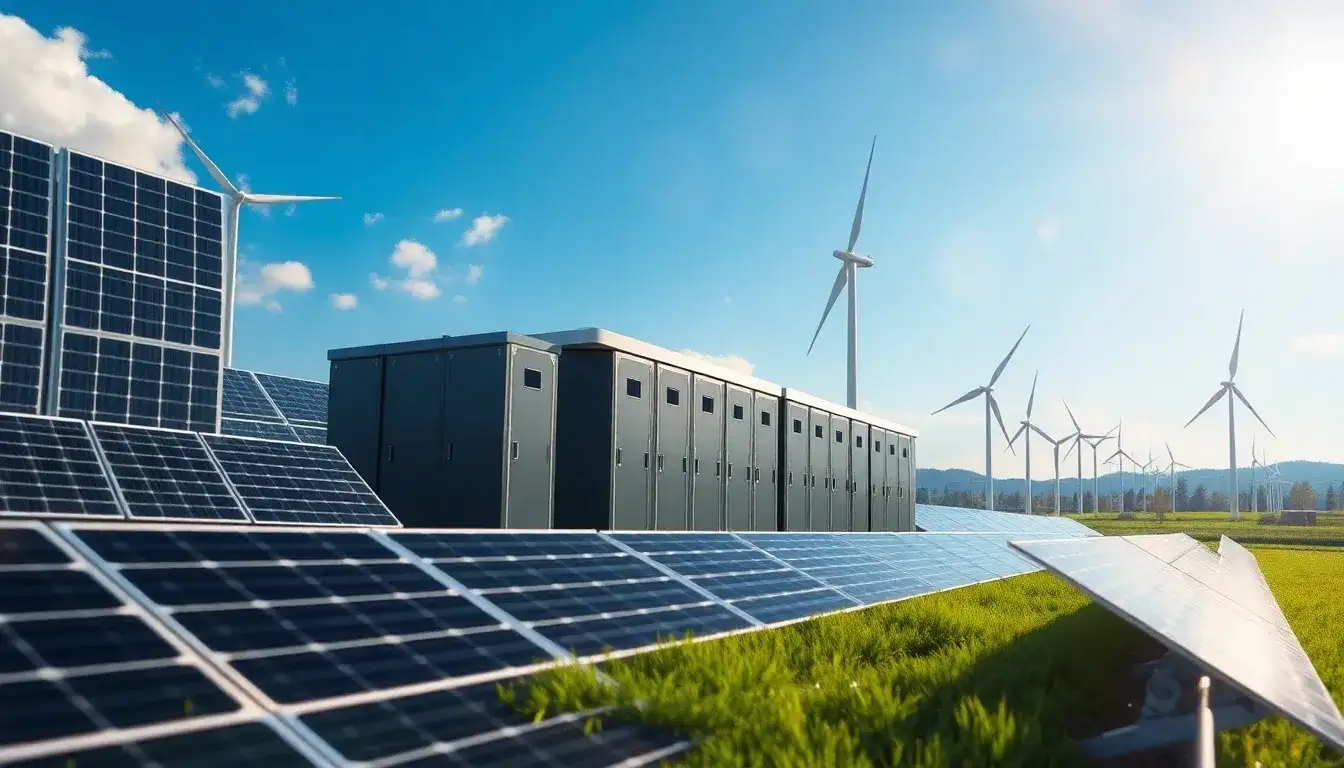
Utility-scale batteries play a crucial role in supporting the integration of renewable energy into power grids by addressing the variability and intermittency of sources like wind and solar. Their key contributions include:
- Energy Storage and Time-Shifting: These large battery systems store excess electricity generated during periods of high renewable output (e.g., sunny or windy times) and release it when generation is low or demand is high. This capacity shifting smooths out renewable energy supply, allowing the grid to utilize more clean energy without waste.
- Capacity Firming and Output Smoothing: Batteries help “firm” the capacity of variable renewable energy (VRE) by delivering a steadier, more predictable power output. They smooth abrupt fluctuations in generation, improving grid reliability and easing grid operator challenges.
- Grid Services: Utility-scale batteries provide essential ancillary services such as frequency response, regulation reserves, flexible ramping (controlling how fast power output changes), and black start capabilities (helping restart power grids after outages). These services maintain grid stability and power quality as renewable shares grow.
- Deferring Infrastructure Investments: By absorbing excess renewable generation and supporting peak demand, batteries reduce the need to invest immediately in costly grid upgrades or peak power plants. This deferral saves capital and enables a more gradual grid transition.
- Supporting Isolated and Off-Grid Areas: When paired with renewables in mini-grids or isolated communities, utility-scale batteries reduce reliance on expensive and polluting diesel generators by providing reliable, cheaper electricity from renewables.
- Balancing Supply and Demand: They help balance the electricity supply with consumer demand, ensuring a stable and reliable power system even as renewable generation fluctuates.
In summary, utility-scale battery storage systems enable higher penetration of renewable energy by storing surplus power, smoothing output, enhancing grid stability, reducing curtailment of renewables, postponing infrastructure upgrades, and supporting remote or off-grid electrification. This makes the energy system more flexible, reliable, and sustainable as it transitions towards a clean energy future.
Original article by NenPower, If reposted, please credit the source: https://nenpower.com/blog/how-do-utility-scale-batteries-support-the-integration-of-renewable-energy/

