

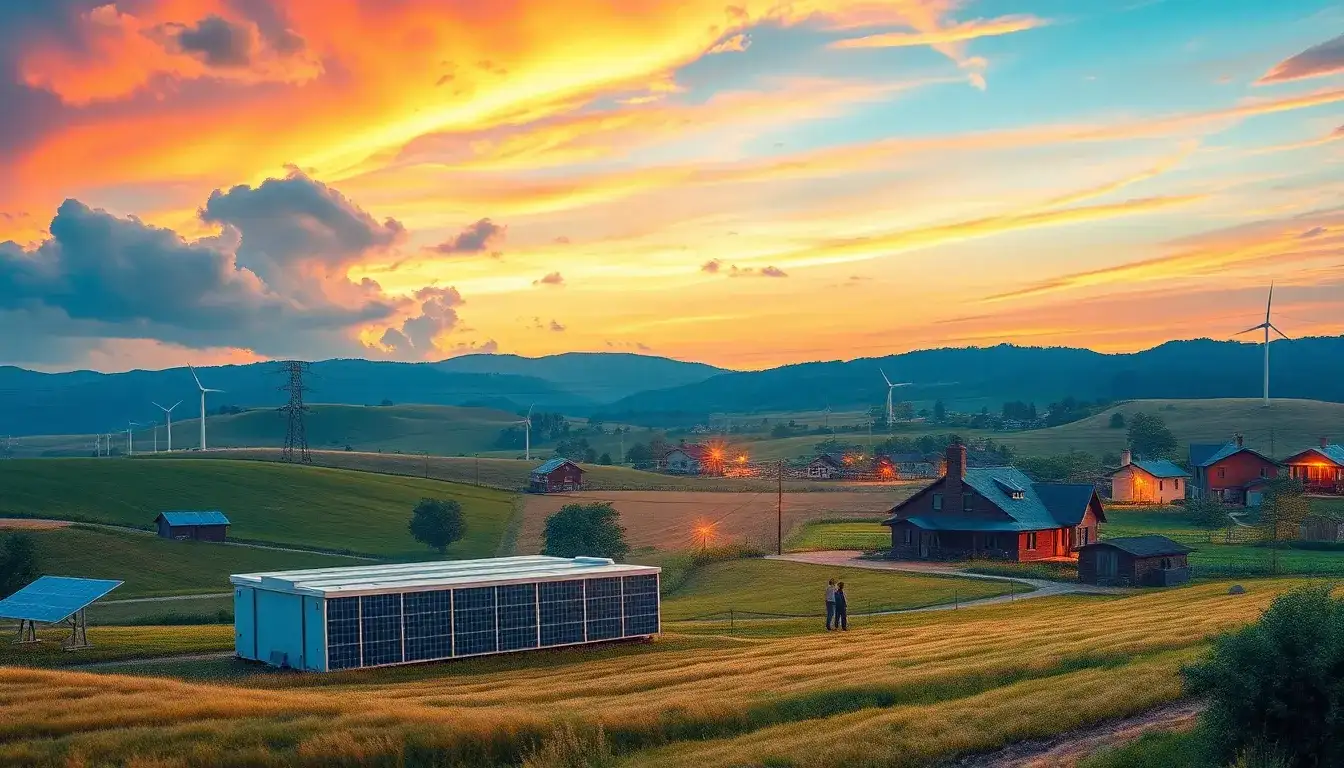
Key Benefits of Utility-Scale Batteries for Grid Resilience in Rural Areas
- Mitigating Power Outages: Utility-scale battery energy storage systems (BESS) can supply power during outages, ensuring that critical infrastructure remains operational. This capability is especially important in rural areas where response times for repair crews can be longer.
- Peak Capacity Management: Rural areas often experience peak demand during certain times of the day. Utility-scale batteries can store excess energy from renewable sources during low-demand periods and release it during peak times, reducing strain on the grid and enhancing stability.
- Enhancing Renewable Energy Integration: In rural settings, renewable energy sources like solar and wind can be intermittent. Utility-scale batteries help mitigate this intermittency by storing excess energy generated during peak production periods, allowing for a consistent power supply when renewable energy output is low.
- Reducing Reliance on Diesel Generators: For isolated communities, utility-scale batteries can reduce the dependency on diesel generators, which are often used as backup power sources. This shift can help lower emissions and operational costs over time.
- Supporting Grid Infrastructure: By providing an additional power source, utility-scale batteries can help relieve pressure on the grid and support the infrastructure during extreme weather events or other disruptions, thereby improving overall grid resilience in rural areas.
In summary, utility-scale batteries improve grid resilience in rural areas by providing reliable backup power, managing peak demand, integrating renewable energy sources, reducing reliance on less efficient backup systems, and supporting grid infrastructure stability.
Original article by NenPower, If reposted, please credit the source: https://nenpower.com/blog/how-do-utility-scale-batteries-improve-grid-resilience-in-rural-areas/

