

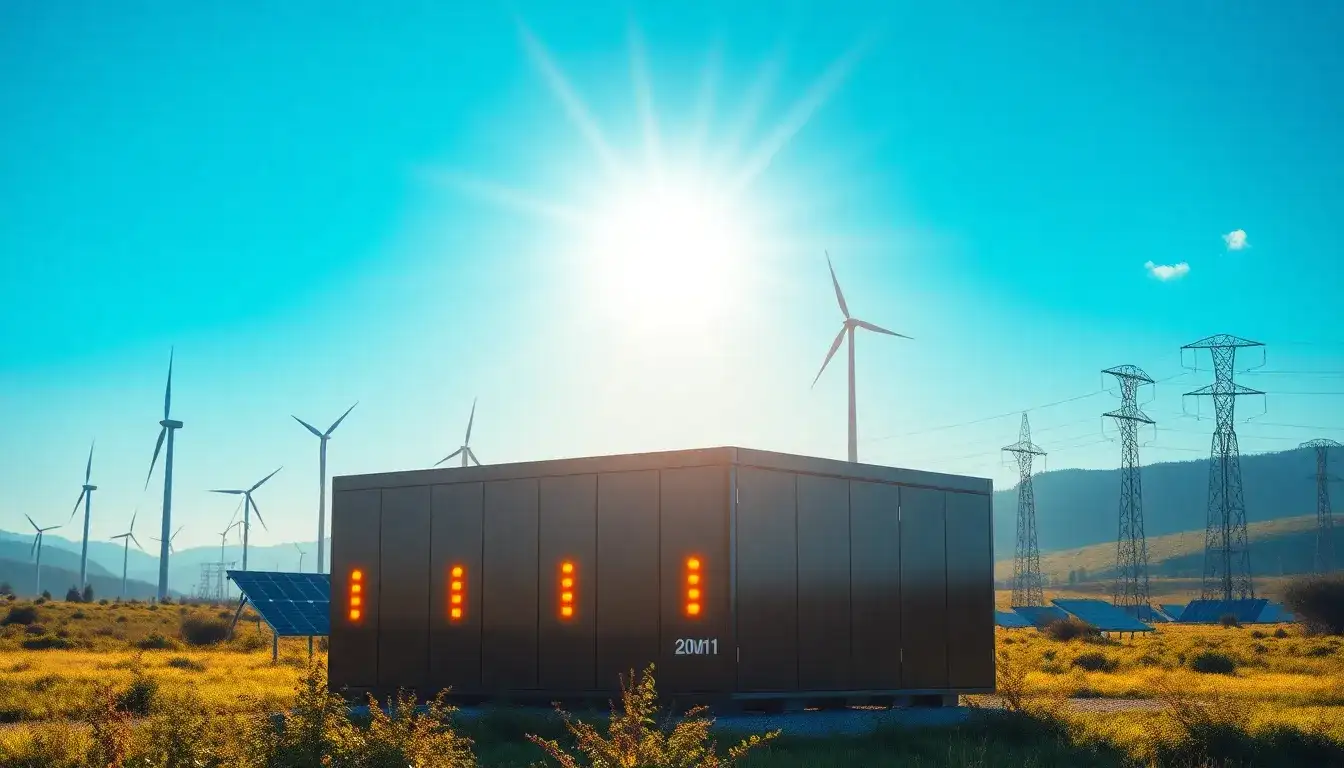
Utility-scale battery storage systems significantly enhance renewable energy integration through multiple mechanisms:
Grid Stability and Energy Balancing
Battery systems provide frequency regulation and ramp rate control, maintaining grid stability as variable renewable energy (VRE) sources like solar and wind fluctuate. They balance supply and demand by storing excess energy during periods of high generation and releasing it during peak demand.
Capacity Firming and Output Smoothing
By firming renewable energy capacity, batteries smooth intermittent power output, ensuring consistent delivery even when sunlight or wind diminishes. This reduces reliance on fossil-fuel backup and mitigates curtailment of renewable generation.
Infrastructure Cost Reduction
Batteries defer costly grid upgrades by alleviating transmission congestion and managing peak loads. They also replace diesel generators in off-grid communities, lowering energy costs and emissions.
Renewable Energy Utilization
Storing surplus renewable energy enables maximized utilization of VRE, shifting power to high-demand periods and reducing waste. This capability is critical for achieving higher renewable penetration in energy grids.
Ancillary Grid Services
Battery systems provide black-start capabilities and flexible ramping to restore grid operations post-outages and adapt to rapid changes in generation or demand. These services ensure reliable grid operation alongside increasing renewable integration.
Original article by NenPower, If reposted, please credit the source: https://nenpower.com/blog/how-do-utility-scale-batteries-impact-renewable-energy-integration/

