

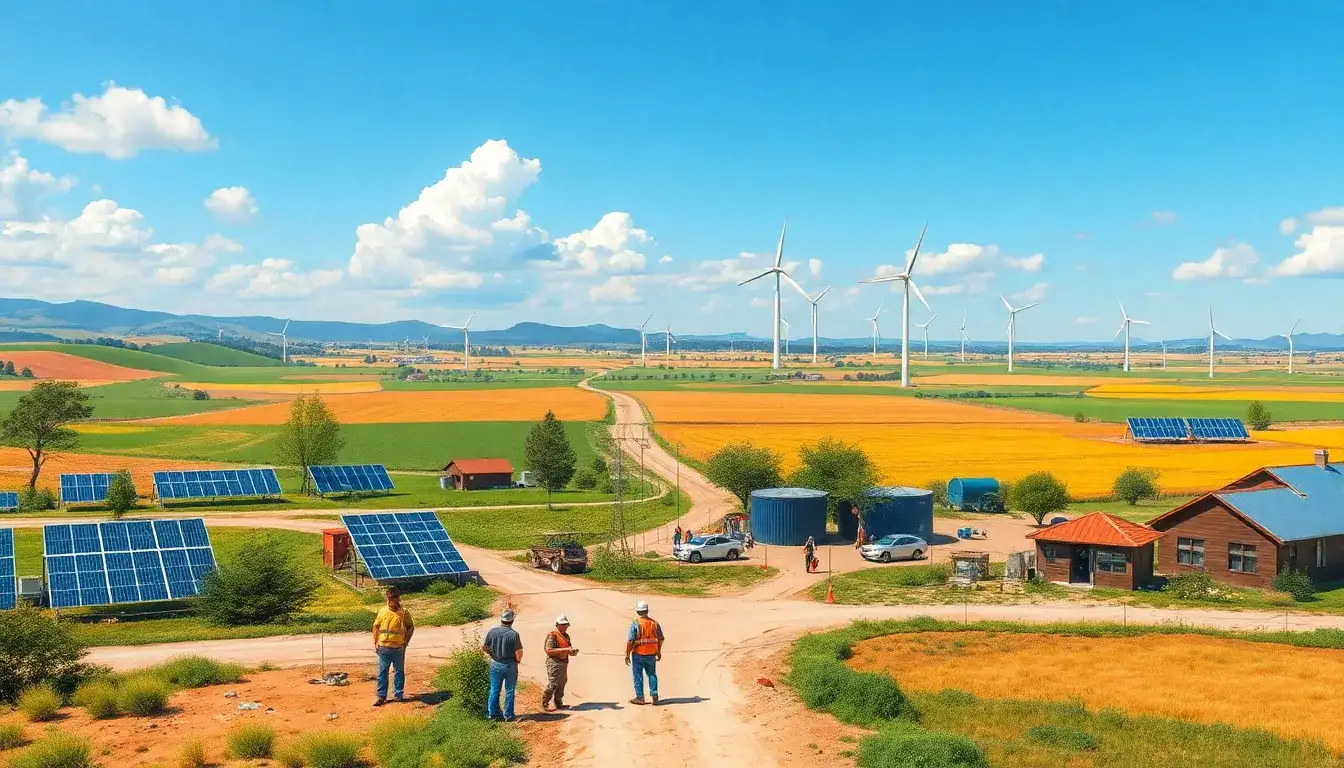
Utility-scale batteries create new job opportunities in rural communities through several key pathways:
- Job Creation in Development, Construction, and Maintenance: Utility-scale battery projects require a range of skilled and semi-skilled jobs, including software coding to manage battery systems, manufacturing components, on-site installation, and ongoing maintenance. While some jobs, such as software development, may be located remotely, many installation and maintenance roles are local to the project sites, directly benefiting rural communities where these facilities are often sited.
- Attracting Investment and Increasing Local Revenues: The presence of utility-scale battery projects generates significant tax revenues and land lease payments for rural areas, which can fund public services and infrastructure. For example, energy storage projects in Texas contribute billions in tax revenue and provide substantial payments to landowners and local governments, bolstering rural economies.
- Enabling Faster and More Modular Infrastructure Deployment: The modular nature of battery systems allows relatively quick construction compared to traditional energy infrastructure, leading to more rapid job creation and economic activity. This ease of deployment encourages developers to enter rural markets where land availability is high and regulatory environments are favorable, creating new employment opportunities in those regions.
- Supporting Growth of the Clean Energy Sector Locally: As battery storage complements renewable energy sources like solar and wind — which also see significant deployment in rural areas — these projects collectively stimulate local clean energy industries. The growth of these industries supports jobs not only in battery technology but also in manufacturing, research and development, and other energy-related services.
- Strengthening Local Economies Through Cost Savings and Grid Reliability: Beyond direct job creation, utility-scale batteries help reduce electricity costs and improve grid reliability, which benefits rural businesses and residents economically. These improvements help sustain vibrant local economies, indirectly supporting jobs across various sectors.
In summary, utility-scale battery storage projects foster rural job opportunities by creating direct employment in construction, operation, and maintenance; generating local government revenues; attracting clean energy investments; and supporting broader economic resilience in rural communities.
Original article by NenPower, If reposted, please credit the source: https://nenpower.com/blog/how-do-utility-scale-batteries-create-new-job-opportunities-in-rural-communities/

