

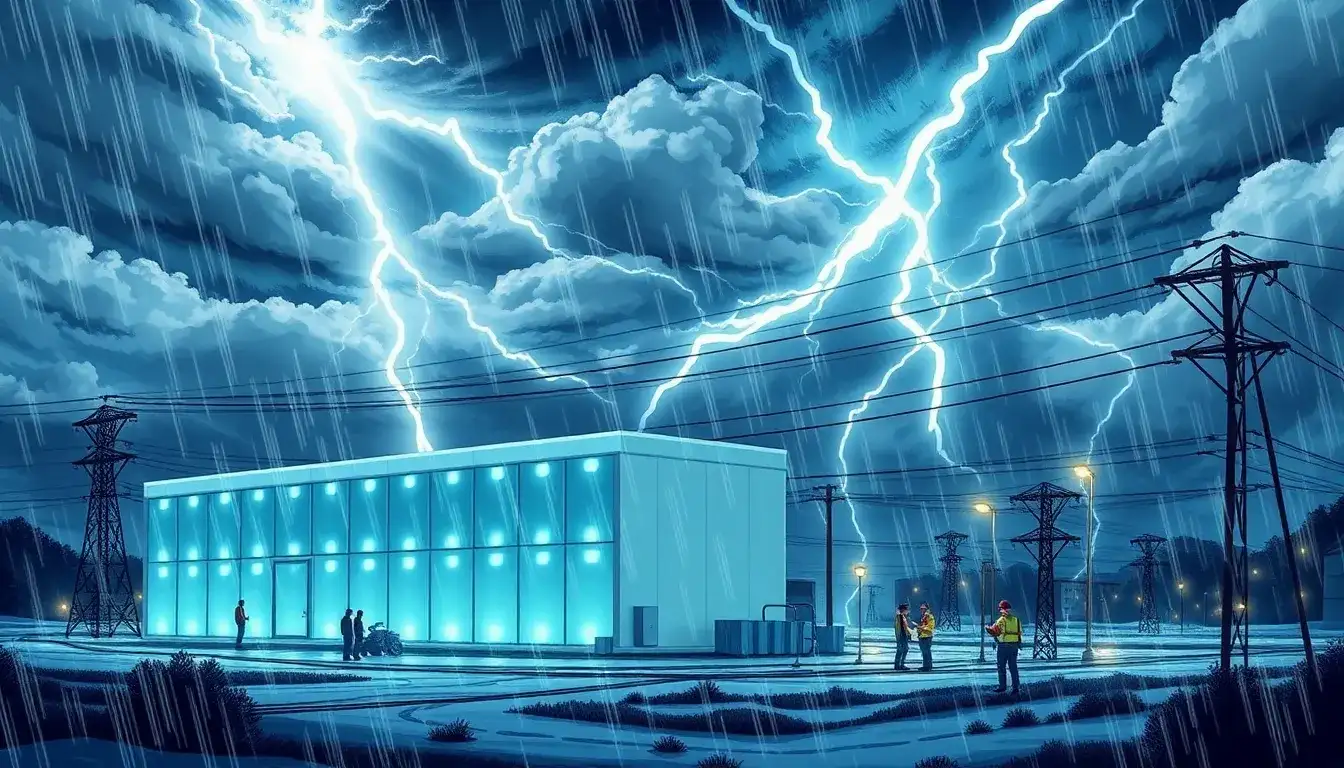
Utility-scale batteries contribute significantly to grid stability during severe weather through several key functions:
1. Meeting Peak Electricity Demand and Managing Capacity
During extreme weather events, electricity demand can surge to unprecedented levels, straining grid resources and increasing the risk of outages. Utility-scale batteries store excess energy during periods of low demand and discharge it during peak times, effectively “time-shifting” electricity availability. This reduces the need to rely on fossil fuel peaker plants, lowers emissions, and improves grid stability by ensuring sufficient power supply even during stress periods.
2. Providing Grid Stability Services
Batteries help maintain critical grid parameters such as frequency, voltage, and reactive power regulation. These services ensure that the grid operates within safe and stable limits, preventing disturbances that could cause faults or outages. Batteries respond to grid fluctuations faster than traditional thermal generation, providing rapid stabilization during both normal and emergency conditions. For example, battery systems have already been deployed to support grid stability during emergency alerts.
3. Black Start Capability for Grid Restoration
After widespread outages—often caused by severe weather—batteries can provide the initial power needed to restart generators and critical grid infrastructure. This black start capability allows for faster recovery of the electric grid without relying on diesel generators, enhancing overall grid resilience.
4. Enhancing Grid Resilience and Reliability
Utility-scale battery storage ensures the grid remains online and reliable during severe weather by delivering uninterrupted power. Their availability and optimized performance through advanced control and software solutions are essential to reliably prevent outages during extreme events.
5. Supporting Local Power Quality and Distribution Resilience
At the distribution level, battery energy storage systems (BESS) provide local power quality improvements and support resilience, helping communities maintain power during severe weather disruptions.
In summary, utility-scale batteries are crucial to modern grid stability during severe weather by time-shifting energy to meet peak demand, rapidly stabilizing grid parameters, enabling quick restoration through black start, and enhancing overall grid resilience and reliability.
Original article by NenPower, If reposted, please credit the source: https://nenpower.com/blog/how-do-utility-scale-batteries-contribute-to-grid-stability-during-severe-weather/

