

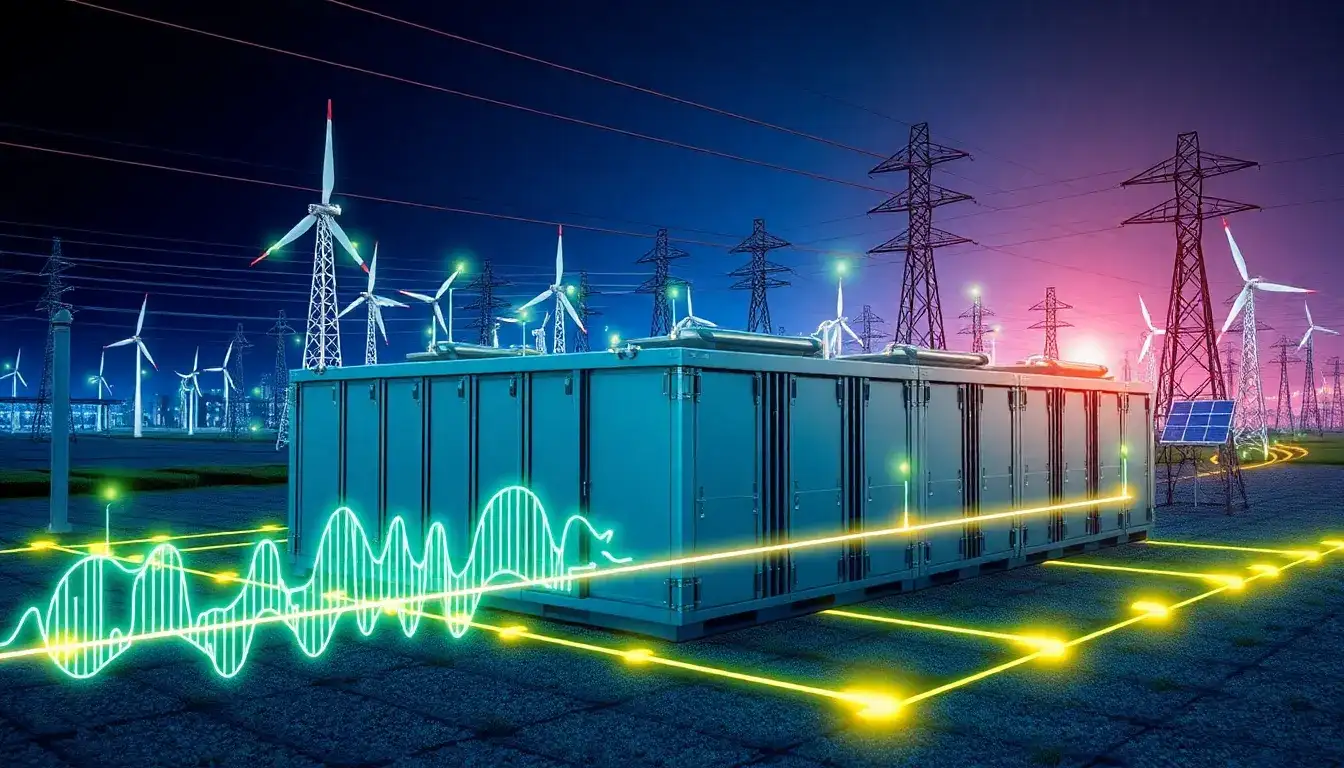
Utility-scale battery storage systems play a critical role in frequency regulation by rapidly adjusting power output to maintain grid stability at the target frequency of 60 Hz. Here’s how they contribute:
1. Instantaneous response to frequency deviations
Batteries detect frequency fluctuations (caused by imbalances between supply and demand) and respond within milliseconds. When frequency drops below 60 Hz, they discharge stored energy to increase supply; when frequency rises, they absorb excess power through charging.
2. Mitigating renewable energy variability
As renewable penetration increases, battery storage counters the inherent unpredictability of solar/wind generation. They provide fast-acting power injections or reductions to balance sudden changes in renewable output, preventing frequency instability.
3. Multi-functional grid support
While frequency regulation remains their primary application (representing 59% of U.S. utility-scale battery capacity as of 2020), modern systems can simultaneously perform:
- Ramping support: Smoothing abrupt generation/demand changes
- Load following: Adjusting output to match demand patterns
- Arbitrage: Storing energy during low-cost periods for high-demand times
4. Technical advantages over conventional generators
Batteries outperform traditional frequency regulators due to:
- Zero startup latency: Immediate response without warm-up periods
- Bidirectional operation: Seamless switching between charging/discharging
- Precision control: Sub-second adjustments to power flow
Recent industry trends show an increasing emphasis on hybrid applications, with operators typically using batteries for 2.2 distinct grid services simultaneously to maximize economic and operational benefits. This multi-use capability enhances cost-effectiveness while maintaining frequency stability as grids transition to higher renewable energy shares.
Original article by NenPower, If reposted, please credit the source: https://nenpower.com/blog/how-do-utility-scale-batteries-contribute-to-frequency-regulation-in-the-grid/

