

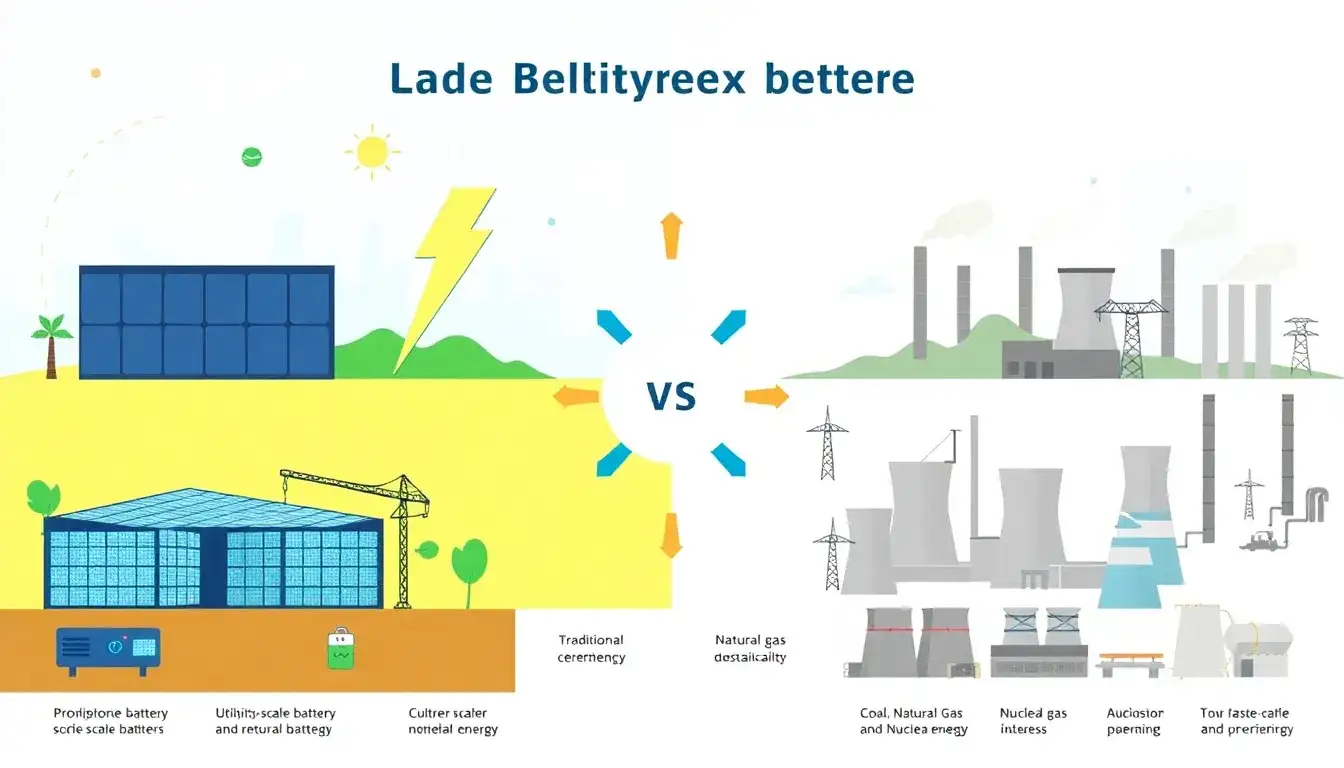
Utility-scale Batteries vs. Traditional Power Generation Methods
Utility-scale batteries, often in the form of Battery Energy Storage Systems (BESS), have several advantages and disadvantages when compared to traditional power generation methods. Here’s a comparison highlighting key aspects:
Advantages of Utility-Scale Batteries Over Traditional Methods
- Renewable Energy Integration: Batteries can effectively store excess energy generated from renewable sources like solar and wind, reducing intermittency and ensuring a stable power supply. This is particularly beneficial as the world shifts towards renewable energy, unlike traditional methods that are often dependent on fossil fuels.
- Fast Response Time: Utility-scale batteries can supply power quickly when needed, making them valuable for grid stabilization and peak demand management. This rapid response is not always achievable with traditional fossil fuel-based power plants.
- Environmental Benefits: By supporting renewable energy, utility-scale batteries contribute to a cleaner energy mix, reducing greenhouse gas emissions compared to traditional fossil fuel-based power generation.
Disadvantages of Utility-Scale Batteries Compared to Traditional Methods
- High Cost: Lithium-ion batteries, commonly used in utility-scale applications, are expensive to manufacture and install, which can be a significant barrier to widespread adoption compared to the established cost structures of traditional power plants.
- Limited Energy Density: While lithium-ion batteries have high energy density for portable applications, their utility-scale deployment requires large physical spaces to store enough energy, which can be impractical in some scenarios.
- Limited Cycle Life and Safety Concerns: Lithium-ion batteries degrade over time, reducing their lifespan and capacity. Additionally, there are safety risks associated with thermal runaway, although these are rare if properly managed.
- Charge/Discharge Rates: Utility-scale batteries can face limitations in their ability to rapidly charge and discharge large amounts of energy, which can affect their efficiency in responding to sudden changes in demand.
Comparison Summary
| Feature | Utility-Scale Batteries | Traditional Power Generation |
|---|---|---|
| Renewable Integration | Excellent for supporting intermittent renewable energy sources. | Often not optimized for renewable sources. |
| Response Time | Quick response for grid stability and peak demand management. | Generally slower compared to batteries. |
| Environmental Impact | Supports a cleaner energy mix by enabling renewable integration. | Typically fossil fuel-based with significant emissions. |
| Cost | High upfront costs for installation and maintenance. | Generally cheaper upfront, with well-established infrastructure. |
| Energy Density | Limited for utility-scale applications requiring large spaces. | Can provide constant power output without significant space issues. |
In summary, utility-scale batteries offer unique advantages in supporting renewable energy systems and providing rapid grid response, but they face challenges related to cost, energy density, and safety. Traditional power generation methods, while often cheaper and more established, have limitations in terms of environmental impact and flexibility.
Original article by NenPower, If reposted, please credit the source: https://nenpower.com/blog/how-do-utility-scale-batteries-compare-to-traditional-power-generation-methods/

