

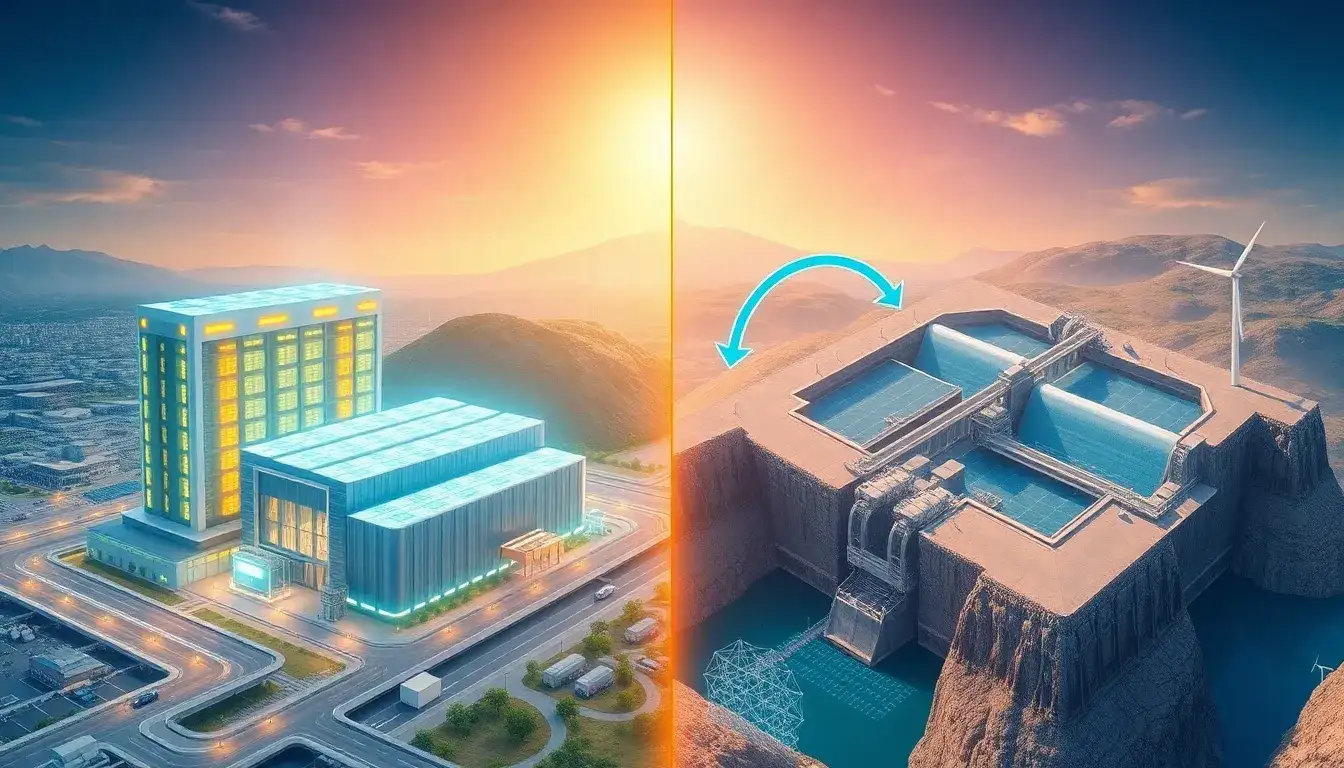
Utility-scale batteries and pumped storage hydropower (PSH)
Utility-scale batteries and pumped storage hydropower (PSH) are two leading technologies for large-scale energy storage, but they differ significantly in efficiency, capacity, lifespan, and typical use cases.
Efficiency and Energy Duration
- Round-trip efficiency (the percentage of energy retained after storing and then releasing it) is roughly comparable for both technologies, generally around 75% to 80%. Some sources note pumped storage hydropower can exceed 80% efficiency, slightly below or comparable to lithium-ion batteries, which can have a slightly higher round-trip efficiency in some studies.
- Duration of energy supply: Pumped storage hydropower can typically provide energy for about 10 hours continuously, which is longer than typical lithium-ion battery systems that often provide around 1.5 to 6 hours of duration depending on the application and technology improvements. Batteries had about 46 minutes average duration in 2015, increasing to about 1.5 hours by 2019 as usage shifted.
Capacity and Scale
- Pumped storage hydropower dominates global energy storage capacity, accounting for over 94% of installed storage worldwide, making it the largest single form of grid-scale energy storage.
- Utility-scale battery capacity is growing rapidly, driven by falling costs and pairing with renewable energy sources. As of late 2020, the operational battery capacity was 1.4 GW in the U.S., with much more planned.
Lifespan and Sustainability
- Lifespan: Pumped storage hydropower facilities have an expected life exceeding 100 years, essentially making them long-term infrastructure with virtually no degradation over time if well-maintained.
- In contrast, lithium-ion batteries degrade with use and age, typically requiring replacement around every 15 years as capacity falls to about 70% of the original, necessitating ongoing staged replacements to maintain capacity.
Operational Use and Flexibility
- PSH facilities generally operate at higher utilization factors than batteries and are traditionally used for large-scale, long-duration energy storage that balances daily or longer fluctuations in grid demand.
- Batteries, while typically shorter in duration, are increasing in duration and are very effective for fast response, frequency regulation, and pairing with intermittent renewables due to their high round-trip efficiency and rapid deployment.
Summary Comparison
| Feature | Pumped Storage Hydropower | Utility-Scale Batteries (Li-ion) |
|---|---|---|
| Round-trip efficiency | ~75-80%, often slightly lower than batteries | ~80%, slightly better in some cases |
| Energy duration | ~10 hours | 1.5 to 6 hours (increasing with technology) |
| Installed capacity | >94% of global storage capacity | Rapidly growing, smaller share globally |
| Lifespan | >100 years, minimal degradation | ~15 years with noticeable capacity degradation |
| Operational flexibility | High utilization, suited for long-duration storage | Fast response, suitable for short to medium duration |
| Sustainability | Very durable, less frequent replacement | Requires periodic replacement, recycling challenges |
In conclusion, pumped storage hydropower excels as a durable, large-capacity, long-duration storage solution with well-established infrastructure and longevity. Utility-scale batteries offer flexibility, faster deployment, and slightly better efficiency but have shorter useful lives and currently smaller overall capacity. Both are complementary in integrating renewable energy and stabilizing the grid.
Original article by NenPower, If reposted, please credit the source: https://nenpower.com/blog/how-do-utility-scale-batteries-compare-to-other-forms-of-energy-storage-like-pumped-storage-hydropower/

