

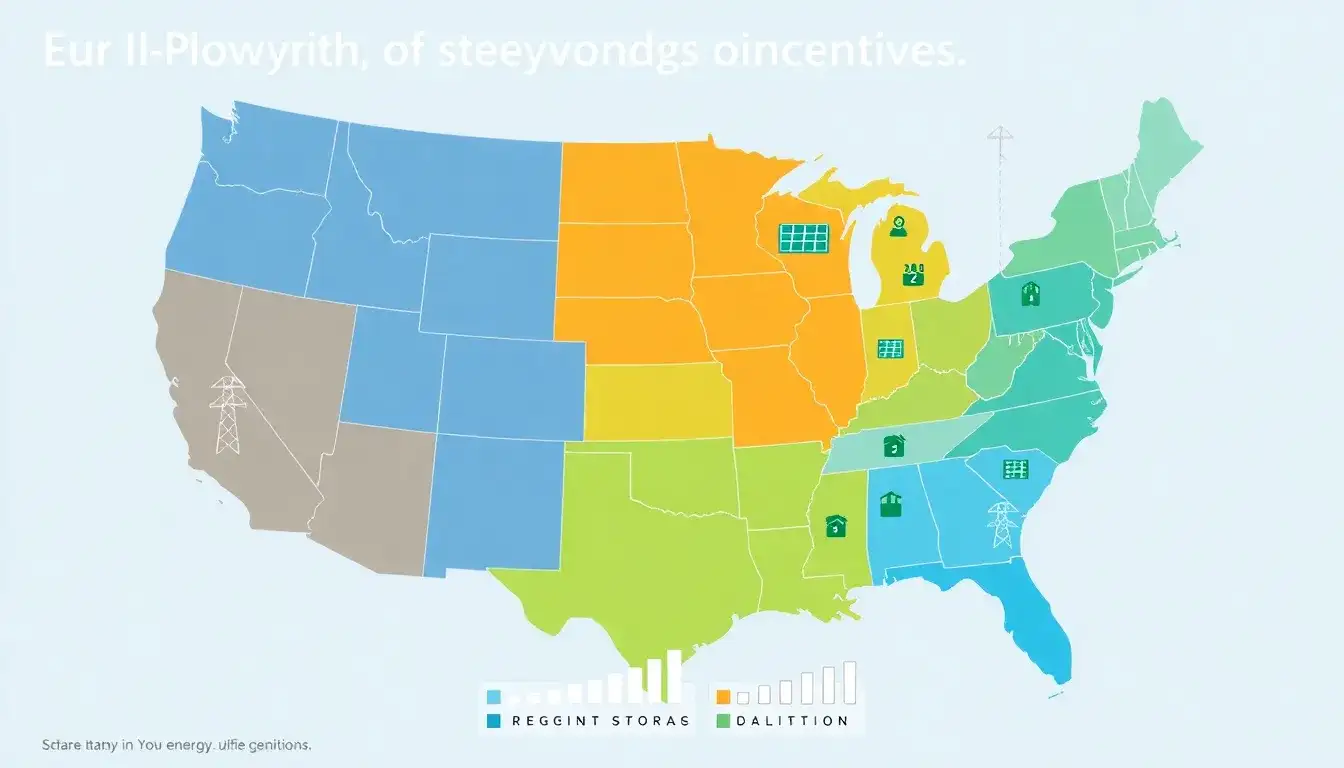
Utility company incentives for energy storage systems vary significantly by region. Here’s a breakdown of some notable programs:
Regional Incentives Overview
- California:
- Self-Generation Incentive Program (SGIP): Offers a dollar per kilowatt-hour rebate for battery storage. Higher incentives are available for lower-income households and areas prone to power outages or fire risk.
- Incentives can range from $500/kWh for residential customers to $1,000/kWh for equity resilience programs.
- Connecticut:
- Energy Storage Solutions: Residential customers can receive up to $16,000 in installation rebates, while businesses get a 50% upfront incentive. Performance-based incentives are available for participating in grid dispatch events.
- Residential incentives increased to $250/kWh in 2023.
- Massachusetts:
- Mass Save Connected Solutions: Offers financial incentives and zero-interest financing for battery installation. Customers can earn performance incentives for grid stability contributions over ten years.
- Incentives are structured to cover battery costs over five years.
- New York (Long Island):
- Offers a $250 per kilowatt rebate for battery storage. However, funding is limited, with only about 4% remaining as of 2025.
- North Carolina:
- Duke Energy PowerPair Program: Provides up to $9,000 in incentives for residential solar plus battery installations. Participating customers can also enroll in demand response programs for additional bill credits.
- Vermont:
- Although there are no state-specific incentives, Green Mountain Power offers a bring-your-own-device rebate program with up to $10,500 for battery installation.
Performance-Based Incentives
In many regions, performance-based incentives involve utilities drawing power from residential batteries during peak demand periods (usually summer and winter), providing compensation to homeowners based on the energy contributed to the grid. These programs are designed to enhance grid resilience without compromising household backup power during storms.
Each region’s incentives reflect specific energy goals, infrastructure needs, and economic considerations, reflecting a diverse landscape of support for energy storage systems across the United States.
Original article by NenPower, If reposted, please credit the source: https://nenpower.com/blog/how-do-utility-company-incentives-vary-by-region-for-energy-storage-systems/

