

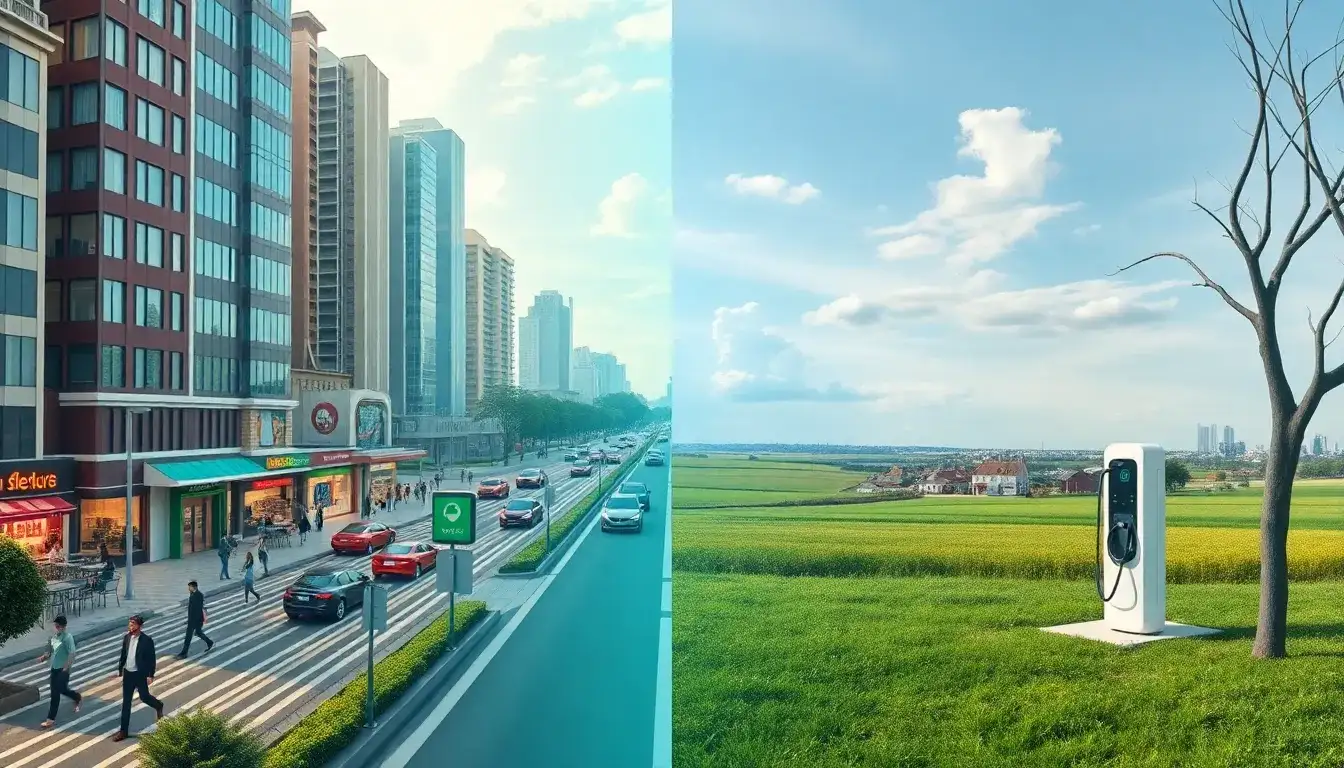
EV Charging Costs: Urban vs. Rural
EV charging costs differ between urban and rural areas due to factors like electricity rates, infrastructure density, and charging models. Here’s a breakdown:
Cost Drivers
- Urban areas typically face higher charging rates due to elevated operational costs (e.g., land, parking fees) and demand-based pricing.
- Rural areas often have lower electricity prices and fewer demand-based fees, leading to more competitive charging rates, though limited infrastructure can offset savings.
Practical Cost Comparison
- Home charging (used by 80%+ of EV drivers) is cheaper in rural areas where electricity rates are often lower, offsetting higher gasoline expenses faced by rural drivers.
- Public charging in cities includes time-based fees (e.g., parking costs) and per-kWh premiums for fast charging, while rural public stations may lack DC fast chargers, increasing reliance on slower Level 2 units.
Infrastructure Challenges
- Fast-charging gaps in rural areas force longer wait times or detours, indirectly raising “costs” through inconvenience.
- Demand charges imposed by utilities disproportionately affect rural DC fast charger profitability, discouraging deployment and keeping per-session fees high.
While urban users pay more per charge, rural drivers face hidden costs from sparse infrastructure and range anxiety. Home charging remains the most cost-effective solution in both settings, but rural residents benefit more due to lower residential electricity rates and reduced reliance on public stations.
Original article by NenPower, If reposted, please credit the source: https://nenpower.com/blog/how-do-urban-and-rural-ev-charging-costs-compare/

