

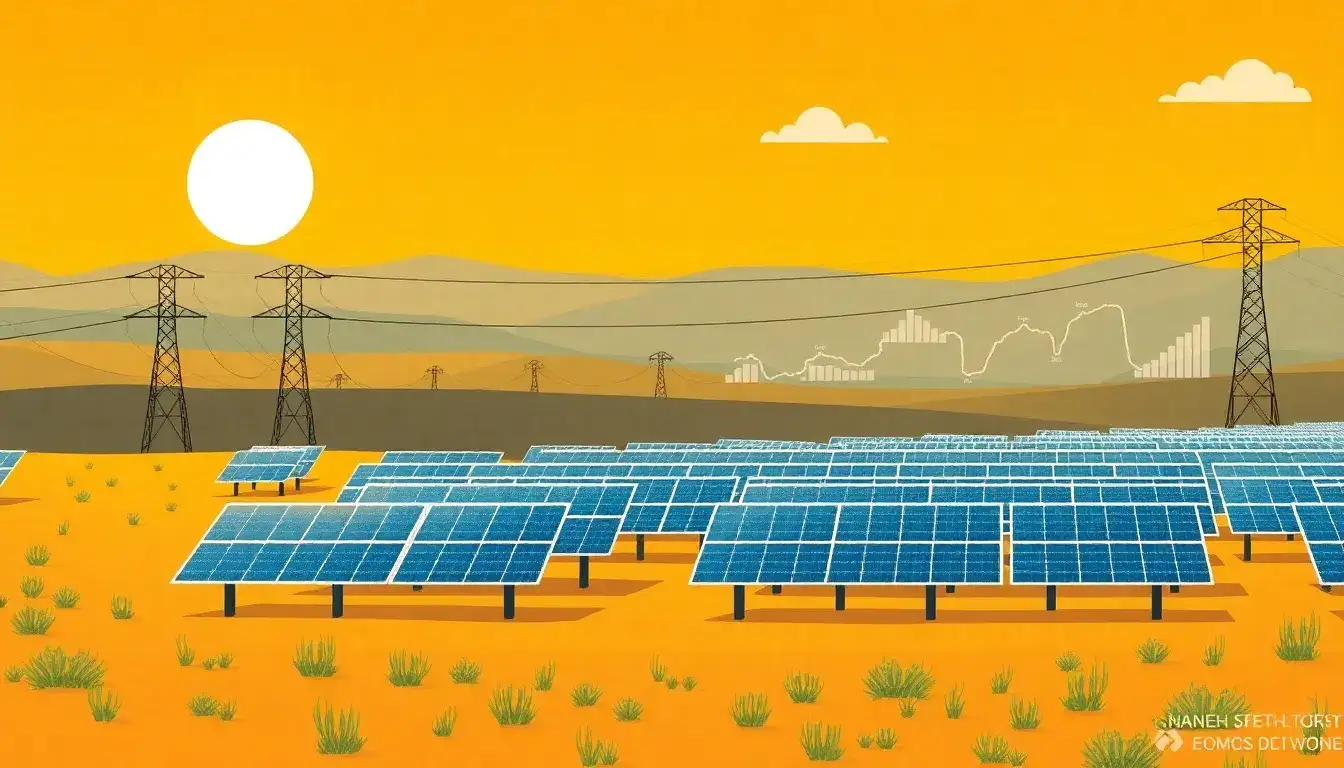
Impact of Transmission on Solar Projects
- Cost Increases: Transmission costs can significantly increase the overall costs of large-scale solar projects. These costs include grid interconnection fees, network upgrade requirements, and other related expenses. For instance, the cost of grid interconnection typically ranges from $100 to $300 per kilowatt (kW), with cases of much higher costs when extensive network upgrades are needed. This can make solar projects more expensive than anticipated.
- Levelized Cost of Energy (LCOE): The levelized cost of energy (LCOE) of solar projects can be affected by transmission costs. Utility-scale solar projects typically have an LCOE of $36 to $46 per megawatt-hour (MWh). Transmission costs, which range from $1 to $10 per MWh, can increase the LCOE by 3% to 33%. This increase can make solar less competitive against other energy sources.
- Grid Interconnection Process: The process of connecting solar projects to the grid often involves long wait times due to high demand and complex evaluation processes. This delay can extend project timelines and increase costs indirectly by delaying revenue generation.
- Cost Allocation and Policy: The allocation of transmission costs is also a significant challenge, particularly for large-scale projects. Disagreements over cost allocation can stall or cancel projects if developers feel the burden is excessive.
- Scaling Renewable Energy: As renewable energy sources like solar become more prevalent, the need for efficient transmission infrastructure grows. Misjudging these costs can hinder the expansion of solar energy and impact national renewable energy targets.
Economic Viability Strategies
- Co-Development with Storage: Combining solar projects with energy storage can help mitigate some transmission costs by reducing the need for large-scale grid connections and stabilizing energy output.
- Distributed vs. Centralized Systems: Emphasizing distributed solar installations can avoid some transmission costs altogether, as they connect directly to local grids rather than high-voltage transmission lines.
- Policy Support: Clearer policies on cost allocation and streamlined interconnection processes can reduce bottlenecks and make large-scale solar projects more economically viable.
Overall, understanding and addressing transmission costs are crucial for maximizing the economic viability of large-scale solar projects and achieving broader renewable energy goals.
Original article by NenPower, If reposted, please credit the source: https://nenpower.com/blog/how-do-transmission-costs-influence-the-economic-viability-of-large-scale-solar-projects/

