

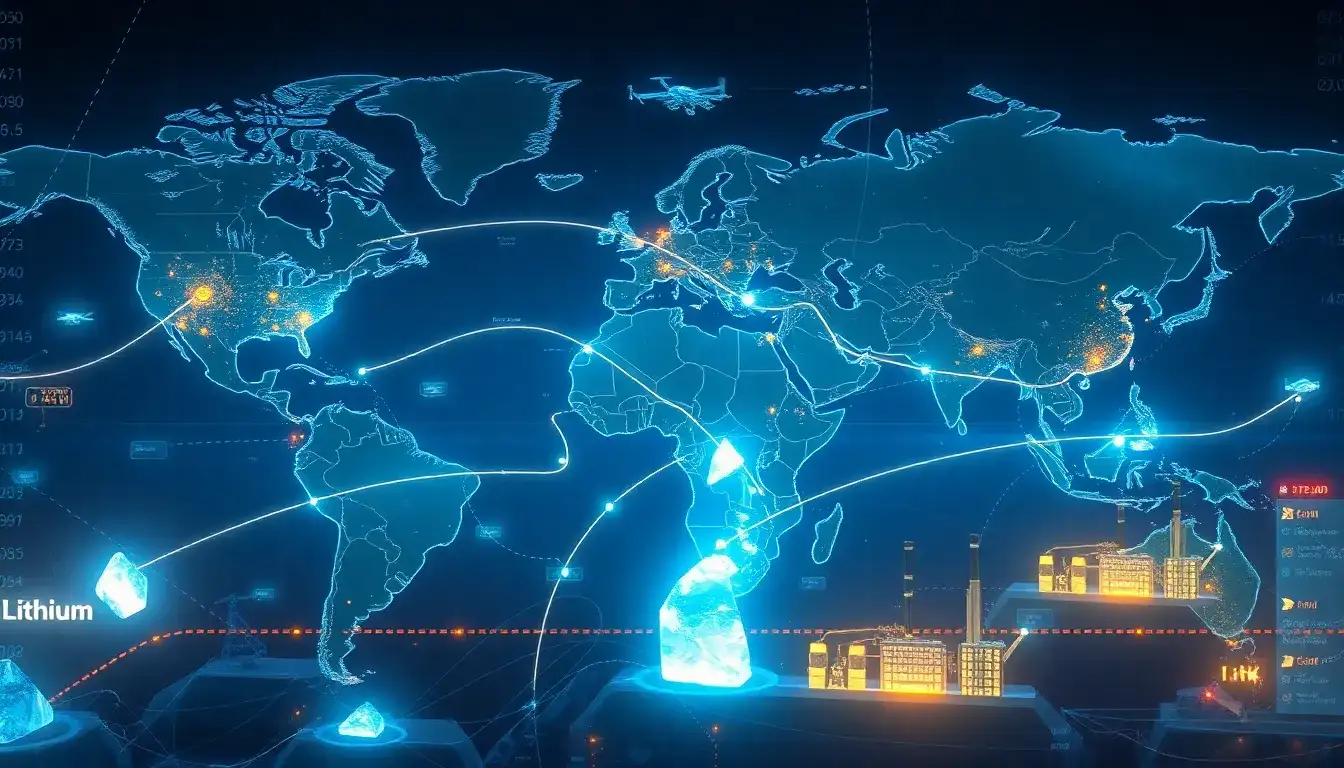
Trade barriers significantly impact lithium pricing and availability by disrupting supply chains, increasing costs, and reshaping market dynamics, especially in the context of the global electric vehicle (EV) battery industry.
Impact on Lithium Pricing
- Tariffs raise costs of imported lithium materials and batteries: The U.S. has imposed substantial tariffs on lithium-ion batteries and related materials imported from China and other Asian countries. For example, tariffs have increased to 25% on lithium-ion EV batteries produced in China, up from 7.5%, and the U.S. has also levied 82% tariffs on batteries from China and tariffs ranging from 24% to 49% on batteries from Vietnam, Thailand, Taiwan, and others.
- Increased production costs passed to EV manufacturers: These tariffs increase the cost of imported lithium and battery components, forcing EV manufacturers relying on these imports (e.g., Rivian, Lucid) to face soaring costs. Some have been compelled to raise vehicle prices by 5-10%, which undermines their competitiveness in the market.
- Raw material shortages exacerbate cost pressures: Critical raw materials like natural graphite, primarily sourced from China but crucial for battery production, face supply chain constraints and are subject to tariffs. This scarcity and added import costs further push up lithium battery prices.
Impact on Lithium Availability
- Short-term supply shortages due to forced “decoupling”: U.S. trade policy aims to reduce dependency on Chinese imports by incentivizing domestic production and involving allies. However, the U.S. currently lacks sufficient lithium refining and battery production capacity, which creates short-term supply bottlenecks and potential shortages for lithium materials and batteries.
- Disrupted global supply chains: Lithium and associated materials supply chains are highly globalized, with China holding a dominant position. Tariffs and trade restrictions complicate sourcing and delay development of new mines and production facilities, which typically require long lead times, affecting the availability of lithium.
Strategic and Long-term Effects
- Policy-driven acceleration of domestic and allied production: The trade barriers are designed to encourage investment in local lithium refining and battery manufacturing capacity. South Korean and Japanese companies, for example, are increasing investments to build factories in the U.S., targeting a tripling of local production capacity by 2030.
- Chinese companies adapting through partnerships: Despite tariffs, Chinese firms like CATL and Svolt are partnering with U.S. automakers via technology licensing to maintain access and influence in the market, counteracting some of the tariffs’ impacts.
- Global market competitiveness shifts: While U.S. tariffs increase costs domestically, Chinese EVs and batteries may remain more price-competitive globally due to their integrated supply chains and lack of equivalent trade barriers, impacting the global pricing and availability landscape.
Summary
Trade barriers—primarily tariffs on Chinese lithium batteries and materials—directly raise lithium battery costs and disrupt supply chains, causing short-term shortages and higher prices. While these policies aim to foster domestic manufacturing and reduce reliance on China, the transition involves supply constraints and increased costs in the near term. Over time, increased local capacity and strategic partnerships may stabilize availability and prices, but global competitiveness will remain influenced by these trade dynamics.
Original article by NenPower, If reposted, please credit the source: https://nenpower.com/blog/how-do-trade-barriers-influence-lithium-pricing-and-availability/

