

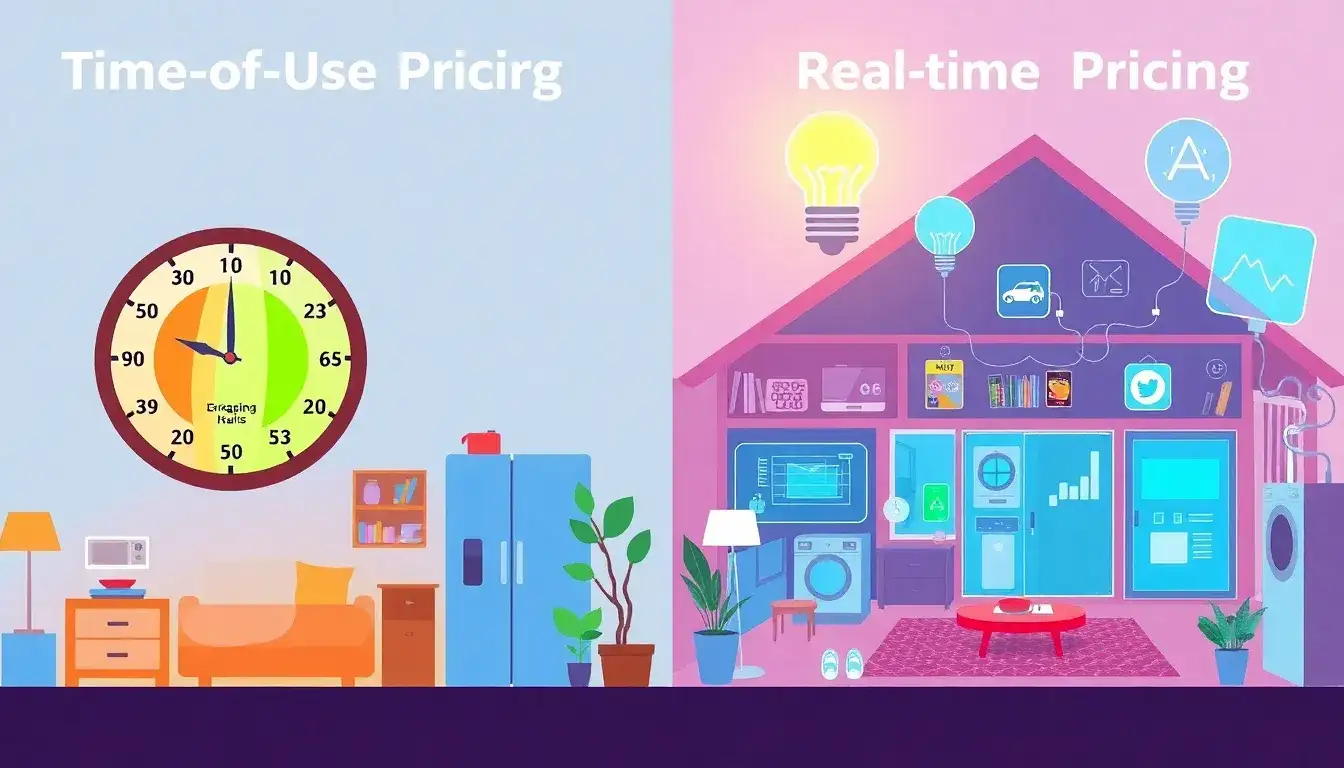
Time-of-Use (TOU) pricing and Real-Time Pricing (RTP) are both strategies designed to manage electricity demand by varying prices based on consumption periods. However, they differ in how they apply these price variations and their effects on customer behavior.
Time-of-Use Pricing
Definition: TOU pricing involves charging different rates for electricity based on predetermined time periods, typically peak, off-peak, and sometimes mid-peak. These rates are fixed ahead of time and apply uniformly throughout those periods.
Impact on Behavior:
- Behavioral Shift: Incentivizes consumers to shift energy-intensive activities to off-peak hours when rates are lower.
- Predictability: Provides predictability as rates are known in advance, allowing consumers to plan their usage accordingly.
- Research Findings: Studies show that TOU pricing can lead to significant reductions in peak demand, with average reductions around 6% to 18% depending on the peak-to-off-peak price ratio.
Real-Time Pricing
Definition: RTP involves charging electricity rates that reflect the current market price of electricity. Prices can fluctuate frequently, often minute-by-minute or hourly, in response to changes in electricity supply and demand.
Impact on Behavior:
- Immediate Responsiveness: RTP encourages immediate responses to current market conditions by adjusting consumption in real-time based on price signals.
- Complexity: More complex, as consumers need to monitor and adjust to frequent price changes, often requiring smart devices or automation for optimal savings.
- Economic Sensitivity: Consumers are highly sensitive to real-time price incentives, potentially leading to larger peak demand reductions compared to TOU pricing if they are able to respond effectively.
Key Differences
- Price Flexibility: RTP prices vary much more frequently and unpredictably than TOU rates.
- Consumer Engagement: RTP requires more active consumer engagement and possibly automation to maximize benefits, whereas TOU pricing is more straightforward and predictable.
- Behavioral Impact: Both strategies can reduce peak demand, but RTP tends to be more effective for consumers who can adapt to real-time changes, while TOU pricing is more suitable for those who prefer predictable rates.
Original article by NenPower, If reposted, please credit the source: https://nenpower.com/blog/how-do-time-of-use-pricing-and-real-time-pricing-differ-in-their-impact-on-customer-behavior/

