

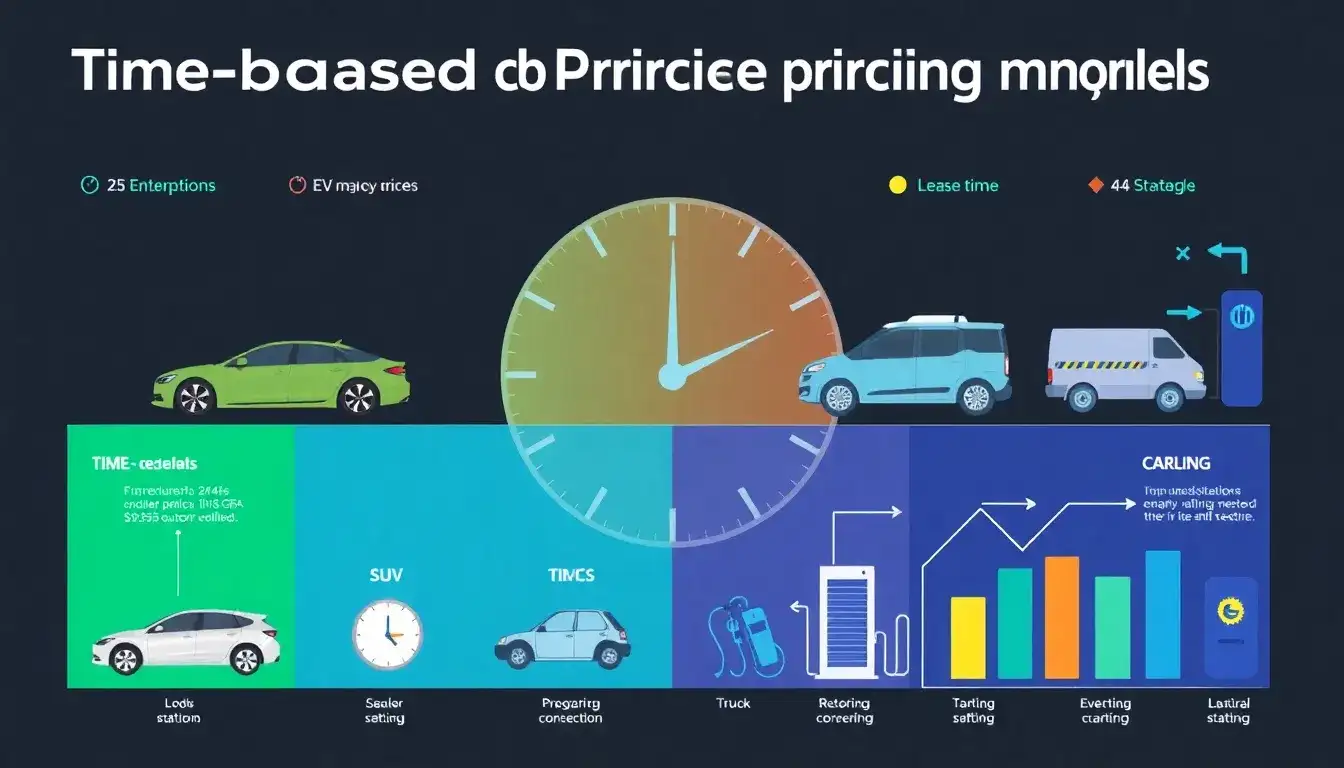
Time-based pricing models for EV charging create varying impacts across different electric vehicle models due to differences in charging speed, battery capacity, and efficiency.
Key effects of time-based pricing:
- Unfair cost distribution: Slower-charging EVs (typically older models or those with smaller batteries) incur higher costs for the same energy delivered, as they require more time to reach sufficient charge levels. For example, reaching 80% battery capacity can take 20-50 minutes depending on the vehicle.
- Advantage for high-performance EVs: Models with faster charging capabilities (e.g., newer EVs with 800V architectures) benefit financially, paying less for equivalent energy compared to slower-charging counterparts.
- Strain on utilization: These models encourage drivers to disconnect quickly in high-demand areas, improving charger turnover, but may discourage use in locations where extended charging is unavoidable due to technical limitations.
Impact by EV type:
| EV Category | Effect |
|---|---|
| Fast-charging EVs (e.g., latest Tesla/Porsche models) | Lower relative cost per kWh due to shorter session times. |
| Slow-charging EVs (e.g., early Nissan Leaf or PHEVs) | Higher costs for equivalent energy, creating financial disincentives. |
| Large-battery EVs (e.g., Lucid Air) | Mixed effects: Longer charging sessions increase costs, but faster charging curves may offset this. |
This pricing approach risks creating inequities between EV owners, as payment correlates with technical charging performance rather than actual energy consumption. Some networks mitigate this by combining time-based with energy-based pricing during peak hours.
Original article by NenPower, If reposted, please credit the source: https://nenpower.com/blog/how-do-time-based-pricing-models-affect-different-ev-models/

