

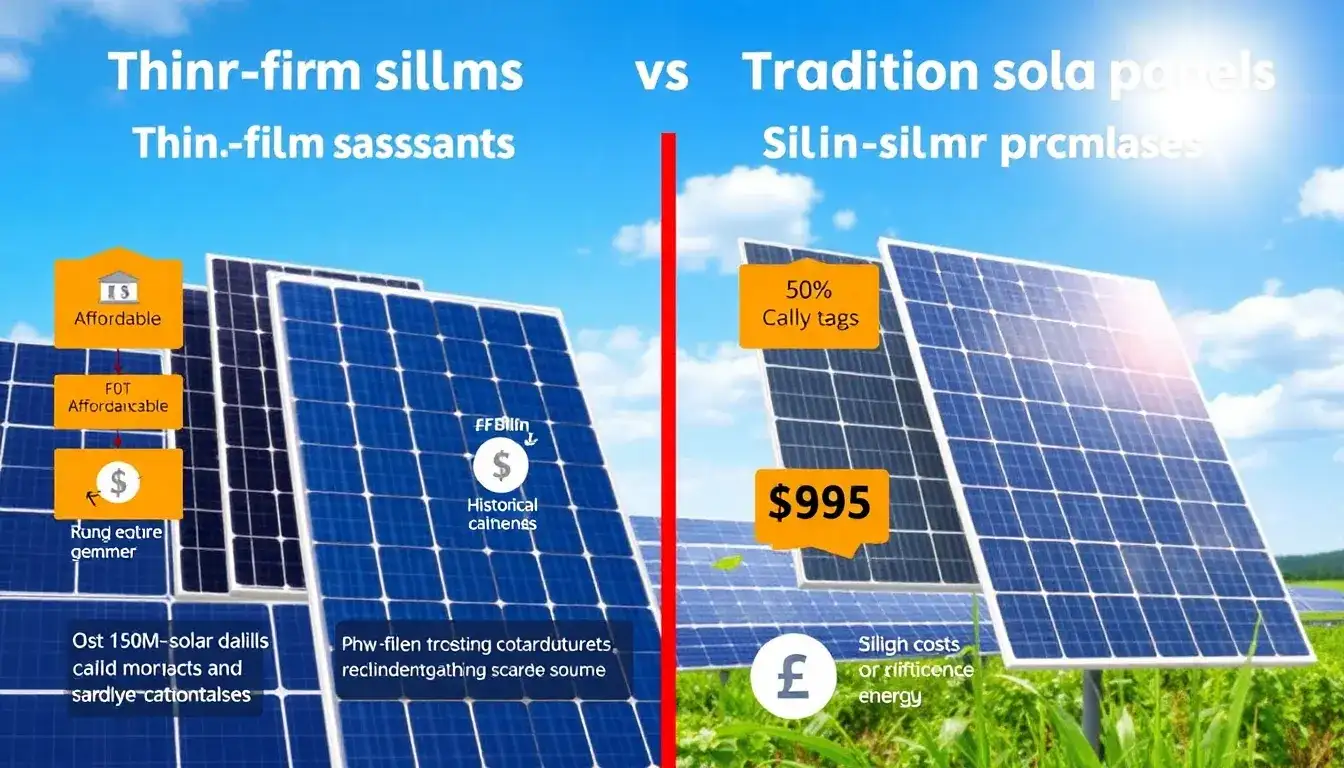
Thin-film solar panels generally have a lower upfront cost compared to traditional crystalline silicon solar panels, but several factors affect the cost comparison, including efficiency, installation, and material use.
Cost Comparison
- Material and Manufacturing Cost: Thin-film solar panels require fewer raw materials and simpler manufacturing processes, making their initial costs lower. For example, CdTe thin-film panels are among the cheapest, with material costs around $0.40 per watt, whereas traditional crystalline silicon panels are more costly due to their higher efficiency and durability.
- Installation Costs: Thin-film panels are lighter and more flexible, leading to faster and simpler installation with fewer mounting hardware needs, which can reduce labor costs.
- Price per Watt:
- Thin-film panels typically cost between $0.50 and $1.00 per watt for the materials, with total installed costs (including labor and other components) ranging roughly from $3,000 to $7,000 for a typical residential system of 10 panels.
- Traditional crystalline silicon panels (monocrystalline and polycrystalline) presently range from about $0.90 to $1.50 per watt before installation, with monocrystalline typically costing more than polycrystalline.
- Long-Term Cost Effectiveness:
- Although thin-film panels have a lower upfront price, their lower efficiency (around 10%-13% compared to 17%-22% for monocrystalline) means more panels and space are required to generate the same power, potentially increasing balance-of-system costs.
- Traditional crystalline panels are more durable, often lasting 25-30+ years with less degradation, improving their cost-effectiveness over time.
Summary
| Feature | Thin-Film Solar Panels | Traditional Crystalline Panels |
|---|---|---|
| Material Cost per Watt | $0.40 to $1.00 | ~$0.90 to $1.50 |
| Typical Installed Cost | $3,000 to $7,000 (for ~10 panels) | Often higher; varies by type and size |
| Efficiency | 8% to 13%, up to 20% (CIGS) | 15% to 22% (Monocrystalline higher) |
| Installation Complexity | Easier, lighter, fewer mounting needs | Heavier, more mounting hardware needed |
| Lifespan | 10 to 20 years, faster degradation | 25+ years, slower degradation |
| Space Required for Same Output | More space needed due to lower efficiency | Less space due to higher efficiency |
In conclusion, thin-film solar panels offer a cheaper initial investment and simpler installation but require more space and may have higher long-term costs due to lower efficiency and shorter lifespan. Traditional crystalline silicon panels have higher upfront costs but deliver better efficiency and durability, often making them more cost-effective over the panel’s lifetime.
Original article by NenPower, If reposted, please credit the source: https://nenpower.com/blog/how-do-thin-film-solar-panels-compare-to-traditional-silicon-panels-in-terms-of-cost/

