

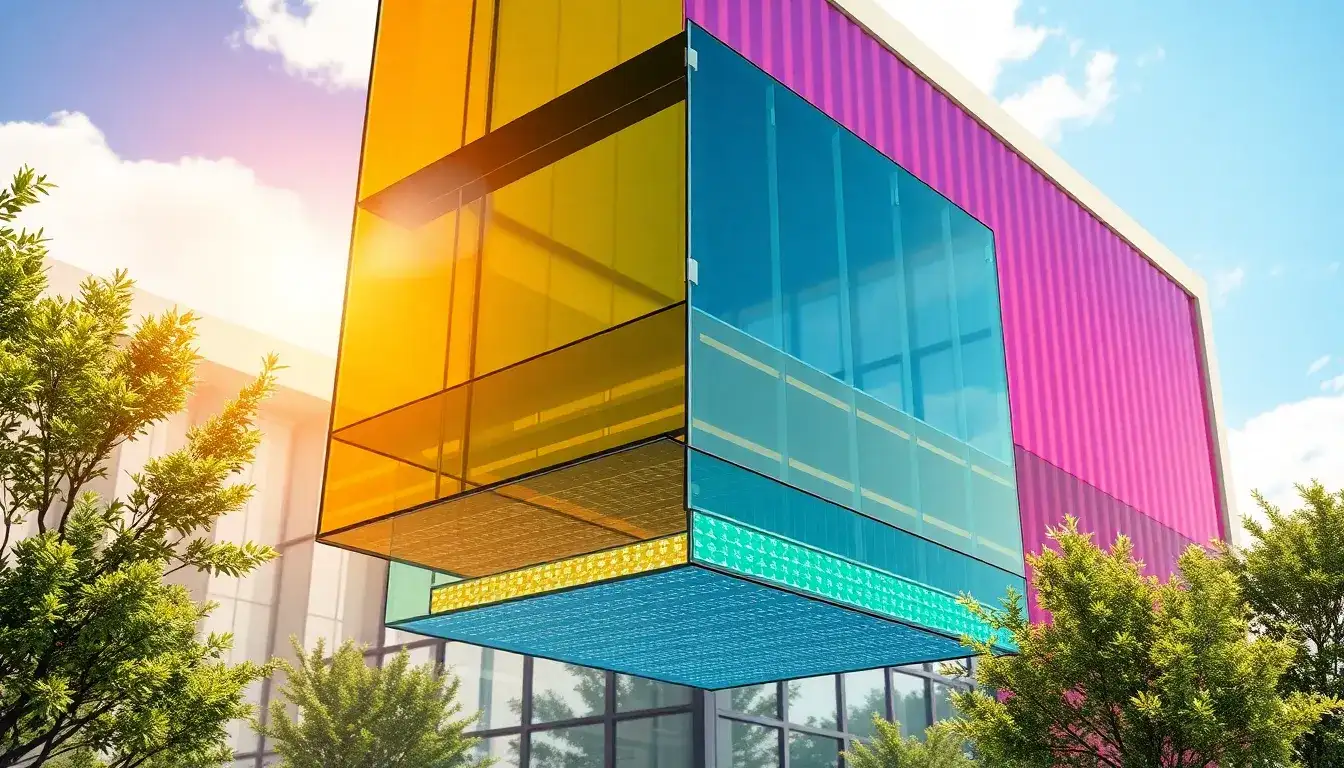
Thermochromic photovoltaic glass panels work by combining the properties of thermochromic materials with photovoltaic (solar cell) technology, enabling the glass to change color and generate electricity simultaneously based on temperature changes caused by solar radiation.
How Thermochromic Photovoltaic Glass Panels Work
- Thermochromic Behavior: These panels contain materials that alter their optical properties—specifically their color or tint—in response to temperature changes. When the glass heats up due to sunlight, the thermochromic material undergoes a structural transformation that causes the glass to tint or change color. This tinting helps block glare and reduce unwanted solar heat gain inside buildings, lowering the need for air conditioning.
- Photovoltaic Functionality: Embedded within the glass are photovoltaic materials, typically a layer of perovskite crystals. These perovskites are highly efficient at absorbing sunlight and converting it into electricity. When the thermochromic transformation is triggered by heat, the alignment or structure of the perovskite changes in a way that activates the photovoltaic function, enabling the glass to generate electrical power.
- Material Mechanism: The perovskite layer is usually sandwiched between two glass panes. Vapor or heat triggers the perovskite to rearrange into different crystalline shapes (chain, sheet, cube), which causes visible color changes. This reversible process allows the glass to switch fast (within seconds) between a transparent state and a tinted, electricity-generating state.
- Energy Efficiency Impact: By automatically tinting on hot days, these windows reduce the transmission of solar heat into buildings, cutting cooling costs and energy consumption. Simultaneously, the generation of onboard electricity contributes to the building’s energy needs, potentially feeding surplus power back to the grid and making the building a partial energy generator.
- Innovation and Control: New developments allow for a broader range of colors and lower activation temperatures (around 95 to 115 °F), which are typical for sunny days, enhancing both aesthetic appeal and functional control. The color change is fast and reversible, improving user comfort and architectural flexibility.
Additional Notes on Thermochromic Materials in Solar Windows
- Some thermochromic materials, such as vanadium dioxide (VO2), change their crystal structure at specific temperatures, altering infrared transmittance rather than visible color. These materials help regulate solar heat gain by becoming less transparent to infrared heat as temperatures rise, thereby reducing building cooling loads.
- The integration of thermochromic layers with photovoltaic materials requires careful tuning so that the thermochromic material does not block the wavelengths of light that the photovoltaic cells need to harvest energy.
Summary
Thermochromic photovoltaic glass panels leverage thermochromic materials—like perovskites that change crystal structure with heat—to tint windows on sunny, hot days. This tinting blocks solar heat, reducing cooling demands, while simultaneously activating embedded perovskite solar cells that generate electricity. The process is rapid, reversible, and can be tuned for different colors and activation temperatures, offering both energy savings and aesthetic design benefits for buildings.
This dual-function glass technology thus transforms building windows into smart energy management systems that control heat gain and produce renewable power.
Original article by NenPower, If reposted, please credit the source: https://nenpower.com/blog/how-do-thermochromic-photovoltaic-glass-panels-work/

