

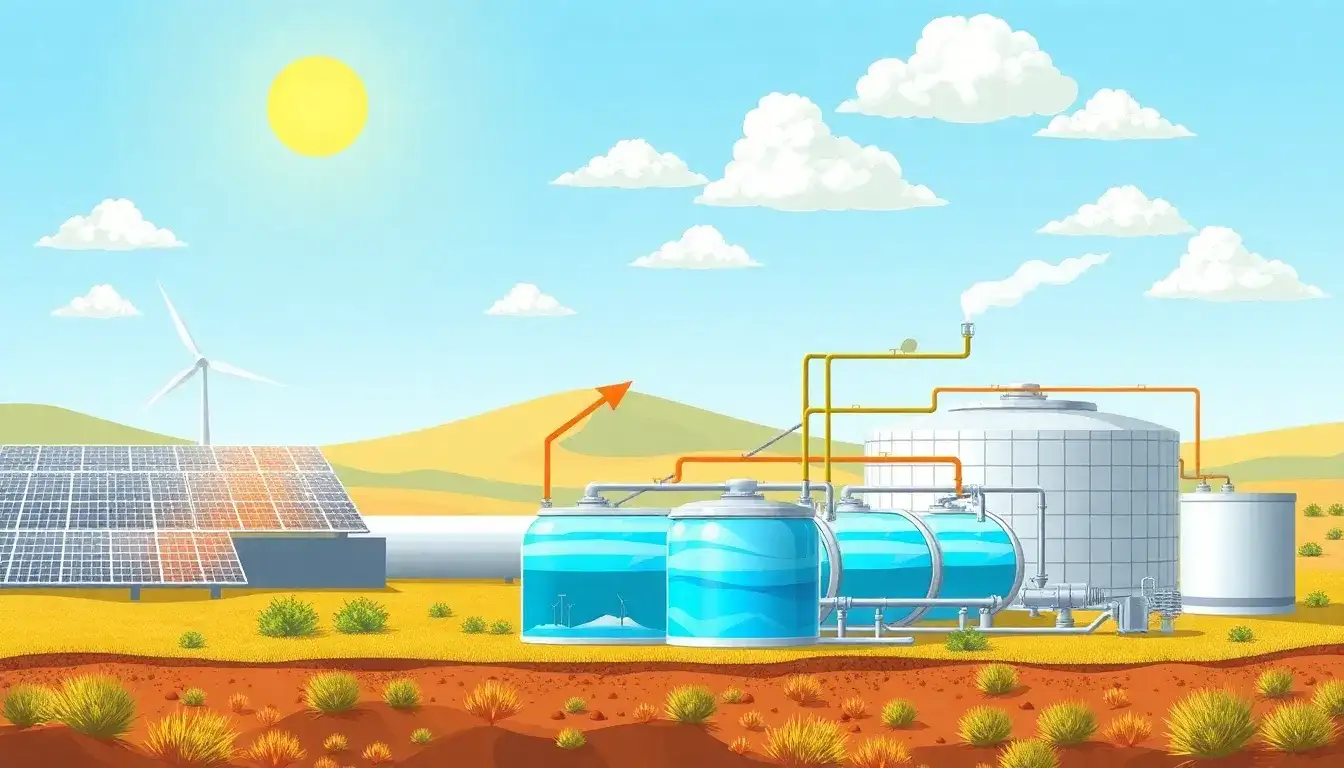
Thermal Energy Storage (TES) Systems and Concentrating Solar Power (CSP)
Thermal energy storage (TES) systems play a crucial role in enhancing the functionality of solar power systems, particularly concentrating solar power (CSP) systems. Here’s how they work together:
Overview of CSP Systems
CSP systems harness sunlight by concentrating it onto a receiver, generating heat that can be used directly or stored for later use. This heat is typically stored in fluids, such as molten salts or oils, which are then used to produce electricity when needed.
Types of Thermal Energy Storage Systems Used with CSP
-
Two-Tank Direct System
- This system uses the same fluid for heat collection and storage.
- The fluid is stored in two tanks: a low-temperature tank and a high-temperature tank.
- When heated by solar collectors, the fluid moves from the low-temperature tank to the high-temperature tank for storage.
- Later, it is used to generate steam for electricity production through a heat exchanger.
-
Two-Tank Indirect System
- This system uses different fluids for heat collection and storage.
- The heat-transfer fluid is too expensive or unsuitable for long-term storage, so it is used to heat a cheaper storage fluid through an additional heat exchanger.
- The storage fluid is then used to generate steam for electricity production.
-
Single-Tank Thermocline System
- This system stores thermal energy in a solid medium, typically silica sand, within a single tank.
- The hot and cold regions are separated by a thermocline, which moves based on energy addition or extraction.
- This system is more cost-effective due to requiring only one tank and leveraging thermal stratification.
How TES Systems Integrate with Solar Power
- Enhancing Dispatchability: TES allows CSP systems to store solar energy during the day for use in the evening or during cloudy periods, making solar power more dispatchable and reliable.
- Reducing Intermitency: By storing energy when sunlight is abundant, TES systems help balance electricity supply and demand, reducing instances of power curtailment when generation exceeds immediate needs.
- Improving Efficiency: Integrating solar receivers with thermal storage enhances plant efficiency by capturing and utilizing more of the sun’s energy, reducing losses over time.
- Long Duration Storage: Some TES systems, like those using molten salts, can store energy for months with minimal heat loss, providing a long-term energy reserve.
In summary, thermal energy storage systems are integral to CSP systems as they mitigate the intermittency of solar power, enhance dispatchability, and improve overall efficiency by allowing energy to be stored for later use.
Original article by NenPower, If reposted, please credit the source: https://nenpower.com/blog/how-do-thermal-energy-storage-systems-work-in-conjunction-with-solar-power-systems/

