

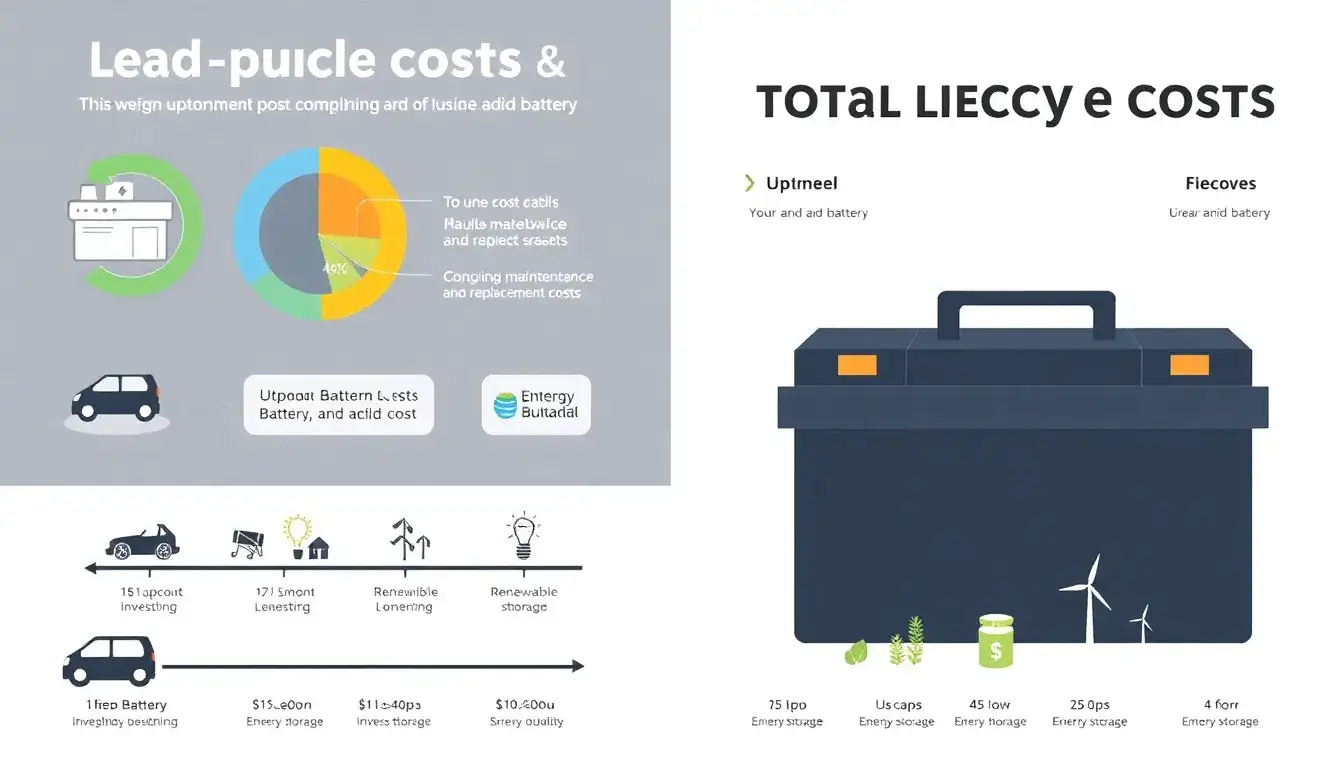
The upfront costs of lead-acid batteries are generally lower compared to alternatives like lithium-ion batteries, making them appear more affordable initially. For example, lead-acid batteries typically cost between $100 and $1,500 depending on application and capacity, while lithium batteries can range from $700 to $2,000 or more for comparable capacities. Per kWh, lead-acid batteries might cost around $100 to $200, whereas lithium-ion batteries cost about $300 to $500 per kWh.
However, when examining total lifecycle costs, lead-acid batteries tend to be significantly more expensive. This is due to several factors:
- Shorter Lifespan: Lead-acid batteries typically last 300–1,000 charge cycles, which translates to around 3–10 years depending on usage. Lithium-ion batteries last much longer, often 2,000–5,000 cycles or 5–15 years.
- Lower Depth of Discharge (DoD): Lead-acid batteries should only be discharged to about 50% to avoid damage, effectively requiring larger capacity or more frequent recharging. Lithium batteries can be discharged up to 95–100%, providing more usable energy per cycle.
- Frequent Replacement: Because lead-acid batteries wear out more quickly, they must be replaced more often. Over a 10-year period, this could mean 3–5 replacements, increasing costs for purchase, installation, disposal, and labor. Lithium batteries usually require only one installation across the same period.
- Maintenance and Efficiency Costs: Lead-acid batteries often require regular maintenance such as watering, cleaning, and ventilation, adding labor and operational costs. Lithium batteries have minimal maintenance needs and better energy efficiency (up to 50% more).
- Charging and Downtime: Lead-acid batteries take longer to charge (6–8 hours plus cooling), which can lead to productivity losses and higher labor costs. Lithium batteries charge faster (2–4 hours) and can be opportunity charged, reducing downtime.
A lifecycle cost analysis example shows that despite higher upfront costs, lithium batteries are about 2.8 times cheaper per usable kWh over their lifespan due to lower replacement frequency and maintenance expenses. Similarly, for applications like RV battery banks or solar storage, the total 10-year cost of lead-acid batteries can be multiple times higher than lithium options when factoring in replacements and operational costs.
Summary Table of Lead-Acid vs Lithium Battery Costs and Lifespan
| Aspect | Lead-Acid Batteries | Lithium-Ion Batteries |
|---|---|---|
| Upfront Cost | Lower ($100–$1,500 range) | Higher ($700–$2,000 range) |
| Lifespan (cycles) | 300–1,000 cycles | 2,000–5,000 cycles |
| Usable Capacity (DoD) | ~50% | 95–100% |
| Replacement Frequency | Multiple over 10 years (3–5x) | Usually 1 replacement over 10 years |
| Maintenance Required | Regular watering, cleaning | Minimal to none |
| Charging Time | 6–8 hours + cooling | 2–4 hours |
| Energy Efficiency | Lower | Higher (up to 50% better) |
| Total Lifecycle Cost | Higher due to replacements, maintenance, downtime | Lower due to longevity and efficiency |
In conclusion, while lead-acid batteries have a lower upfront cost, their total lifecycle cost is substantially higher because of shorter lifespan, frequent replacements, maintenance needs, and lower efficiency. Lithium batteries, despite higher initial investment, offer better long-term value and cost savings over the lifecycle of the battery system.
Original article by NenPower, If reposted, please credit the source: https://nenpower.com/blog/how-do-the-upfront-costs-of-lead-acid-batteries-compare-to-their-total-lifecycle-costs/

