

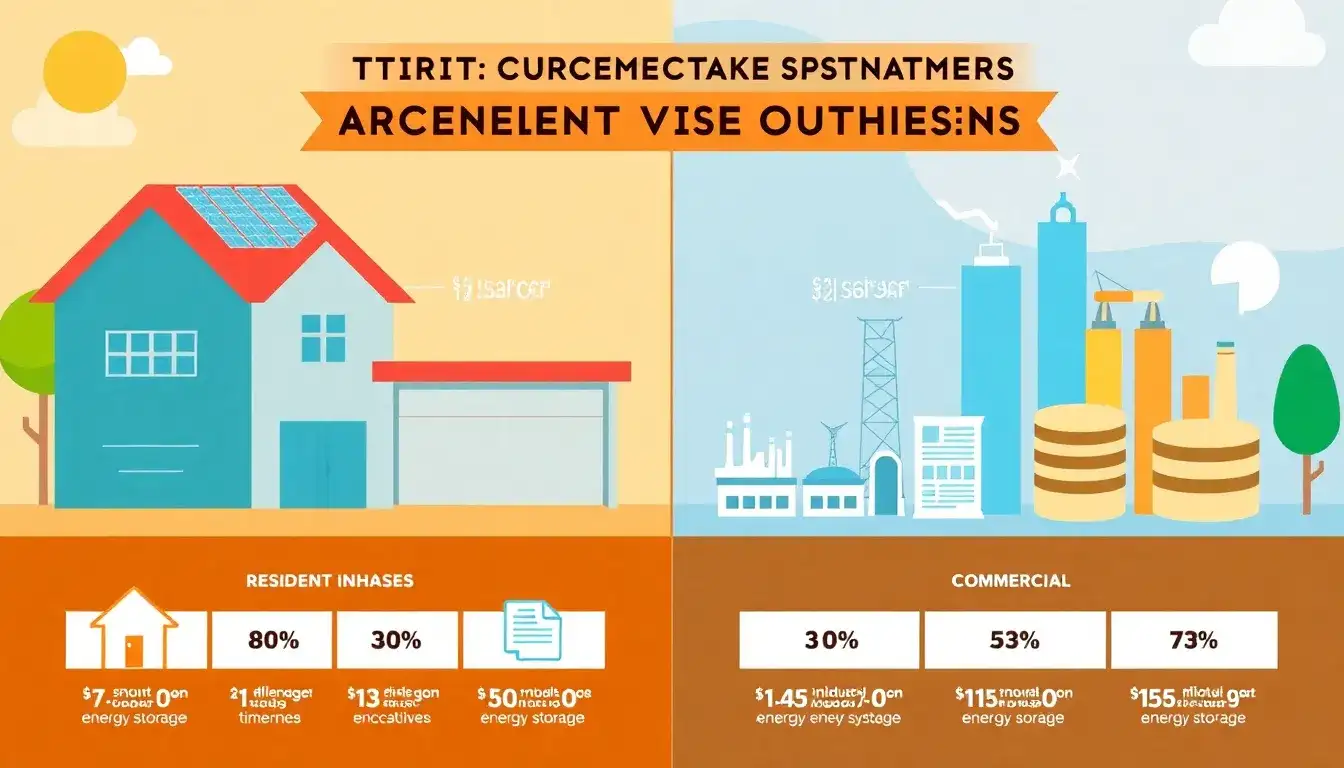
The tax credit structures for residential and commercial energy storage systems differ significantly in their phaseout schedules and regulatory frameworks:
Residential Systems (Section 25D Credit)
- Credit rate: 30% of costs through 2032, phasing down to 26% (2033) and 22% (2034).
- Standalone eligibility: Energy storage systems ≥3 kWh qualify independently of solar pairing under Inflation Reduction Act updates.
- Application: Available for primary residences and second homes (rentals excluded).
Commercial Systems (Section 48E ITC)
- Credit structure: Technology-neutral credit for storage projects placed in service after 2024, with a base rate of 6% or bonus rate of 30% if meeting wage/apprenticeship requirements.
- Phaseout tied to emissions reductions (no explicit rate phaseout mentioned in available materials; credits apply through at least 2033 under current IRA provisions).
- Scope: Applies to standalone storage and hybrid systems meeting Section 48 technical standards.
Key Differences
| Aspect | Residential (25D) | Commercial (48E) |
|---|---|---|
| Credit Rate | 30%→26%→22% (2022-2034) | 6%/30% depending on labor standards |
| Eligibility | ≥3 kWh storage, no solar required | No capacity minimum specified |
| Property Type | Primary/secondary residences only | No residential restrictions |
| Sunset | Unavailable after 2034 | At least through 2033 |
Commercial systems gain flexibility through stackable credits and bonus rates for labor compliance, while residential credits focus on straightforward percentage reductions tied to installation dates.
Original article by NenPower, If reposted, please credit the source: https://nenpower.com/blog/how-do-the-tax-credit-phases-differ-between-residential-and-commercial-energy-storage-systems/

