

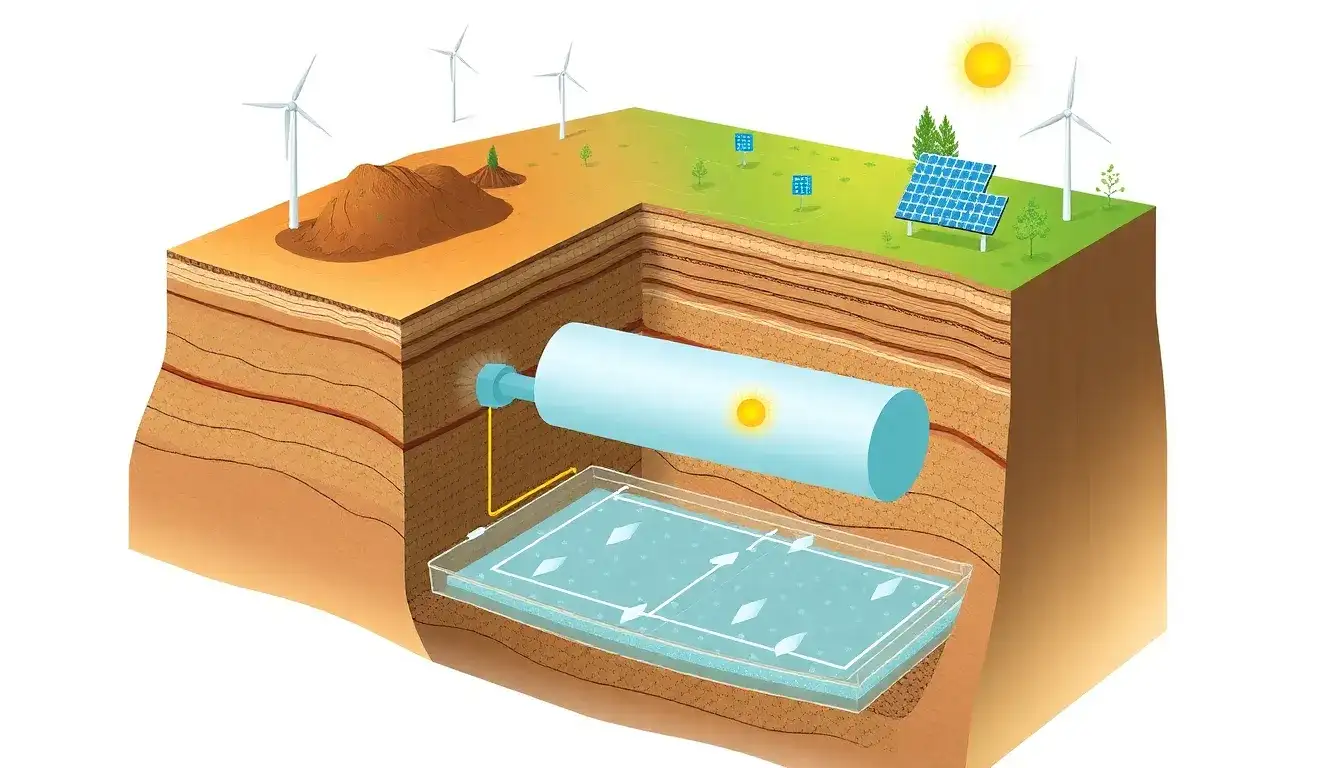
Retention Capability of Depleted Gas Reservoirs
- Definition: Retention capability refers to the degree to which stored gas (such as compressed air or CO2) is held within the reservoir area. This is a critical factor in determining how well a depleted gas field can store and release gas efficiently.
- Importance for CAES: For CAES, maintaining a high retention capability is essential as it ensures that the compressed air remains stored effectively, minimizing leakage and maximizing the potential for energy recovery when the air is expanded back through turbines to generate electricity.
- Comparison with Natural Gas Storage: Depleted gas fields have been used for natural gas storage due to their strong retention capabilities, which are facilitated by the natural seal of the geologic formations. This existing infrastructure and natural sealing are advantageous for adapting these reservoirs for CAES.
- Factors Influencing Retention: The original residual gas saturation, cap rock integrity, and the presence of faults or fractures can influence how well a reservoir retains gas. For CAES, any factors that compromise the seal or allow significant gas leakage will reduce the effectiveness of the storage system.
Suitability of Depleted Gas Reservoirs for CAES
-
Advantages:
- Existing Infrastructure: Depleted gas fields often have established well networks and surface facilities, which can be repurposed for CAES, reducing initial investment costs.
- High Storage Capacity: These reservoirs generally possess high storage capacities, making them suitable for large-scale energy storage systems.
- Good Sealing Performance: Natural seals in these reservoirs can provide effective containment, similar to their use in CO2 storage projects.
-
Challenges:
- Pressure and Temperature Management: CAES requires maintaining specific pressure and temperature conditions to ensure efficient air compression and storage. Depleted gas fields must be evaluated for their pressure-containment capabilities during repressurization.
- Leakage Risks: Even with good natural seals, any legacy well or fault issues could lead to significant leakage risks, impacting both energy efficiency and environmental safety.
In summary, the retention capabilities of depleted gas reservoirs make them potentially suitable for CAES, but careful assessment of the reservoir’s integrity and management of operational conditions are crucial to ensure efficient and safe use.
Original article by NenPower, If reposted, please credit the source: https://nenpower.com/blog/how-do-the-retention-capabilities-of-depleted-gas-reservoirs-affect-their-suitability-for-compressed-air-energy-storage/

