

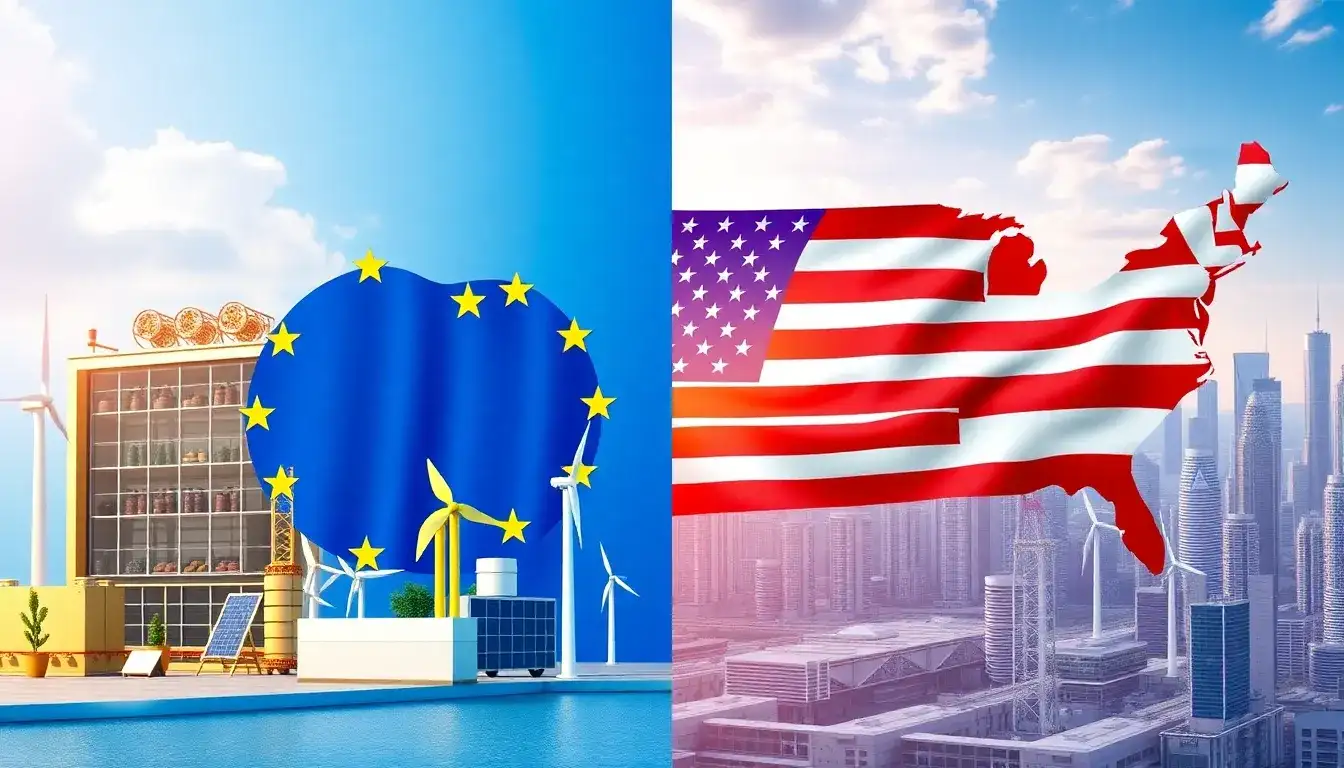
The regulatory frameworks in the EU and the US differ in several ways when it comes to supporting energy storage:
EU Regulatory Framework
- Comprehensive Battery Regulation: The EU has adopted a unified Batteries Regulation that prioritizes sustainability, recycling, and safety across the battery lifecycle, including sourcing, production, use, and recycling. This regulation aims to ensure environmentally responsible battery production in the EU.
- Green Deal and Fit for 55: The European Green Deal and Fit for 55 package are pivotal in promoting energy storage as part of the EU’s transition to a carbon-neutral economy. These initiatives encourage the deployment of innovative energy storage technologies to integrate more renewables into the grid and enhance energy security.
- Electricity Market Design: The EU’s Electricity Market Design reform aims to create a market environment that supports energy storage by reducing price fluctuations and encouraging the use of storage technologies to maintain grid stability.
- Diverse Implementation: While the EU provides a unified regulatory framework, the implementation of these regulations can vary among member states, allowing for some flexibility in how each country chooses to support energy storage.
US Regulatory Framework
- Federal vs. State Regulations: Unlike the EU, the US lacks a single federal-level comprehensive energy storage regulation. Instead, energy storage is primarily regulated at the state level, with various incentives and policies implemented by individual states to support its development.
- Federal Tax Credits and Grants: The US federal government offers tax credits (e.g., the Investment Tax Credit) and grants to incentivize the development and deployment of renewable energy technologies, including energy storage systems.
- FERC Policies: The Federal Energy Regulatory Commission (FERC) plays a crucial role in shaping energy storage policies, particularly through its Orders on energy storage participation in wholesale markets, which help integrate energy storage into the grid.
- Market-Driven Approach: Unlike the EU’s more prescriptive regulations, the US often relies on market forces to drive the development of energy storage technologies, with federal policies aiming to remove barriers to entry and encourage private investment.
Key Differences
- Centralization vs. Decentralization: The EU has a more centralized approach to energy storage regulation, with a comprehensive framework applied across member states. In contrast, the US has a more decentralized approach, relying heavily on state-level regulations.
- Prescriptive vs. Market-Driven: The EU’s regulatory framework is highly prescriptive, focusing on sustainability and environmental considerations. The US, on the other hand, uses a mix of federal and state incentives to encourage market-driven growth in energy storage.
- Integration with Green Policies: The EU’s energy storage policies are closely integrated with broader green initiatives like the Green Deal, while the US approach is more fragmented but still aims to support a transition to renewable energy sources.
In summary, the EU emphasizes a comprehensive and prescriptive regulatory approach to ensure sustainability and integration of energy storage into the grid, whereas the US relies more on market incentives and state-level policies to drive energy storage development.
Note: There are no direct references to US-specific energy storage regulations in the provided search results, thus the information is based on general knowledge and practices.
If you want more specific details about US regulations or policies, it would be beneficial to consult additional sources or legal documents specific to U.S. energy storage policies.
Original article by NenPower, If reposted, please credit the source: https://nenpower.com/blog/how-do-the-regulatory-frameworks-in-the-eu-and-the-us-differ-in-supporting-energy-storage/

