

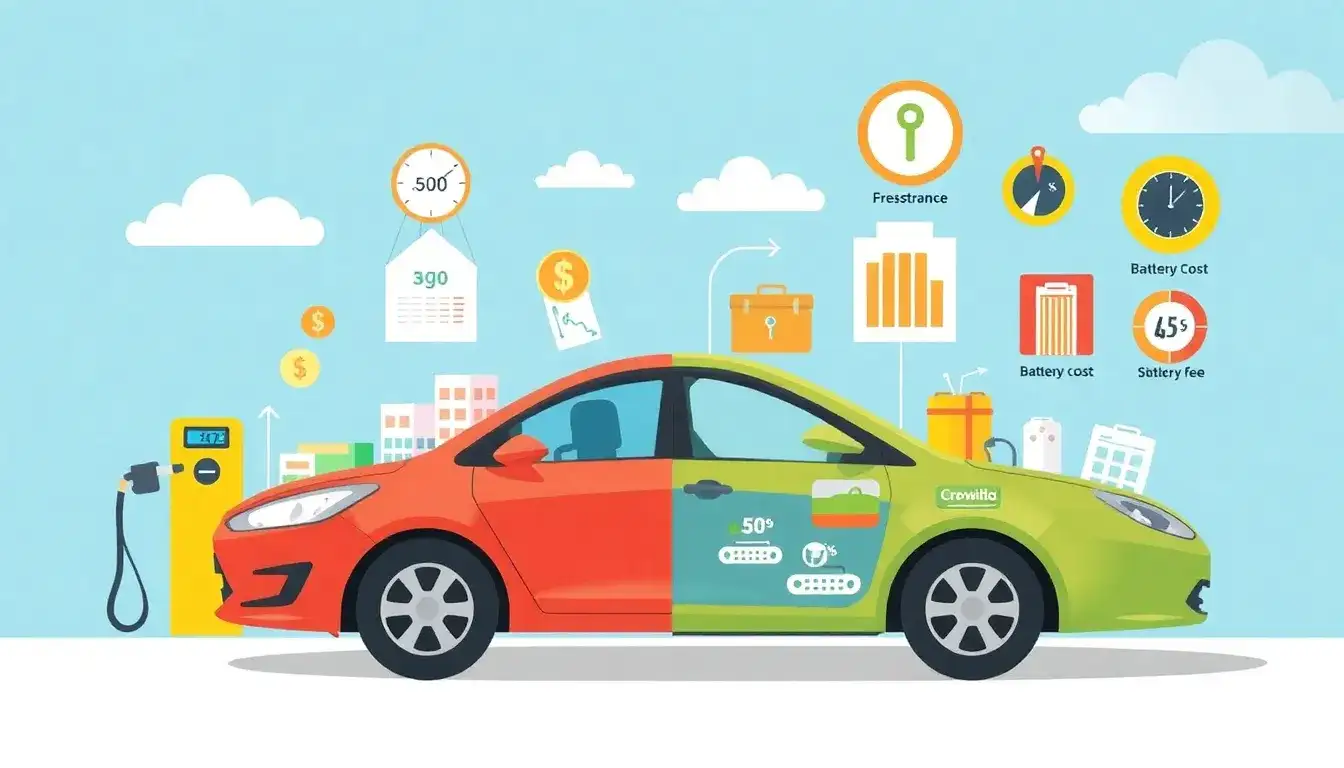
Electric vehicle (EV) registration fees vary by state and can significantly influence the overall cost of ownership by adding recurring annual expenses that do not apply equally to gasoline-powered cars.
Nature of EV Registration Fees
- Many states impose special annual registration fees on EVs to compensate for lost gasoline tax revenue, which traditionally funds road maintenance and infrastructure. These fees range broadly, from around $30 to over $400 annually, depending on the jurisdiction.
- For example, Utah charges EV owners an annual additional fee that started at $60 and increased over time to $120, indexed to inflation. Plug-in hybrid (PHEV) and hybrid vehicles also face additional but generally lower fees ($26 to $52 for PHEVs, lower for hybrids).
- In Illinois, a proposal to charge $1,000 annually for EVs was dramatically scaled back to a $100 EV fee on top of a $158 general vehicle registration fee. Illinois also doubled the gas tax, making the gap in costs between gasoline vehicles and EVs narrower but still present.
- Some states like North Carolina have set flat fees, e.g., $100 for all-electric vehicles and $50 for plug-in hybrids.
Impact on Cost of Ownership
- These fees increase the fixed annual cost of owning an EV, potentially offsetting some savings from lower fuel and maintenance costs. For instance, a $100-$150 annual fee adds a comparable cost to what a gasoline vehicle owner pays in state gas taxes, especially for high-mileage drivers.
- The additional fees can be particularly impactful in states with high registration fees or where the EV fees are substantial relative to the cost savings on fuel and maintenance.
- Conversely, even with these fees, the total cost of ownership for many EV owners remains lower or competitive compared to gasoline vehicles due to savings on fuel, reduced maintenance, and sometimes tax incentives.
Summary
| Aspect | Effect of EV Registration Fees |
|---|---|
| Annual additional fee | $30–$400+ depending on state, adds to fixed ownership cost |
| Purpose | Recover lost gasoline tax revenue for road funding |
| Offset | Partially reduces fuel cost savings from EV usage |
| Variation by state | Wide variation; some states impose moderate fees, others high |
| Overall EV cost of ownership | Increases but often balanced by fuel/maintenance savings |
In conclusion, while EV registration fees raise the fixed annual costs of ownership, thereby increasing the total cost of owning an electric vehicle, these fees are often viewed as a way to maintain equitable road funding. The impact varies widely by state and vehicle usage but does not fully negate the cost benefits of owning an EV.
Original article by NenPower, If reposted, please credit the source: https://nenpower.com/blog/how-do-the-registration-fees-for-electric-vehicles-impact-their-overall-cost-of-ownership/

