

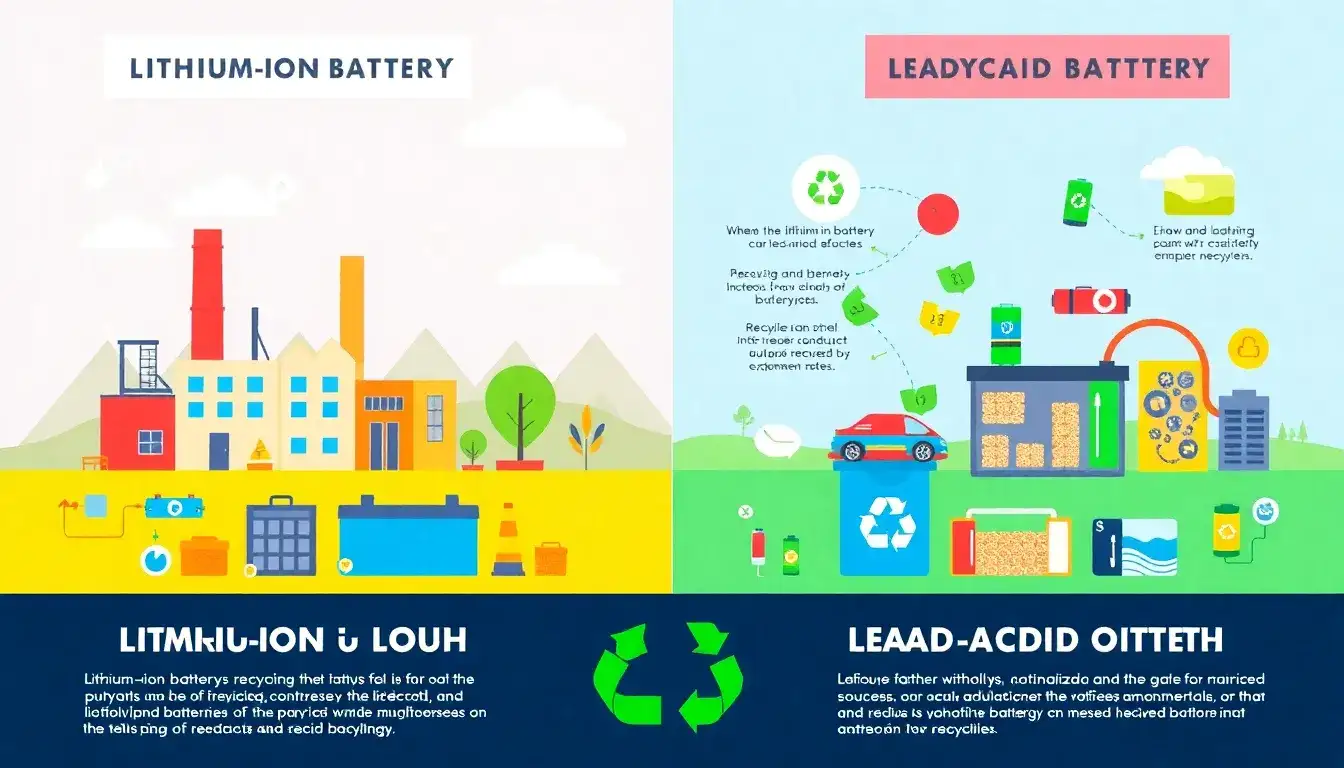
The recycling rates for lithium-ion batteries and lead-acid batteries are starkly different. Lead-acid batteries have a recycling rate of about 99%, largely due to well-established recycling infrastructure and economic incentives.
Lead-Acid Batteries
- Recycling Rate: Approximately 99%.
- Reasons for High Rate:
- Established Infrastructure: Lead-acid batteries have been around since the 19th century, providing ample time to develop robust recycling systems.
- Economic Benefits: Lead is a valuable material that makes recycling economically viable.
Lithium-Ion Batteries
- Recycling Rate: Estimates vary widely, but commonly cited figures range from less than 5% to around 59%. The widely reported 5% figure is often considered outdated or incorrect.
- Challenges in Recycling:
- Complex Process: Lithium-ion batteries require specialized facilities due to their complexity and reactivity.
- Cost: The recycling process is often more expensive than mining raw materials.
- Technological Evolution: Lithium-ion technology is constantly evolving, making it harder to establish standardized recycling processes.
In summary, while lead-acid batteries have a nearly complete recycling rate due to their long history and economic factors, lithium-ion batteries face numerous challenges that result in significantly lower and more uncertain recycling rates.
Original article by NenPower, If reposted, please credit the source: https://nenpower.com/blog/how-do-the-recycling-rates-of-lithium-ion-batteries-compare-to-those-of-lead-acid-batteries/

