

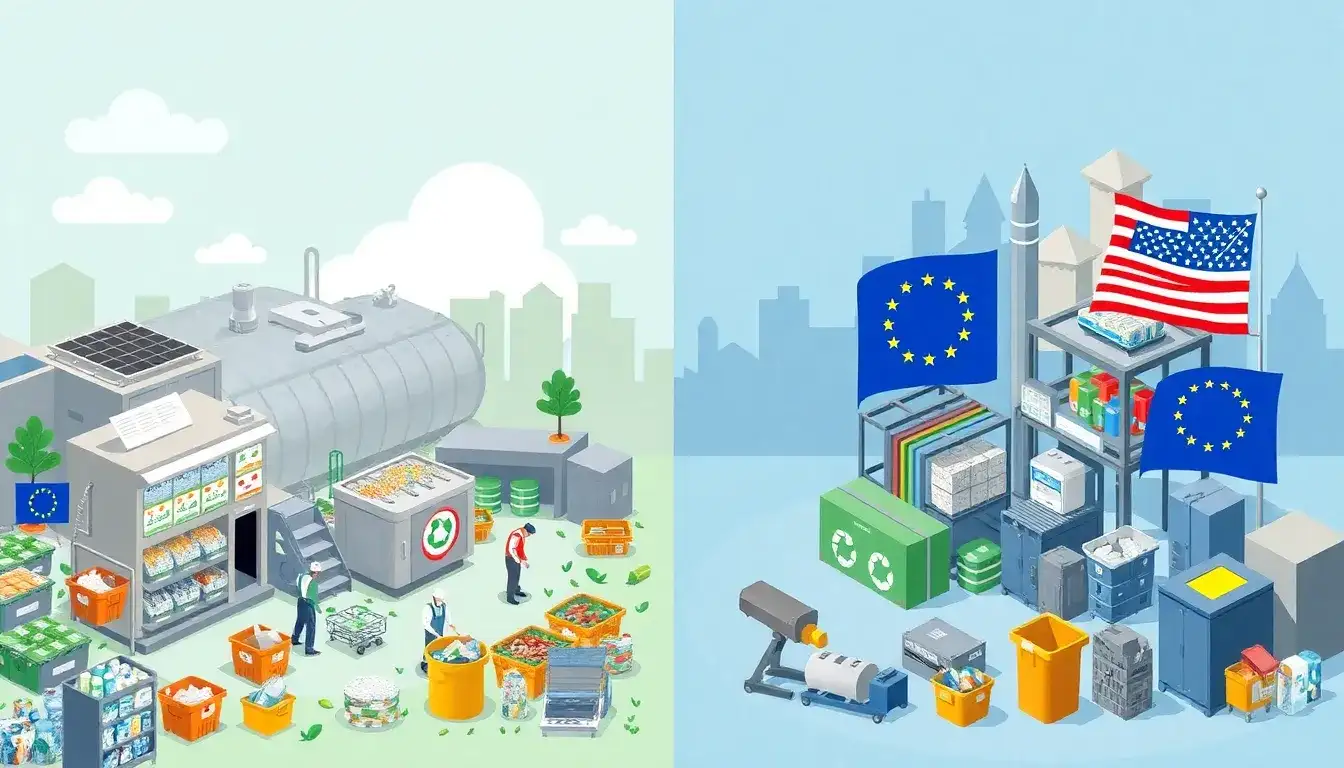
The recycling cost structures between the EU and the US exhibit significant differences in price dynamics, waste management practices, and economic pressures:
Cost Components
- Secondary material prices: In the EU (2022), average prices were €454/tonne for plastic, €206/tonne for paper, and €65/tonne for glass. Comparable US figures are not provided, but US recycling programs are often more expensive than landfilling (e.g., $147/ton vs. $28/ton for landfill in San Jose).
- Input costs: EU plastic recyclers face soaring scrap costs and high energy prices, pushing the industry toward a “breaking point.” US programs struggle with collection/sorting costs and diminishing curbside recycling infrastructure.
Regulatory and Market Factors
- End-of-life disposal: EU citizens pay higher prices for waste disposal compared to North America, incentivizing recycling over landfilling.
- Trade dynamics: EU recyclables now face shifting export markets post-2018, while US programs face volatile commodity prices and reduced profitability.
Operational Pressures
- Infrastructure costs: US municipalities report rising program expenses due to specialized trucks and labor, while EU recyclers grapple with energy-intensive processes exacerbated by recent energy crises.
- Recycling rates: The EU achieves higher rates partly due to waste-to-energy adoption (~40% in some countries vs. 7% US), reducing landfill reliance. The US has seen stagnant recycling rates since 2008 despite higher per-ton costs.
| Factor | EU Characteristics | US Characteristics |
|---|---|---|
| Plastic Recycling | €454/tonne material value; energy-driven crises | Higher collection costs; market volatility |
| Regulatory Push | High disposal fees incentivize recycling | Limited federal price mechanisms |
| Waste Conversion | ~40% waste-to-energy adoption | 7% waste-to-energy usage |
Original article by NenPower, If reposted, please credit the source: https://nenpower.com/blog/how-do-the-recycling-costs-differ-between-the-eu-and-the-us/

