

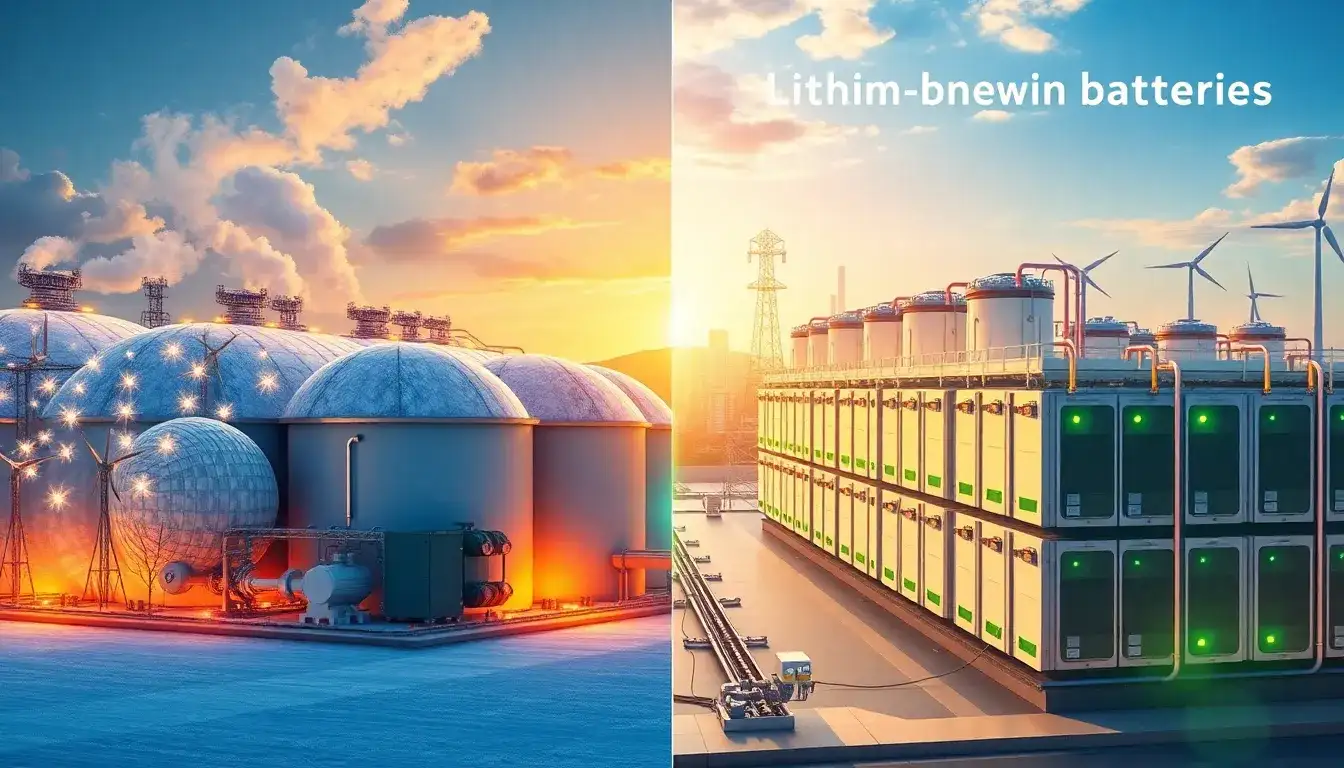
Operational Efficiencies: Thermal Energy Storage vs. Lithium-Ion Batteries
When comparing the operational efficiencies of thermal energy storage (TES) systems and lithium-ion batteries, several factors come into play:
Thermal Energy Storage (TES)
TES systems are designed to store thermal energy, which can be used to generate electricity or provide direct heat. These systems can achieve high efficiencies, depending on the specific technology and application.
- Efficiency Range: Thermal efficiencies for TES systems can range from 50% to over 90%.
- Kraftblock Example: The Kraftblock system claims a round-trip efficiency of over 95%, particularly when utilizing waste heat.
- Duration and Flexibility: TES systems can store energy for varying durations, offering flexibility in both charging and discharging.
Lithium-Ion Batteries
Lithium-ion batteries store electrical energy and are widely used in portable electronics and electric vehicles.
- Efficiency Range: Lithium-ion batteries generally have a round-trip efficiency of around 90% to 95%.
- Duration and Flexibility: While they offer high efficiency, their lifespan is typically measured in charge cycles rather than absolute time, unlike TES systems which can store energy for extended periods.
Comparison Summary
| Feature | Thermal Energy Storage (TES) | Lithium-Ion Batteries |
|---|---|---|
| Efficiency | 50% to over 95% | Approximately 90% to 95% |
| Storage Duration | Variable, from minutes to weeks | Limited by charge cycles (not time-based) |
| Application | Industrial processes, renewable integration, building HVAC | Portable electronics, electric vehicles, stationary power |
In summary, while both technologies achieve high efficiencies, TES systems offer longer storage durations and greater flexibility in application, particularly in industrial settings and renewable energy systems. Lithium-ion batteries, however, remain crucial for electrical energy storage in automotive and consumer electronics.
Key Differences
- Application: TES is ideal for industrial heat and integration with renewable energy systems, whereas lithium-ion batteries are suited for electric vehicles and portable devices.
- Duration and Flexibility: TES systems can store energy for longer periods and offer more flexible charging and discharging options, making them suitable for a broader range of applications.
- Efficiency Metrics: While both technologies have high efficiencies, TES systems are often measured in thermal efficiency, while lithium-ion batteries are evaluated on round-trip electrical efficiency.
In conclusion, the choice between TES and lithium-ion batteries depends on the specific needs of the application—whether it requires thermal energy storage for industrial processes or electrical energy storage for consumer electronics or transportation.
Original article by NenPower, If reposted, please credit the source: https://nenpower.com/blog/how-do-the-operational-efficiencies-of-thermal-energy-storage-systems-compare-to-those-of-lithium-ion-batteries/

