

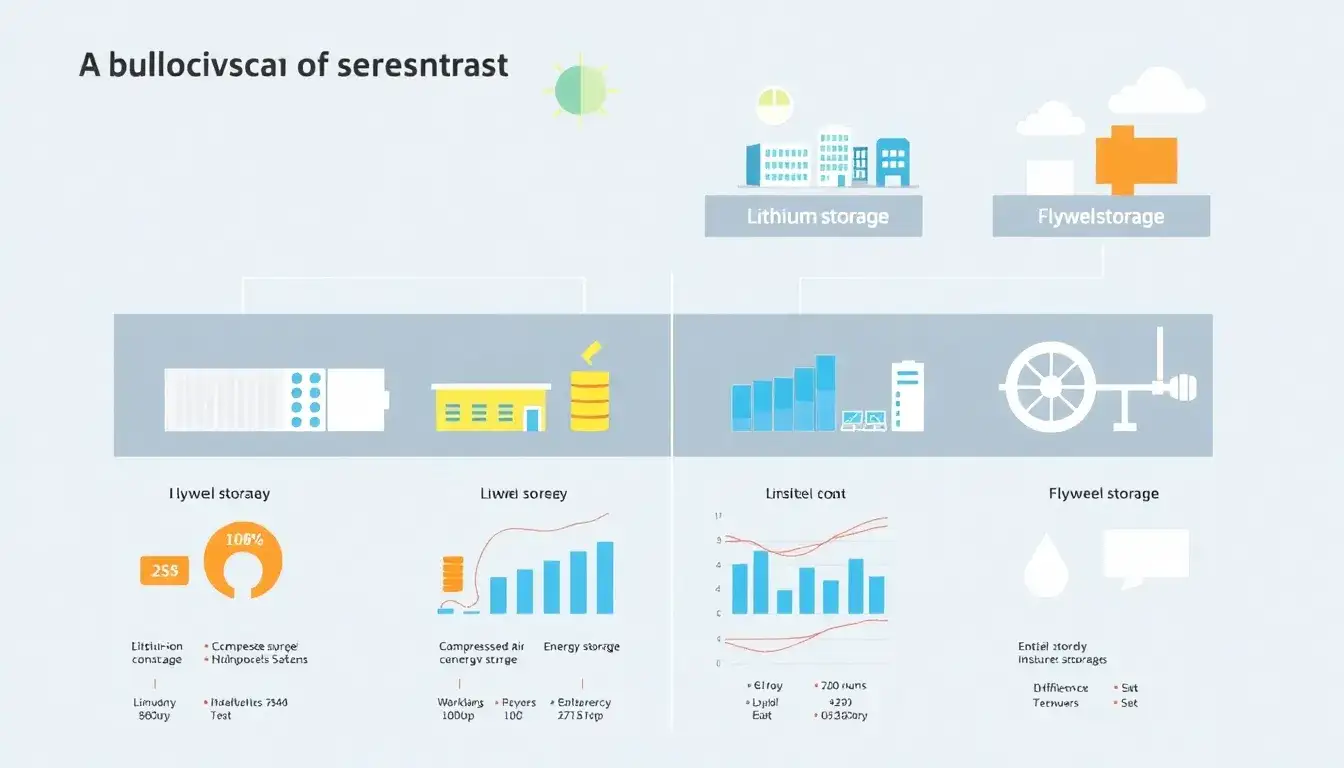
Operational Costs of Pumped Hydro Storage Compared to Other Technologies
Overview of Operational Costs
Pumped Hydro Storage (PHS):
- Variable Costs: The variable cost of PHS is linked to the electricity market price, as it depends on the cost of pumping water back into the reservoir versus the revenue from generating power when water flows back down. Operating costs are relatively low, typically a fraction of a cent per kWh.
- Efficiency: Modern PHS facilities achieve an efficiency rate of about 85%, meaning they lose about 15% of the energy stored during the cycle.
- O&M Costs: Fixed and variable O&M costs for PHS are generally stable, with variable components such as parts and overhauls estimated at regular intervals. For example, parts costs are typically a constant $/kW across all power levels, while overhauls are needed every 10 years.
Other Energy Storage Technologies:
- Batteries (e.g., Lithium-Ion):
- Variable Costs: Essentially zero, as there are no fuel or water costs.
- Efficiency: Can approach 90% round-trip efficiency for some advanced battery systems, though typical efficiencies range from about 80% to 95% depending on the technology and application.
- O&M Costs: Generally lower than PHS but can vary depending on the specific battery chemistry and conditions.
- Other Technologies (e.g., Compressed Air, Flywheel):
- These have varying efficiencies and operational costs, often higher than PHS on a per-unit basis, but may offer benefits in terms of deployment flexibility or short-duration high-power applications.
Comparison Summary
| Technology | Operational Costs (Variable) | Efficiency | O&M Costs | Scalability |
|---|---|---|---|---|
| Pumped Hydro | Low, tied to electricity prices | 85% | Stable, low | High |
| Lithium-Ion | Zero (energy only) | 80-95% | Low | Medium |
| Compressed Air | Variable | 40-50% | Moderate | Limited |
| Flywheel | Low (energy only) | 90-95% | High | Low |
Conclusion
Pumped hydro storage offers high scalability with relatively stable and low O&M costs compared to most other energy storage technologies. However, its reliance on specific geography and market conditions for profitability can make it less flexible than battery systems in terms of deployment and operation. Batteries and other technologies excel in different niches based on efficiency, flexibility, and application-specific advantages.
Original article by NenPower, If reposted, please credit the source: https://nenpower.com/blog/how-do-the-operational-costs-of-pumped-hydro-storage-compare-to-other-energy-storage-technologies/

