

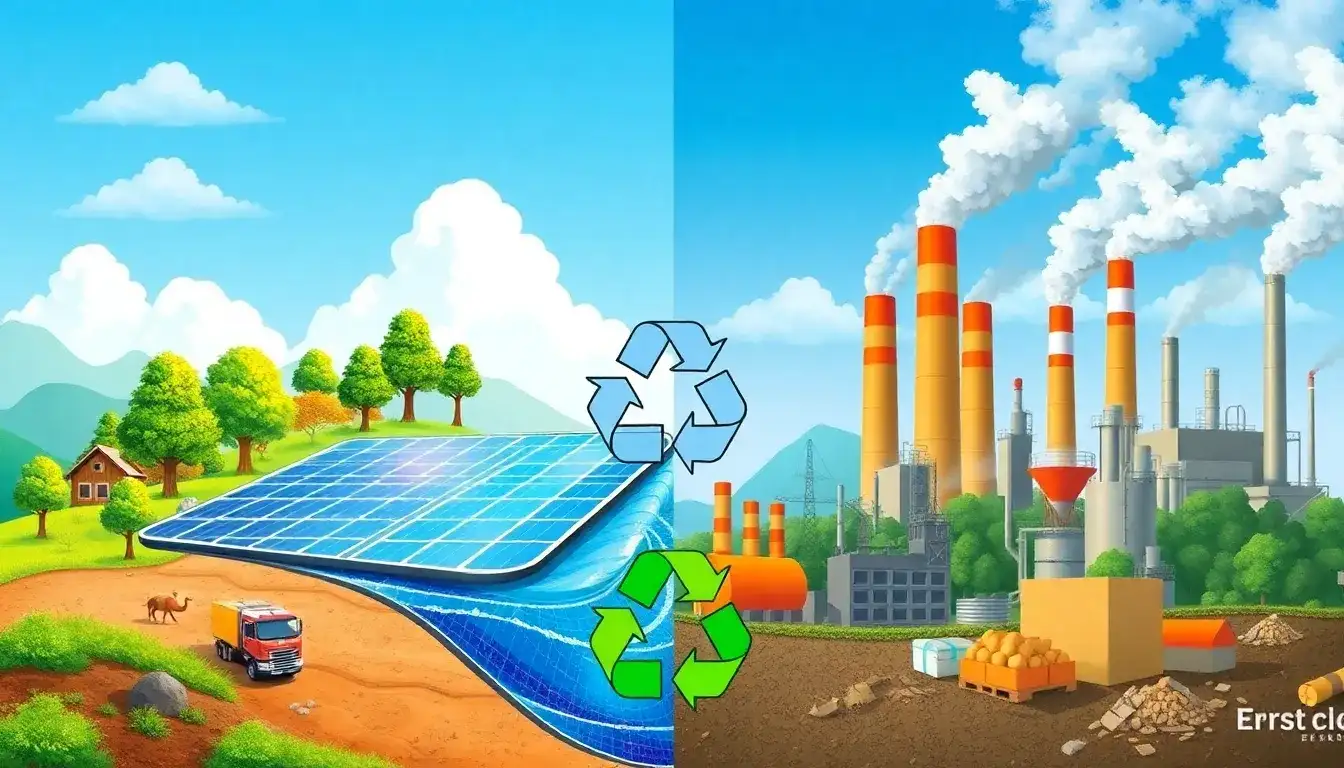
Impact of Solar Panel Materials on Environmental Sustainability
1. Raw Material Extraction
Solar panels primarily use materials such as silicon, silver, and aluminum. Extracting and processing these materials results in environmental consequences like habitat destruction, soil erosion, water pollution, and greenhouse gas emissions. For example, mining for high-purity silicon and metals can degrade ecosystems and consume large amounts of water and energy, contributing to the carbon footprint of solar technology.
2. Types of Solar Panel Materials and Manufacturing Impacts
- Monocrystalline silicon panels are produced by cutting wafers from a single silicon crystal block. This method uses significant energy and creates the highest emissions among solar panel types, but it delivers the highest energy conversion efficiency (19-22%).
- Polycrystalline silicon panels are made from melted silicon crystals that solidify into wafers; their production is less energy-intensive than monocrystalline but still involves electricity use and emissions.
- Thin-film solar panels use materials such as amorphous silicon, cadmium telluride, or copper indium gallium selenide. These panels have a lower carbon footprint in manufacturing but often contain toxic heavy metals like cadmium, posing environmental and human health risks if not properly handled and disposed of.
3. Toxicity and Hazardous Waste
Certain solar panel materials, especially in thin-film panels, contain heavy metals (e.g., cadmium, lead) classified as hazardous waste by some governments. Improper disposal or damage can lead to environmental contamination and pose health hazards to workers and communities. Solar thermal systems may also use hazardous heat-transfer fluids that pose risks if leaked.
4. Energy Consumption in Manufacturing
Manufacturing solar panels involves energy-intensive processes such as wafer production and cell fabrication, which contribute to greenhouse gas emissions. Higher purity and efficiency panels typically require more energy to produce, increasing their upfront environmental cost despite benefits during use.
5. End-of-Life Waste Management
At the end of their lifespan, solar panels pose waste management challenges. Discarded panels can release toxic substances if landfilled. Recycling technologies are emerging to recover valuable materials and mitigate environmental harm. Countries like Germany exemplify effective recycling programs, reducing the potential long-term ecological footprint.
6. Impact on Ecosystems and Biodiversity
Large-scale mining to obtain panel materials and solar farm installations can lead to habitat loss and disrupt local wildlife. Responsible siting and sustainable mining practices are needed to minimize these impacts.
Summary Table of Material Impacts on Solar Panel Sustainability
| Material Type | Environmental Impact | Manufacturing Energy Use | Toxicity Risk | Recycling/Disposal Challenge |
|---|---|---|---|---|
| Monocrystalline Silicon | High energy use, habitat disturbance | Highest | Low | Moderate, mostly silicon recovery |
| Polycrystalline Silicon | Moderate energy use, mining impacts | Moderate | Low | Similar to monocrystalline |
| Thin-Film (CdTe, CIGS) | Lower carbon footprint; toxic heavy metals | Low | High (cadmium, others) | Complex due to hazardous materials |
Conclusion
The materials used in solar panels shape their environmental sustainability profile. While solar panels provide clean electricity with zero emissions during operation, the extraction, manufacturing, and disposal of panel materials introduce environmental challenges including habitat destruction, greenhouse gas emissions, and toxicity. Balancing high efficiency with lower environmental impact requires careful material selection, improved manufacturing practices, responsible mining, and robust recycling systems to maximize the sustainability of solar technologies.
Original article by NenPower, If reposted, please credit the source: https://nenpower.com/blog/how-do-the-materials-used-in-solar-panels-impact-their-overall-environmental-sustainability/

