

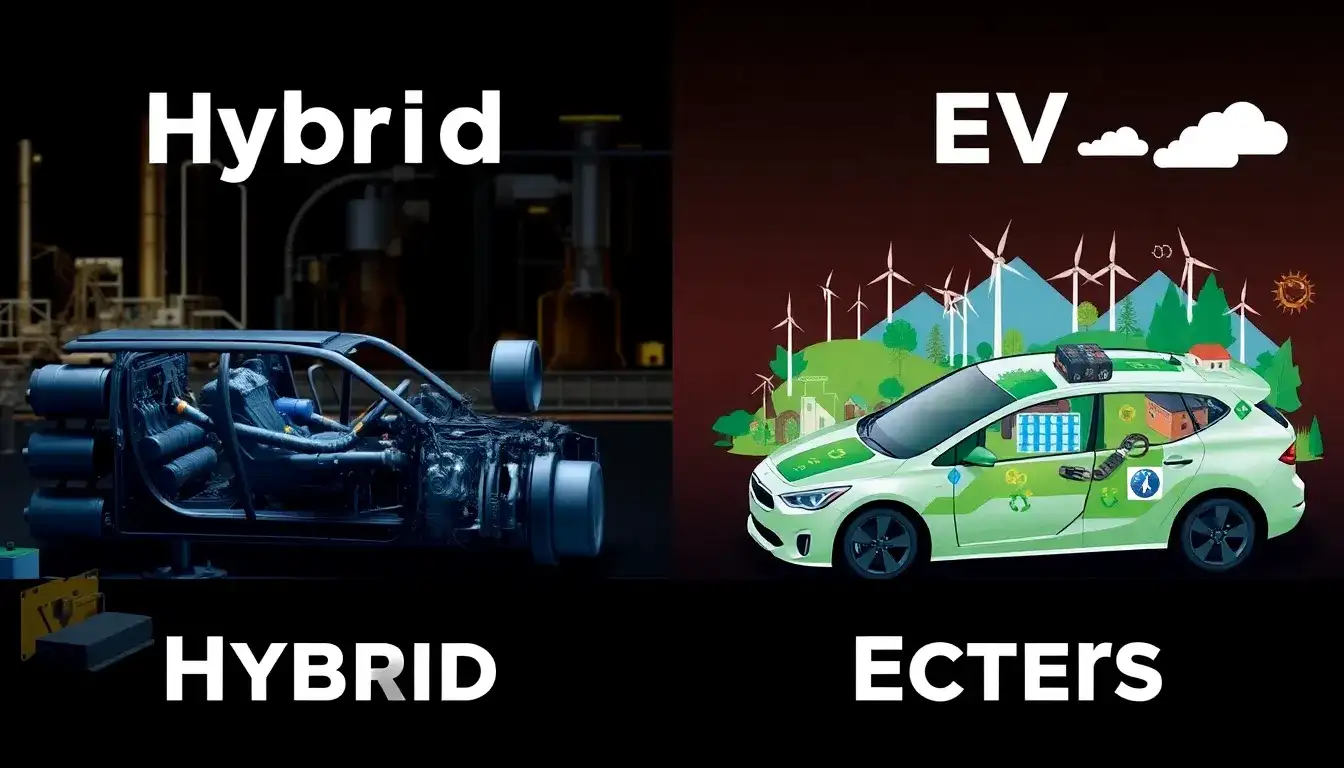
The manufacturing processes of hybrids and electric vehicles (EVs) differ notably in their environmental impacts, primarily due to battery production and material extraction.
Battery Production and Raw Materials
- EVs rely heavily on large lithium-ion batteries containing lithium, cobalt, and nickel, materials which require intensive mining activities. These mining operations have high environmental costs, including habitat destruction, water pollution, and social impacts on local communities. For instance, copper mining, essential for EVs, consumes vast land areas and can displace indigenous populations.
- Hybrids also use batteries, but typically smaller ones with less intensive material demands compared to fully electric vehicles, reducing the scale of these impacts.
Emissions from Manufacturing
- Building an EV generally produces about 80% more emissions than building a comparable internal combustion engine (ICE) vehicle or hybrid, mainly due to the energy-intensive battery manufacturing process.
- Specifically, studies have found that 46% of an EV’s carbon emissions come from the production process, whereas for conventional vehicles, including hybrids, production accounts for about 26% of their lifetime carbon emissions.
- For example, manufacturing one electric car in India can release nearly 4 tonnes of CO2, a figure significantly higher than that for hybrids or gasoline vehicles.
Lifecycle and Use Phase Benefits
- Although EV manufacturing has a higher upfront environmental cost, these vehicles tend to have lower lifetime emissions because they produce zero tailpipe emissions and are more energy-efficient in operation.
- Hybrids, while having lower manufacturing emissions than EVs, still rely on gasoline combustion to some extent, resulting in higher lifetime emissions than EVs but lower than conventional vehicles.
- Over time, the initial emissions from EV manufacturing can be offset by the reduced operational emissions, with estimates suggesting EVs need to be used around 8 years to break even on emissions compared to internal combustion vehicles.
Other Manufacturing Considerations
- Both hybrids and EVs require similar chassis materials like steel and aluminum, whose production emissions are comparable across vehicle types.
- EVs face additional challenges with water use and environmental impact during assembly due to battery production requirements.
Summary
| Aspect | Hybrid Vehicles | Electric Vehicles (EVs) |
|---|---|---|
| Battery size and materials | Smaller batteries, less mining impact | Large lithium-ion batteries, intensive mining (Li, Co, Ni) with higher environmental and social impacts |
| Manufacturing emissions | Lower than EVs, higher than ICE | Around 80% higher emissions than ICE or hybrids due to battery production |
| Carbon emissions share in production | About 26% of lifecycle emissions | About 46% of lifecycle emissions |
| Operational emissions | Reduced compared to ICE but non-zero | Zero tailpipe emissions, more energy-efficient operation |
| Break-even period for emissions offset | Shorter | Roughly 8 years to offset initial manufacturing emissions |
In conclusion, hybrids have a lower environmental impact during manufacturing mainly because of smaller batteries and less intensive raw material extraction, whereas EVs incur a higher environmental cost upfront due to battery production. However, EVs compensate for this with significantly lower emissions during their operational lifetime, making them advantageous for reducing overall life cycle emissions, especially in regions with cleaner electricity.
Original article by NenPower, If reposted, please credit the source: https://nenpower.com/blog/how-do-the-manufacturing-processes-of-hybrids-and-evs-compare-in-terms-of-environmental-impact/

