

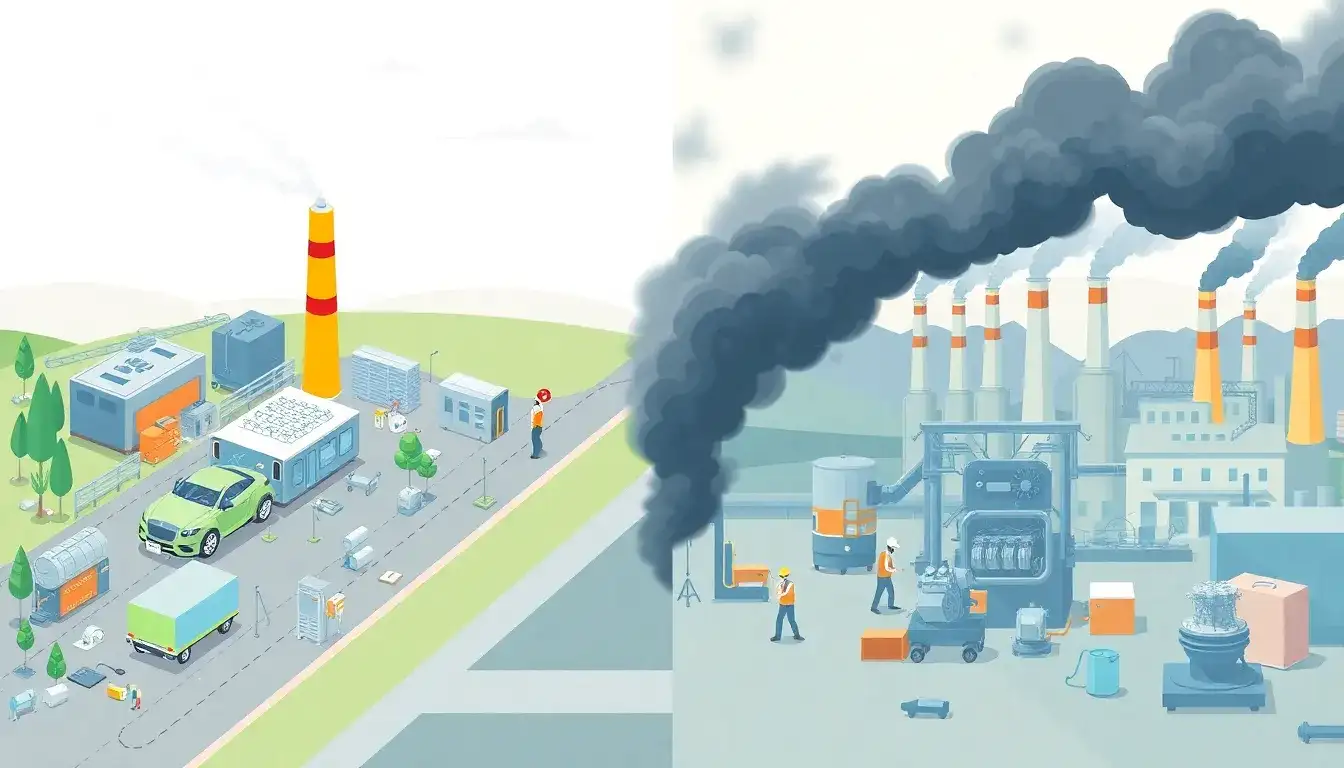
Manufacturing Emissions
- Electric Vehicles (EVs):
- EVs have a higher manufacturing footprint than gas-powered cars, largely due to their batteries. Producing a typical EV with a 75-kWh battery pack results in over 7 tons of CO2 emissions just from the battery, significantly adding to the overall production emissions of around 15 tons of CO2e, which is roughly double that of a comparable internal combustion engine (ICE) vehicle.
- Approximately 46% of EV carbon emissions come from the production process, with a notable portion attributed to the energy-intensive mining and refining of materials like lithium, nickel, cobalt, and graphite.
- Gas-Powered Cars:
- The manufacturing process of gas-powered cars contributes less to their overall emissions compared to EVs. Only about 26% of ICE vehicle carbon emissions come from production, with the majority (74%) resulting from tailpipe emissions during operation.
Overall Emissions
While EVs have higher production emissions, they generate zero tailpipe emissions and can reduce overall lifecycle emissions significantly if powered by clean energy sources. Over time, as renewable energy becomes more prevalent, the lifecycle emissions of EVs should decrease, making them more environmentally friendly compared to gas-powered vehicles.
Lifecycle Emissions Comparison
- Electric Vehicles: About 35% of total emissions come from manufacturing (including battery production), with the remaining 65% from electricity production during use.
- Gas-Powered Cars: About 9% from manufacturing, with 74% from tailpipe emissions during operation.
Overall, while EVs have higher manufacturing emissions, their lifecycle emissions are generally lower than those of gas-powered cars when factoring in energy sources and usage patterns.
Original article by NenPower, If reposted, please credit the source: https://nenpower.com/blog/how-do-the-manufacturing-emissions-of-evs-compare-to-those-of-gas-powered-cars/

