

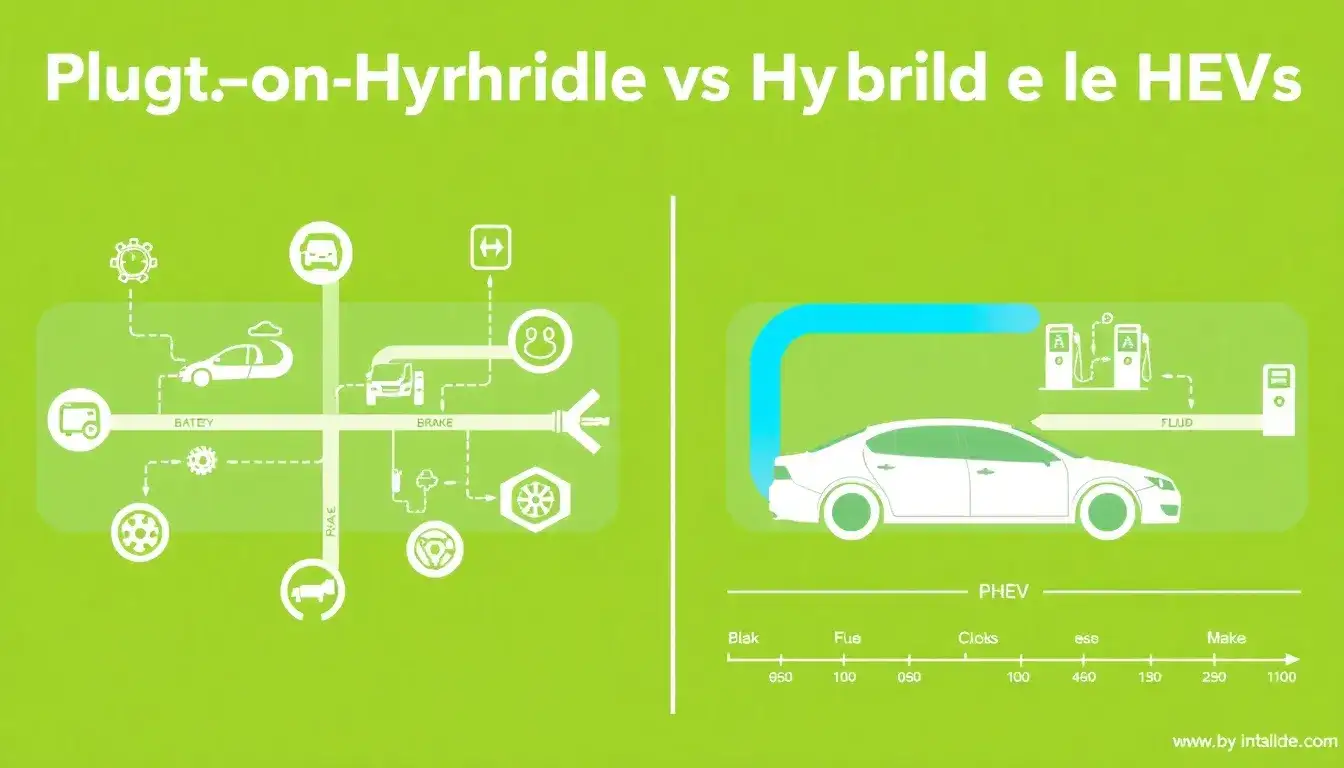
Maintenance Comparison: PHEVs vs HEVs
Plug-in Hybrid Electric Vehicles (PHEVs) and Hybrid Electric Vehicles (HEVs) both share similarities in their maintenance needs due to their use of internal combustion engines, but they differ in their hybrid systems and maintenance requirements.
PHEVs
- Complexity: PHEVs combine a gasoline engine with an electric motor and a battery pack that can be charged from an external power source, making them more complex than HEVs.
- Maintenance Needs: PHEVs require maintenance similar to conventional vehicles, such as engine oil changes, spark plug replacements, and filter changes. However, the regenerative braking system helps extend brake life, and the electric system requires minimal maintenance.
- Fuel Efficiency and Cost: PHEVs are more fuel-efficient than HEVs, especially when operating in all-electric mode. Despite their mechanical complexity, PHEVs and HEVs can have lower maintenance costs over time.
- Charging and Electrical System: Requires periodic checks on the high-voltage components and battery health.
HEVs
- Complexity: HEVs are less complex than PHEVs since they do not have a plug-in charging system, relying solely on regenerative braking and the engine to charge the battery.
- Maintenance Needs: Similar to PHEVs, HEVs require regular engine maintenance but benefit from longer-lasting brake systems due to regenerative braking. The electrical system also requires minimal maintenance.
- Fuel Efficiency and Cost: HEVs are less fuel-efficient than PHEVs, especially in scenarios where PHEV’s electric mode is frequently utilized.
- General Maintenance: Focuses on traditional vehicle upkeep (e.g., oil changes) with the addition of battery and electric motor maintenance, but generally does not involve external charging systems.
Key Differences
- Charging: PHEVs need regular external charging, which introduces additional components and potential maintenance needs compared to HEVs.
- Complexity and Components: PHEVs are more mechanically complex due to their ability to be charged externally, which can lead to potentially higher maintenance costs if components fail, though real-world data shows similar low costs per mile as EVs.
- Fuel Efficiency: PHEVs outperform HEVs in fuel efficiency, particularly in electric mode.
In summary, while both PHEVs and HEVs require similar maintenance tasks due to their internal combustion engines, PHEVs are more complex and may have slightly different maintenance focuses due to their external charging capability. However, both types generally offer lower lifetime maintenance costs compared to conventional vehicles.
Original article by NenPower, If reposted, please credit the source: https://nenpower.com/blog/how-do-the-maintenance-requirements-of-phevs-compare-to-hevs/

