

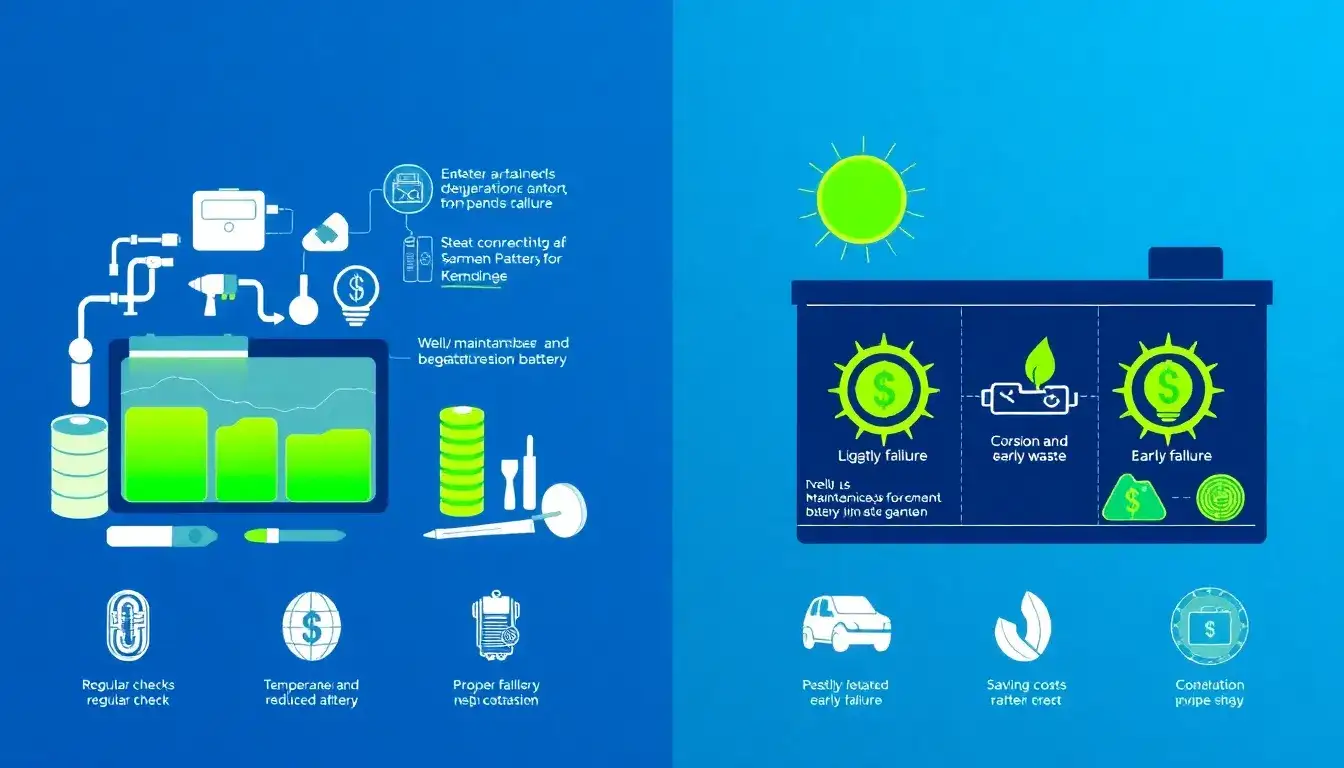
The maintenance requirements of lithium-ion batteries significantly influence their overall cost-effectiveness by affecting their lifespan, performance, and replacement frequency.
Key Maintenance Requirements Impacting Cost-Effectiveness
- Regular Charge Cycles: Lithium-ion batteries should not be left unused for extended periods. It is recommended to perform at least one full maintenance cycle every 6 to 12 months, which involves charging to 100% state of charge (SoC), discharging fully (depth of discharge, DoD), and then charging to 50% SoC. This process helps maintain battery capacity and health.
- Charge Level Management: Keeping the battery charge between roughly 20% and 80%, avoiding full discharge and overcharge, extends battery life. Storing batteries at around 50% charge prevents capacity loss and degradation over time.
- Using Proper Chargers: Employing lithium-ion-specific chargers with intelligent charging logic prevents overcharging and excess heat, helping preserve battery integrity and lifespan.
- Storage Conditions: Batteries should be stored in cool, dry environments and separated from devices if unused for a long time. Extreme temperatures and moisture damage the battery and reduce effective lifespan.
Impacts on Cost-Effectiveness
- Extended Lifespan and Reduced Replacement Costs: Lithium-ion batteries typically last about 2-3 years or 300-500 full charge cycles. Proper maintenance slows capacity degradation, meaning fewer battery replacements are needed within a given timeframe, reducing overall costs.
- Improved Performance and Reliability: Maintaining optimal charge levels and performing regular charge cycles ensures batteries retain their energy capacity longer, providing consistent device run time and reliability, which translates to better value from each battery.
- Lower Total Cost of Ownership: While maintenance requires some time and careful handling, the savings from minimized capacity loss, fewer replacements, and maintained performance outweigh these efforts. Neglecting maintenance accelerates battery aging, leading to shorter service life and higher replacement frequency, ultimately increasing costs.
In summary, the maintenance demands of lithium-ion batteries—such as periodic charging cycles, storing at optimal charge levels, and using proper chargers—are critical to preserving their capacity and longevity. These practices directly enhance the batteries’ cost-effectiveness by extending usable life, reducing replacement frequency, and maintaining performance consistency over time. Neglecting these requirements results in faster degradation and higher overall costs.
Original article by NenPower, If reposted, please credit the source: https://nenpower.com/blog/how-do-the-maintenance-requirements-of-lithium-ion-batteries-impact-their-overall-cost-effectiveness/

