

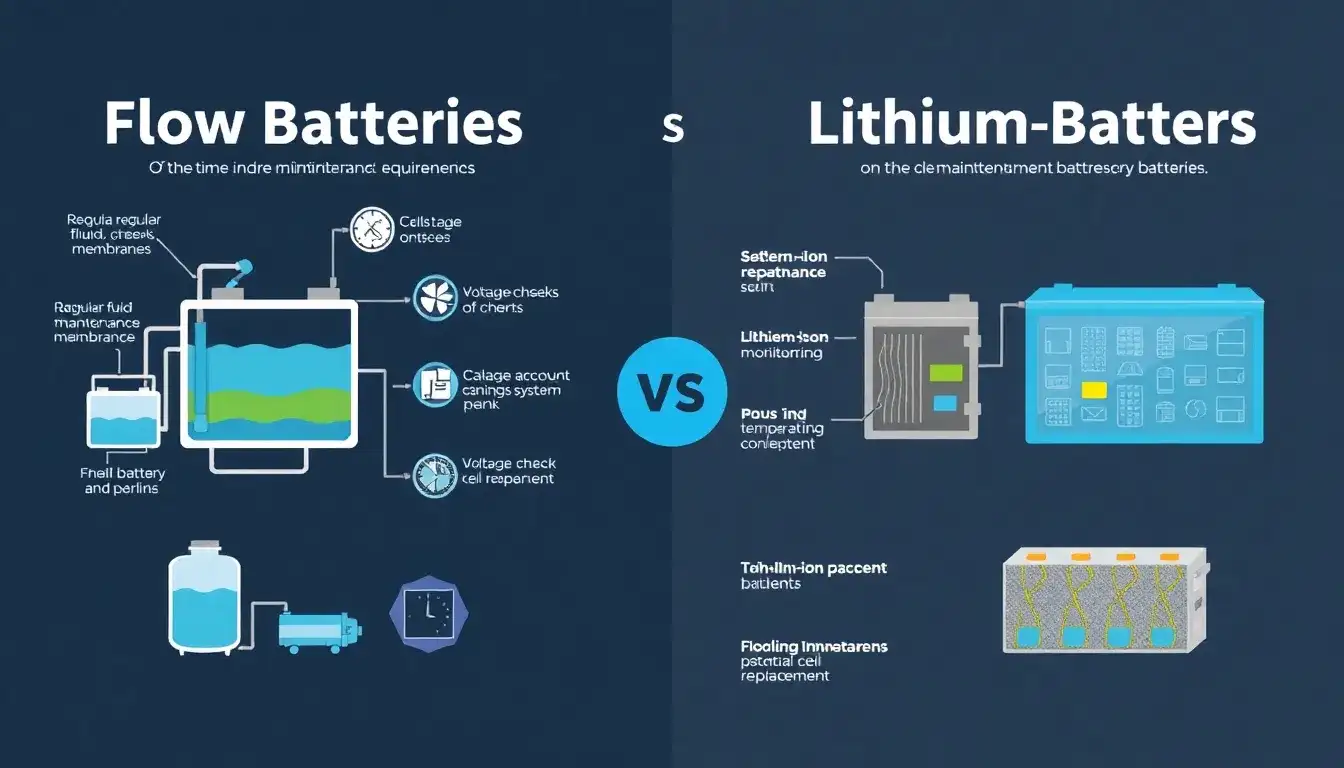
Flow Batteries
- Maintenance Requirements: Flow batteries generally require low maintenance but do need routine checks and services like annual inspections, air filter changes, and electrolyte topping. The electrolyte level should be monitored, and any issues like imbalances or fouling need to be addressed promptly.
- Components and Layout: Flow batteries use pumps, tanks for electrolyte storage, and cell stacks, which require some upkeep to ensure optimal performance.
- Longevity and Performance: They are known for their durability, offering minimal degradation with over 10,000 cycles and a lifespan of up to 30 years. This makes them suitable for long-duration energy storage applications.
Lithium-Ion Batteries
- Maintenance Requirements: Lithium-ion batteries, specifically LFP (Lithium Iron Phosphate) types, typically require no regular maintenance if stored and installed according to specifications. They include battery management systems (BMS) that monitor temperature, state of charge, and cycle life.
- Components and Layout: Lithium-ion batteries consist of cell modules that are compact and integrated into battery packs, reducing the need for extensive maintenance like flow batteries.
- Longevity and Performance: While lithium-ion batteries have a shorter lifespan compared to flow batteries, especially when cycled frequently, they are more widely used due to their higher energy density and efficiency for shorter discharge durations.
Comparison Summary:
| Feature | Flow Batteries | Lithium-Ion Batteries |
|---|---|---|
| Maintenance Requirements | Requires regular checks and maintenance like electrolyte balancing and pump inspections. | Generally low maintenance with integrated BMS for monitoring. |
| Longevity | Long lifespan (up to 30 years) with minimal degradation. | Shorter lifespan (dependent on usage) with potential for degradation with frequent cycling. |
| Scalability and Flexibility | Easy scalability by adding electrolyte volume or tanks. | More compact, but scaling requires adding more battery packs. |
| Suitability | Ideal for long-duration energy storage and frequent cycling. | Suitable for shorter discharge durations and high power density applications. |
In summary, flow batteries are designed for long-duration applications with lower maintenance needs compared to the detailed engineering required for lithium-ion systems, but they require a different kind of maintenance due to their larger mechanical components and external electrolyte storage.
Original article by NenPower, If reposted, please credit the source: https://nenpower.com/blog/how-do-the-maintenance-requirements-of-flow-batteries-compare-to-those-of-lithium-ion-batteries/

