

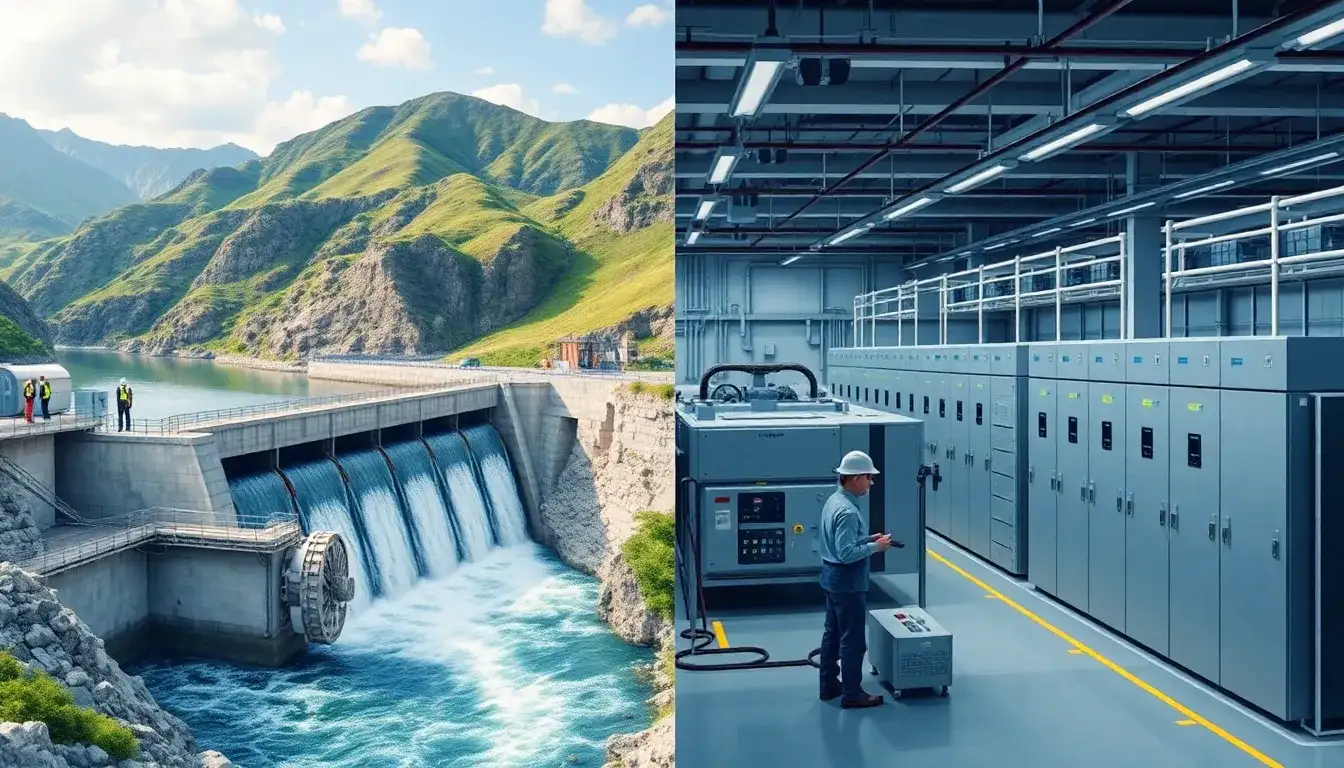
When comparing the maintenance costs of pumped hydroelectric energy storage (PHES) and lithium-ion battery storage, the following points emerge based on the available data:
Maintenance Costs of Lithium-Ion Batteries
- Fixed Operations & Maintenance (O&M) Costs: Lithium-ion battery systems typically incur fixed O&M costs estimated in the range of $7 to $14 per kW-year for grid-scale applications.
- Annual Maintenance for Large Systems: For example, a 50 MW lithium-ion battery storage system may have annual maintenance costs ranging from $500,000 to $1 million. Maintenance activities include battery cell replacement, software updates, and preventive maintenance on power electronics and other components.
- Maintenance Intensity: Lithium-ion batteries require relatively low maintenance compared to older battery technologies, with occasional calibration and monitoring via communication systems like CANBus. They do not require routine tasks like watering or acid neutralization that lead-acid batteries do.
- Lifecycle Maintenance: Maintenance is factored into lifecycle costs which also include eventual battery replacement due to capacity fade over time.
Maintenance Costs of Pumped Hydroelectric Energy Storage
- Maintenance Components: PHES involves mechanical systems such as turbines, pumps, generators, valves, and civil structures like reservoirs and tunnels. These systems generally require regular inspections, lubrication, mechanical repairs, and civil infrastructure upkeep.
- Cost Profile: While exact maintenance cost figures for PHES vary by project size and location, PHES has traditionally been recognized as having relatively low operational and maintenance costs once constructed, often lower than battery storage when amortized over long lifetimes (typically 40-60 years or more).
- Durability and Lifetime: The long lifespan of pumped hydro facilities means maintenance costs are spread over many decades, reducing annualized maintenance expense.
- Complexity: Maintenance can involve specialized skills for mechanical, electrical, and civil components, but the absence of high-frequency cycling degradation (unlike batteries) means replacement costs are less frequent.
Comparative Summary
| Aspect | Lithium-Ion Battery Storage | Pumped Hydroelectric Energy Storage (PHES) |
|---|---|---|
| Maintenance Cost Basis | $~7-$14/kW-year fixed O&M; $500k-$1M/yr for 50MW system | Generally lower annualized O&M costs due to long lifespan |
| Maintenance Activities | Cell replacements, software updates, preventive maintenance on electronics | Mechanical inspections, turbine/pump repairs, reservoir upkeep |
| Maintenance Intensity | Moderate, includes battery replacements every 10-15 years | Low to moderate, with less frequent component replacements |
| System Lifetime | Typically 10-15 years before major battery replacement | Typically 40-60+ years, reducing annual maintenance costs |
| Operational Complexity | High cycling can increase wear and maintenance | Mainly mechanical wear, generally less affected by operational cycling |
In essence, pumped hydroelectric storage tends to have lower annual maintenance costs compared to lithium-ion battery systems when viewed over the full life span of the facilities, largely because PHES assets last much longer and do not require frequent component replacements. Lithium-ion batteries require more frequent maintenance and replacement, contributing to higher ongoing maintenance costs relative to their operational lifetime.
Original article by NenPower, If reposted, please credit the source: https://nenpower.com/blog/how-do-the-maintenance-costs-of-pumped-hydroelectric-energy-storage-compare-to-those-of-lithium-ion-batteries/

