

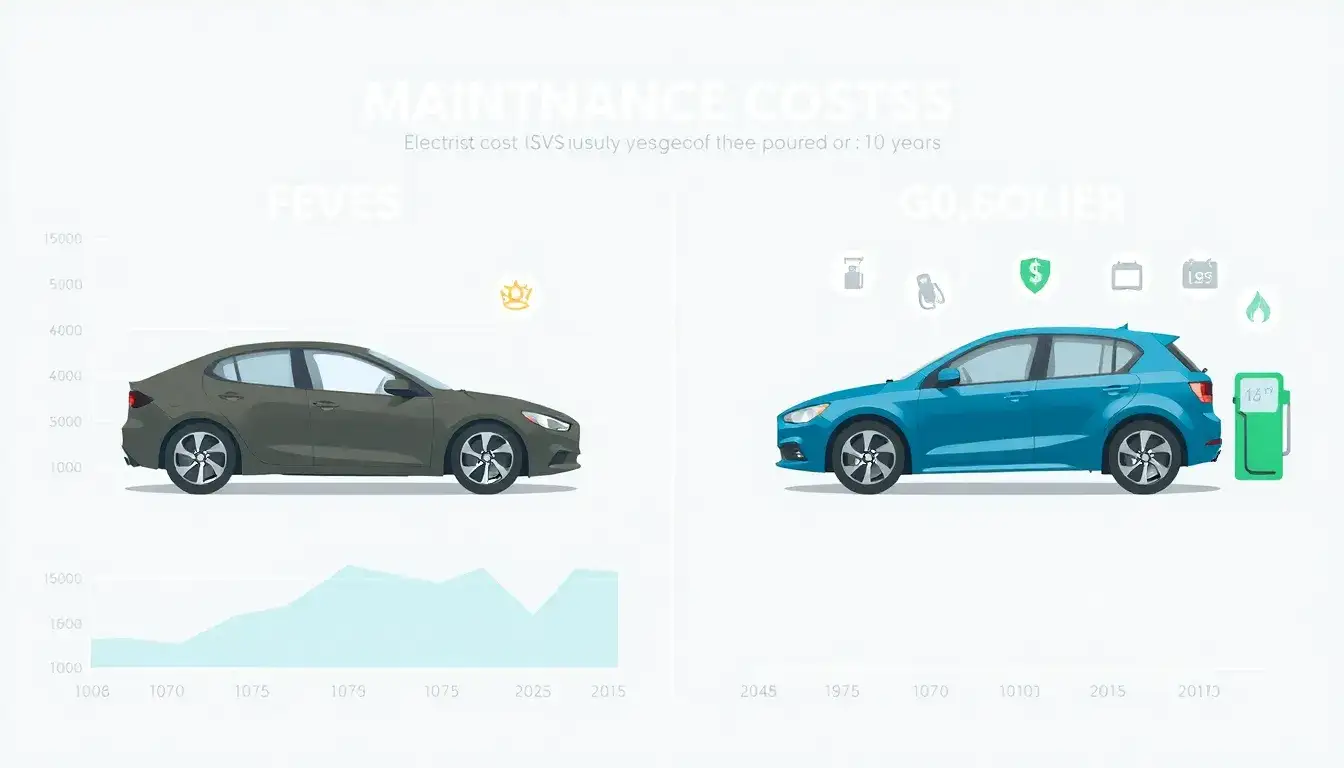
Comparing the maintenance costs of electric vehicles (EVs) to gasoline-powered cars over a 10-year period highlights several key differences and advantages for EVs.
Key Differences and Advantages
1. Lower Maintenance Costs
Electric vehicles generally have lower maintenance costs. On average, EVs cost about 6 cents per mile to maintain, compared to 10 cents per mile for gasoline-powered cars. This is primarily due to the lack of oil changes, timing belt replacements, and other maintenance tasks typical of internal combustion engines. Over a 10-year period, these savings can add up significantly.
2. Reduced Number of Parts
EVs have fewer moving parts compared to gasoline-powered vehicles, which means less wear and tear on parts and fewer replacements needed over time. This reduces the overall cost of maintenance services.
3. Battery Durability
While EV battery packs are expensive to replace, they are designed to last well beyond the typical warranty period of 8 to 10 years or 100,000 miles. Most EVs require minimal battery maintenance, and the batteries themselves degrade slowly, retaining significant capacity even after many charge cycles.
4. Long-term Savings
Over a 10-year period, EV owners can expect to save approximately $4,600 in repair and maintenance costs compared to gasoline-powered vehicles. This does not include fuel savings, which are typically substantial due to the lower cost of electricity compared to gasoline.
5. Specialized Labor Costs
Although EV maintenance may involve higher labor costs due to the specialized nature of the technology, the overall frequency and cost of required maintenance remain lower than for gasoline-powered cars.
Comparison Table
| Aspect | Electric Vehicles | Gasoline-Powered Cars |
|---|---|---|
| Maintenance Cost | Lower (about 6 cents per mile) | Higher (about 10 cents per mile) |
| Moving Parts | Fewer moving parts, reducing wear and tear | More moving parts, increasing maintenance needs |
| Battery Durability | Batteries last 8-10 years or more; require minimal maintenance | No battery replacement concerns, but other parts have shorter lifespans |
| Overall Savings | Significant savings over 10 years, both in maintenance and fuel costs | Higher costs over 10 years due to more frequent maintenance and fuel expenses |
| Labor Costs | May involve higher labor costs due to specialized technology | Generally lower labor costs due to more familiarity with ICE technology |
In summary, while both types of vehicles have their unique maintenance needs, electric vehicles generally offer lower maintenance costs and significant savings over a 10-year period compared to gasoline-powered cars.
Original article by NenPower, If reposted, please credit the source: https://nenpower.com/blog/how-do-the-maintenance-costs-of-electric-vehicles-compare-to-gasoline-powered-cars-over-a-10-year-period/

