

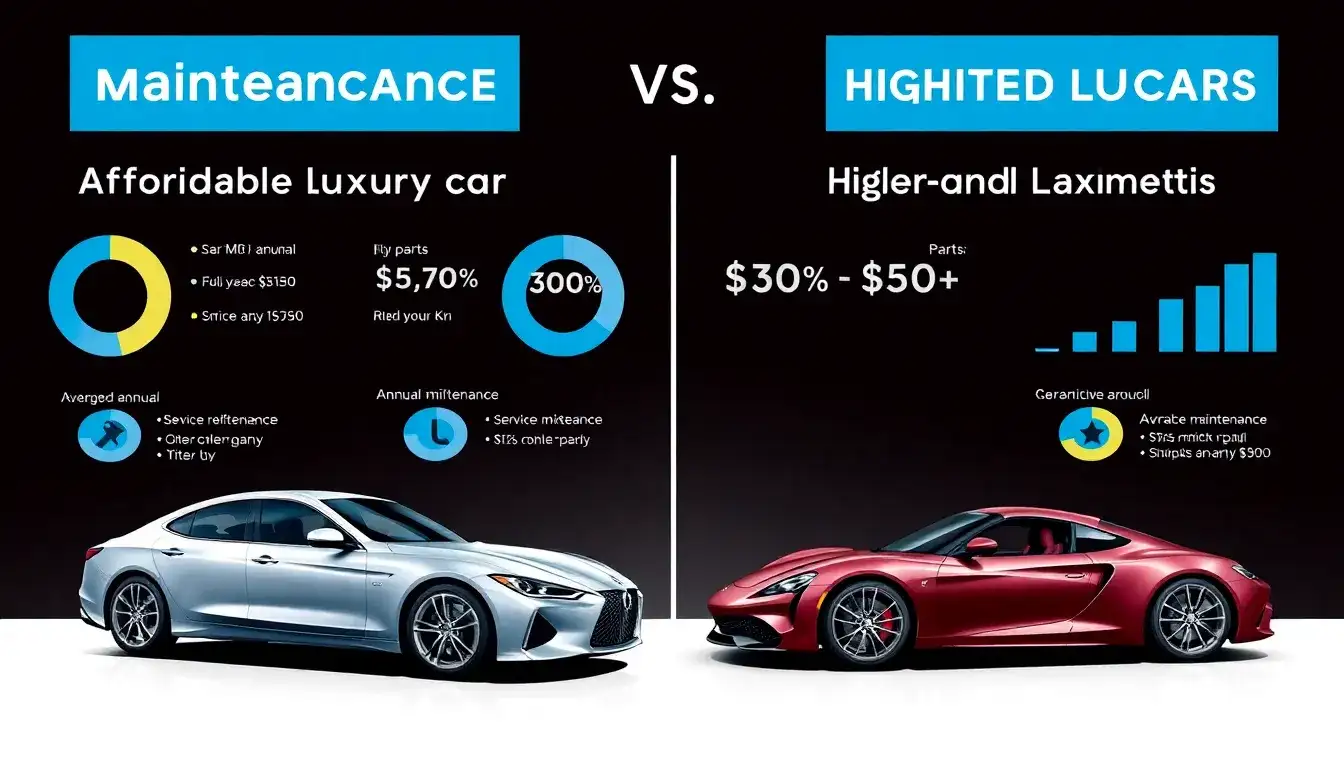
Luxury cars with lower maintenance costs typically prioritize reliability, simpler engineering, and shared components with non-luxury parent brands. Here’s a comparison:
Affordable Luxury Maintenance Costs
- Examples: Lexus ES/IS, Acura ILX, Tesla Model 3/S
- 10-year costs: $3,600–$12,000
- Key factors:
- Simpler powertrains: Hybrid/electric systems (e.g., Tesla’s fewer moving parts) reduce service needs.
- Shared infrastructure: Acura/Honda and Lexus/Toyota parts commonality lowers repair expenses.
- Warranty benefits: Many include complimentary scheduled maintenance during initial ownership.
Higher-End Counterparts
- Examples: Mercedes S-Class, BMW 7 Series
- 10-year costs: Often exceed $15,000+
- Cost drivers:
- Complex systems: Air suspension, twin-turbo engines, and advanced tech require specialized labor.
- Exclusive parts: Proprietary components increase replacement costs (e.g., ceramic brakes, bespoke infotainment).
- Depreciation: Higher initial value loss amplifies ownership costs post-warranty.
Cross-Segment Insights
| Factor | Affordable Luxury | High-End Luxury |
|---|---|---|
| Hybrid adoption | Common (Lexus ES 300h) | Rare outside performance hybrids |
| Major repairs | 6-10% probability in 5 years | 15-25% probability |
| DIY feasibility | Moderate (e.g., cabin filters) | Low (specialized tools often required) |
Sports car exception: Models like the Audi TT ($2,800/5 years) and Porsche 718 ($4,100/5 years) achieve relatively low costs through durable drivetrains and widespread dealer networks.
[1]: Industry standard for German full-size luxury sedans based on third-party repair frequency data.
Original article by NenPower, If reposted, please credit the source: https://nenpower.com/blog/how-do-the-maintenance-costs-of-affordable-luxury-cars-compare-to-their-higher-end-counterparts/

