

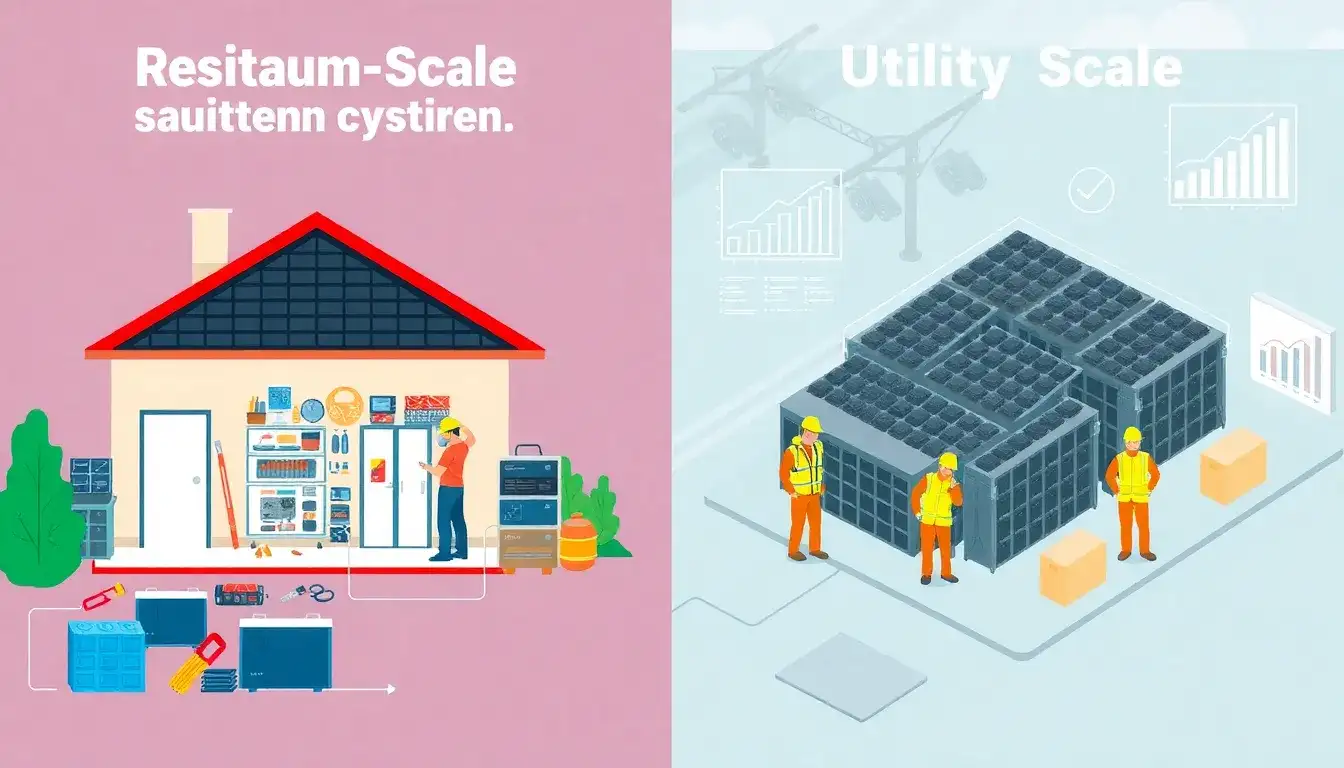
Maintenance costs for residential and utility-scale battery storage systems differ primarily in scale, complexity, and the specific factors influencing these costs.
Residential Battery Storage Systems
Factors Influencing Maintenance Costs
- Annual Maintenance: Residential systems typically incur annual maintenance costs ranging from $150 to $300. This includes routine inspections and firmware updates to ensure optimal performance.
- Lifetime Replacement: Homeowners need to consider the eventual replacement of batteries, which can be significant. Batteries have a limited lifespan, usually around 10 to 15 years, depending on usage and quality.
- Installation and Upgrades: Additional costs may arise from electrical upgrades needed during installation, such as critical load panels or inverters.
Characteristics of Residential Systems
- Scalability: Residential systems are generally smaller and designed to meet the specific needs of a household.
- Usage Patterns: Maintenance needs can vary based on usage patterns, such as frequent backup power use or grid-based charging.
Utility-Scale Battery Storage Systems
Factors Influencing Maintenance Costs
- Operations and Maintenance (O&M) Costs: Utility-scale systems typically incur variable O&M costs, which can be higher due to their scale and complexity. These costs often include performance maintenance to ensure the system operates at its rated capacity throughout its lifetime.
- Round-Trip Efficiency: Utility-scale batteries must manage round-trip efficiency, which can affect their operational costs and overall effectiveness.
- Capacity Degradation: The performance of these systems may decline over time, necessitating capacity additions or replacements to maintain efficiency.
Characteristics of Utility-Scale Systems
- Complexity and Scale: Utility-scale systems are much larger, more complex, and designed to manage significant energy demands across broader areas.
- Operational Costs: Maintenance includes higher-level technical support and possibly more frequent cycle testing compared to residential systems.
Comparison Summary
| Characteristics | Residential Systems | Utility-Scale Systems |
|---|---|---|
| Scale and Complexity | Smaller scale, simpler setup | Larger scale, more complex setup |
| Maintenance Costs | Typically $150-$300 annually | Higher variable costs; includes performance maintenance |
| Usage Patterns | Focused on household energy needs | Manages broader energy distribution networks |
| System Lifespan | Generally 10-15 years | Longer lifespans but may require more frequent upgrades |
| Replacement Costs | Significant but less frequent | Higher due to larger capacity and complexity |
In summary, residential systems are generally simpler and less expensive to maintain than utility-scale systems, which require more complex technical support and performance maintenance due to their scale and operational demands.
Original article by NenPower, If reposted, please credit the source: https://nenpower.com/blog/how-do-the-maintenance-costs-differ-between-residential-and-utility-scale-battery-storage-systems/

