

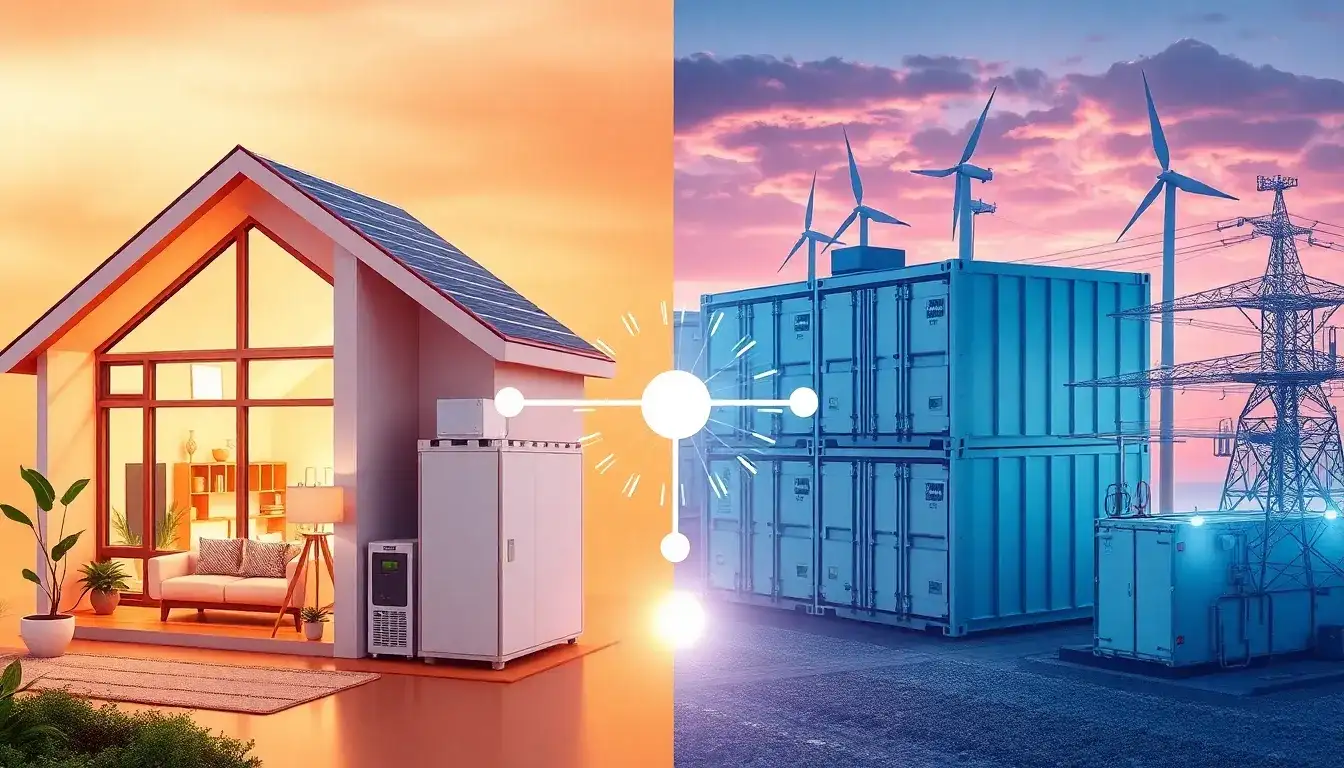
Comparison of Residential and Utility-Scale Battery System Lifetimes
Residential and utility-scale battery systems have different lifetimes due to variations in technology, usage patterns, and environmental conditions.
Residential Battery Systems
- Lifespan: Typically, residential solar batteries last between 5 to 15 years. The average lifespan is often around 10 to 12 years, depending on the type of battery and how it is used.
- Factors Affecting Lifespan: Depth of discharge (DoD), temperature, and charging cycles are key factors. Lithium-ion batteries, particularly those using lithium iron phosphate (LFP) chemistry, are more durable and have a longer lifespan compared to lead-acid batteries.
- Usage Patterns: Residential batteries are often used for backup power during outages and to optimize energy consumption. The frequency of charge/discharge cycles impacts their lifespan.
Utility-Scale Battery Systems
- Lifespan: Utility-scale batteries generally last longer than residential ones, typically ranging from 15 to 20 years or more, depending on the technology. For instance, flow batteries and some advanced lithium-ion systems are designed for longer lifetimes.
- Factors Affecting Lifespan: Similar to residential systems, utility-scale batteries’ lifespans are influenced by DoD, charge cycles, and environmental conditions. However, they often benefit from more controlled operating conditions and advanced management systems.
- Usage Patterns: Utility-scale batteries are used for grid stabilization, peak shaving, and renewable energy smoothing. They can handle more cycles than residential batteries, but their larger scale and lower DoD can lead to longer lifetimes.
Comparison Summary
| Feature | Residential | Utility-Scale |
|---|---|---|
| Lifespan | 5-15 years | 15-20 years or more |
| Battery Type | Predominantly lithium-ion | Varied, including flow batteries and advanced lithium-ion |
| Usage Patterns | Backup power, daily charge/discharge cycles | Grid stabilization, peak shaving, renewable smoothing |
| Factors Affecting Lifespan | DoD, temperature, charge cycles | DoD, temperature, advanced management systems |
In summary, while both residential and utility-scale batteries use similar technologies, utility-scale batteries generally have longer lifetimes due to controlled operating conditions and advanced management systems.
Original article by NenPower, If reposted, please credit the source: https://nenpower.com/blog/how-do-the-lifetimes-of-residential-and-utility-scale-battery-systems-compare/

